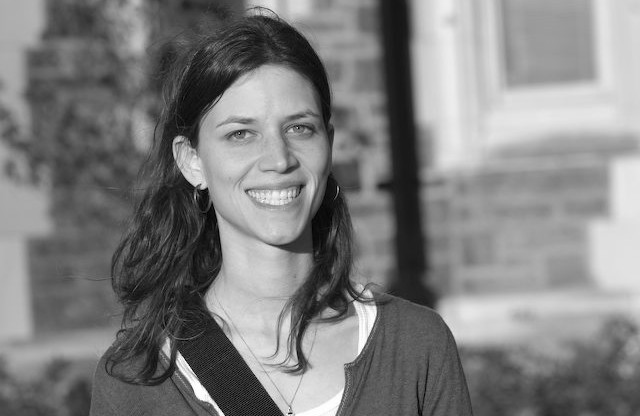
Filmmaker Spotlight: A Conversation with Sara Taksler

TICKLINGGIANTS_031

One of this year’s most topical films, TICKLING GIANTS follows Bassem Youssef, often dubbed the Egyptian Jon Stewart, as he transitions from surgeon to full-time political satirist during the tumultuous Arab Spring. The Daily Show inspired Youssef, whose work was at turns legitimately dangerous and revolutionary in a way that Jon Stewart’s work, protected by the First Amendment to the Constitution, was not. In the era of fake news and “alternative facts,” Youssef’s work may in turn become a roadmap for journalists in a time when legitimate journalism is being actively subverted and vilified. Director Sara Taksler took the time to chat with us about how she got into filmmaking and what filming in Egypt was like. 

KCS: Can you talk a bit about your background and how you got into television and film?

ST: I recently found an email from 2001, where I'm talking about what kind of job I'd like to find. I wrote that I wanted to figure out how to combine entertainment and social justice—so it's worked out pretty well. My first job was as a receptionist for Tough Crowd with Colin Quinn, which used to follow The Daily Show. That was on for a couple seasons and then I freelanced for a little while. During that time, I started making a documentary with my friend Naomi Greenfield, called TWISTED: A Balloonamentary, about people whose lives change when they go to balloon twisting conventions. In 2005, a friend told me about an opening at The Daily Show. I applied and have been here ever since.

KCS: What shows/films were early influences for you?

ST: I've always loved comedy. As a kid I used to secretly stay up late and watch Evening at The Improv and Caroline's Comedy Hour. I'd watch re-runs of I Love LucyLaverne and Shirley and "What's Happening!!". My favorite show as a teenager was My So-Called Life. At a film festival, I once got to briefly meet Claire Danes and tell her how much I loved that show, which I'm sure totally changed her life. As far as movies, I loved Ferris Bueller's Day OffAnnie Hall, and Cinema Paradiso. The first documentary I remember watching was in a class at Washington University in St. Louis. We watched The War Room and I loved it!

KCS: What attracts you to a project? 

ST: When I'm working on a project, I know I will be talking about it every single day for years. So, it's hard to find something you're that interested in. I seem to really like social justice stories with a sense of humor.

KCS: You really get a feel from the film exactly how Youssef's show is produced. How different or similar is it to the Daily Show?

ST: Al Bernameg's office was based on the culture of The Daily Show --- open both in physical space and in the collaborative atmosphere of the office.

KCS: What was it like filming in Egypt? Was that your first experience filming in that kind of charged political climate?

ST: Filming was a challenge. On the one hand, I loved it. The people I met were open, kind and funny. In Bassem's office, everyone felt familiar and like the people I am friends with at home. But, filming in Egypt outside of the office was not easy. I am a white women and obviously not Egyptian. Some people were skeptical of my intentions and a few people thought I was a spy. We filmed most of our outdoor footage from a moving car, after one of our camera people was beaten up to get his footage.

KCS: Was he okay and did he continue to shoot with you? Were there measures other than filming from a moving car that you and your crew took to protect yourselves? 

ST: Thanks for asking. He was okay, but shaken up. We continued to work together. He was someone who only shot for us occasionally, and that continued. I followed the lead of the local crew, if they thought something was or was not safe.

KCS: The Trump administration appears to be subverting the integrity of legitimate journalism. Do you think the risk of danger to journalists is increasing here in our own country?

ST: Declaring the press your enemy can't be good for democracy.

At turns funny, tense, and thought-provoking, TICKLING GIANTS screens March 3, 8:10pm at PEM Morse Auditorium

Filmmaker Spotlight: Catching up with SFF Alum Maite Alberdi

Screen shot 2017-03-03 at 8.59.49 AM
The Grown Ups

Maite Alberdi's film TEA TIME was shown at SFF 2015, this year she returns with THE GROWN-UPS.  SFF program director Jeff Schmidt caught up with the Chilean based filmmaker to talk about her work as a documentary filmmaker.

JS: How did you first get into filmmaking?

MA: In film school, it was very weird to make documentaries, everybody wanted to make fiction films. Before entering the film academy, I studied art history, aesthetics and social media, so I have other interests, not only cinema. When I had to make films in school I felt a little trapped by reality, I think that all the stories that I created already existed in reality, the challenge was to find them.

JS: We were first introduced to you when we screened TEA TIME at SFF 2015.  Can you talk about filming that documentary and give us any updates on what has happened to your film subjects since we screened the film?

MA: TEA TIME had different challenges. The greatest challenge I faced in making TEA TIME was being constant and patient. For me, filming this documentary was an exercise in patience - waiting for things to happen in reality, without hurrying or pushing them, trusting that if one chose the places and situations well, they would provide what you needed. But the right time is more up to life than up to the director. I think it’s complex to impose a timeframe in the characters’ development. In this film I knew that I wanted to portray the last years of this ritual, but didn’t really know exactly how long it was going to take. We shot once a month, for five years in a row. Films have to tell stories and in real life stories don’t happen overnight. That’s the challenge of a documentary in general and of this film in particular. Living the reality of these characters, however long it may take to tell their story and have it move forward, have things happen - that is the journey.After the screenings of the film in different parts of the world, my greatest satisfaction was to realize that it worked everywhere, this film is something which started out as a personal attraction to my grandmother and her friends, was able to become a totally universal story that people could relate to anywhere in the world. I believe that cinema must have something that seems familiar. It must involve the individual and the universal. Unique characters or singular stories with universal emotions that touch us all. The characters in the film had all this beyond my personal relation with them.About the characters, in Chile they are famous, the people recognize them in the street, they sign autographs in different places, and they are invited to many TV programs, they travel to festivals. They say that they never thought that they would live a new life after having already lived for 80 years.

JS: This year, we'll be showing your most recent film, THE GROWN-UPS.  In TEA TIME, one of the women in the film had a daughter with Down Syndrome, in THE GROWN-UPS we visit a school for Down Syndrome children who are entering middle age.  Was this coincidence or did this project evolve in some way from that film?

MA: It is not a coincidence, the woman that appears in TEA TIME with Down Syndrome was my aunt. And a big concern of my grandmother, one of the main characters of TEA TIME, was: What is going to happen to my aunt when my grandmother passes away? So that question was in my life, and I started the research of trying to find adults with Down Syndrome that were living that situation.

JS: As a documentary filmmaker, what motivates and inspires you?

MA: Reality inspires me in general. I believe reality is larger than fiction. All the stories that we tell in documentary films already exist, we just have to find them. For me, films are like a factory of experiences for the spectator. One goes to the theater to share an experience, but documentaries have an added value, this experience already exists in the real world, so we feel even closer to the characters for that reason.Also, daily rituals inspire me. The documentary genre has often made an effort to pursue an event and a great historical and conceivable happening as the narrative axis, however, politics and idiosyncratic social portraits can be displayed from the microcosm. Small situations from daily life that become exceptional can be more moving than explicit political situations. Society is better represented from the intimate portrayal of microcosmic situations to convey what is happening in the world.

JS:  As we celebrate 10 years of Salem Film Fest, what do you think is the importance of documentary film in our daily lives and society?

MA: Documentary films give us the opportunity to think about the world in the present, and to see situations that we cannot live with our own eyes in another way. And for me, as it is important to me to be shooting the present, I believe that I am building the archive of the future, that documentaries are the representation of our world today, and it´s going to have an important value in the future.

THE GROWN-UPS screened on Sunday, March 5 at 12:40pm at CinemaSalem

Finding Peace with THE PEACEMAKER

By Olga Nazarenko

“Apostle-like immigrant” “martyr” “workaholic”

Padraig O’Malley was called many things; however, one thing that everyone agreed upon was that he was a peacemaker. Patience, persistence, empathy, and occasionally using "the Irish card" aid the tall, bearded man from Dublin to do what he does best: negotiate.

In the documentary film The Peacemaker, Padraig O’Malley, who serves as the John Joseph Moakley Distinguished Professor of Peace and Reconciliation at the John W. McCormack Graduate School of Policy Studies at UMass Boston, travels between his isolated life in Cambridge, Massachusetts to the farthest reaches of the earth to bring about reconciliation and to resolve violent conflict between divided societies in political transition.

Directed by Cambridge-based independent filmmaker James Demo, The Peacemaker was shot over six years in the city of Boston, Massachusetts as well as perilous, diverse locations all around the world, including Northern Ireland, Nigeria, Iraq, and Kosovo. The film gives viewers a glimpse into the day-to-day life of Padraig O'Malley, including his many conferences and negotiations with leaders from violence-stricken and war-torn nations.

Although Padraig O'Malley’s life goal is to bring about peace in foreign countries ravaged by conflict and extremist violence, the one place he can’t seem to find peace is within himself. According to a friend of O'Malley’s interviewed in the film, “Padraig is dedicated to exploring the dark side of human nature”. Though O'Malley is deeply concerned with why people engage in violence, the most burning dark side of human nature over which O'Malley obsesses in The Peacemaker is human addiction.

Flying across continents to resolve global strife gives O'Malley the opportunity to avoid the crippling conflict within his own mind. Although at one time, alcohol served as the social lubricant that aided O'Malley in bonding with those he sought to help, in 2002 O'Malley came to terms with the realization that alcohol had become a destructive addiction. From alcoholic to workaholic, O'Malley swaps one addiction for another. After 13 years of sobriety from alcohol, being a peacemaker gives O'Malley a life following addiction recovery, distracts him from his alcohol withdrawal symptoms, and helps him escape from personal despair. O'Malley takes inspiration from alcoholic recovery meetings when his addiction provides him with a model for peacemaking: "As one alcoholic is in the best position to help another, so people from divided societies are in the best position to help each other," explains O'Malley in the film.

One question however remains unanswered. Is Padraig O’Malley on a quest for world peace? Or is the troubled Irish man simply searching for personal salvation and meaning in the empty chaos that is his life? The Peacemaker is a poignant film about a man who faces his internal demons by bringing together societies who are facing their own demons of terror, violence, and destruction.

In a time when we are constantly being bombarded by news in the media of national political strife, activist demonstrations urging for equality, and images of general global distress, The Peacemaker challenges us to incorporate O'Malley's philosophy that we are in the best position to help one another and that by standing together in unity and working together with respect for our differences, we can follow in O'Malley's footsteps toward peace.

THE PEACEMAKER screened on Sunday, March 5, 2017 at 7:30pm at CinemaSalem

Salem Film Fest 2017 Schedule - Grid View

Navigating all the films and special screenings at Salem Film Fest is always a challenge. There's gotta be an easier way! This year we have created a convenient downloadable schedule grid to help you plan your own schedule at the fest. You can download it by clicking the link below. It will also be included in our program book - which you can pick up at CinemaSalem starting on Friday March 2nd.Book Grid spread 2.12 finis

Little Moments of Glory

There are so many new things Salem Film Fest is doing for its tenth anniversary, like our opening night Gala this Thursday with the first ever Salem Film Fest Storyteller Award presented to FRONTLINE founder David Fanning! (Editor's note: http://salemfilmfest.com/2018/gala-tickets/)

But one venture in particular makes me especially proud to be a volunteer. I am thrilled that Salem Film Fest is offering a discount to military veterans.

Full disclosure: my father served in the military for almost eight years. He was out long before I was even a glimmer in his eye. Quite honestly, as a kid I thought the most courageous thing he ever did was having me for a daughter. Thankfully, he served as a Screaming Eagle but he never screamed at me. Even to this day I have a difficult time conjuring an image of him jumping from an airplane in the dark. A feat I cannot fathom being accomplished by this reserved man I lovingly call Thomas.

I admire those that answer the call to serve and excited that Salem Film Fest is recognizing them. Perhaps it could be considered a patriotic act to offer a discounted ticket price for those that served in the military. I prefer to think of it as a way for Salem Film Fest to express a small gesture of thanks and appreciation to those brave individuals for serving our country.

Humbly,
Mary Beth Bainbridge
grateful citizen