FILMMAKER SPOTLIGHT: Margo Guernsey, Director of COUNCILWOMAN

COUNCILWOMAN.png

COUNCILWOMAN
Massachusetts Premiere
CinemaSalem
Friday, March 29 - 7:00 p.m.

Carmen Castillo, a Dominican immigrant who has cleaned hotel rooms in Providence for 24 years, turns local politics on its head when she wins a third term as City Councilwoman by fighting for low-income workers. She navigates her working-class life and the political world with courage and stamina as she faces two tough contenders, skeptics who question her qualifications and anti-union corporate interests.

April Alario spoke with Director Margo Guernsey ahead of the film's Massachusetts Premiere at CinemaSalem on Friday, March 29, at 7 p.m.

April Alario: You met Carmen and became friends more than a decade ago during your work as an organizer for her union.

Margo Guernsey: Yup.

AA: Carmen’s story, one of a hotel cleaning worker and immigrant who became a City Councilwoman, is compelling in so many ways. But what was it about her story in particular that pushed you to make the choice to follow her and spend so much of your life, for years, recording her journey? How did that collaboration come to be?

MG: Really, it was pretty simple. When I found out that she was running, really when I knew she had won, because we didn’t start filming until after she won - and that was on purpose - but when I knew she had won, I knew that she would keep her job at the hotel, because local political office pays very little. Most people don’t know that, because it feels like politics is elite in our country, but the truth is that local political office pays very little. So, in Providence, that’s $18,000 a year. I knew that from having done a lot of social justice work in Providence. So I knew she’d keep her job at the hotel. I also knew her as a person and knew that she was sort of an inspiring person. I just thought we could learn so much, because we had so few politicians who are working people and then let alone a working woman of color.

AA: So much of this film centers around the question of what democracy reflective of the people is meant to look like. And just as the film explores what a “government of the people, by the people, and for the people” might be, even the making of the film leveraged crowdfunding through Kickstarter to help fund the project. On your Kickstarter website, I was struck by the parallel between the project itself and the way the project was made possible in the description of this film as “a grassroots story that needs grassroots support.”

Can you speak about this idea of the shift in our society towards these types of grassroots movements artistically and politically, and how this approach informed both your filmmaking style choices and also the work of Carmen Castillo herself as she served her community?

MG: That’s a good question. The film to me definitely is about democracy and what would democracy look like if the people making the decisions were really of the community. That looks different in different communities across America, but it definitely looks like regular people at the table making public policy decisions. That’s what the film is meant to explore, which is actually why we didn’t start filming until she had won that first election, because it’s meant to sort of be a “politics after the victory.” What is governing? What’s it like? And what does it look like from the perspective of somebody who’s from a community who is generally marginalized in that process?

I think– it kind of goes with that–we’re in an age where the internet has given a lot more grassroots possibilities. I think as a society we’re still figuring out how to use them, and what does that mean, and what are the tools that govern it that would make things fair. But it is definitely what allows for sort of a grassroots approach to fundraising for films.

And I think, in Carmen’s case, it’s honestly not what made her campaign possible. What made her campaign possible was a very traditional–you know, all three of her campaigns had two or three months of knocking on doors every single day in her neighborhood, including her most recent victory which isn’t in the film, but she won again in 2018. And that’s literally she gets off work, and then 3 or 4 or 5 hours of knocking on doors in her neighborhood. That’s a very grassroots campaign in a very traditional way.

But from the film perspective, I think that the internet made it more possible to figure out fundraising for films on a grassroots level.

AA: You chose to make Carmen the narrator of her own story. She shared her perspective in intimate settings in chats with the cameras, and she simply lived her work day from cleaning hotels to organizing and campaigning, spending time with her family and voting at City Council meetings, all strung together in the realistic narrative style of Cinéma vérité.

What informed these narrative style choices for you in terms of how they related to the themes of the film itself?

MG: The film evolved over time, but it always felt like, from when we started filming, it always felt like the footage when we were with Carmen is what really mattered the most. I’ve always felt like this is Carmen’s story. So, it felt like what matters about my making this film, is about her experiencing government. It’s not so much about being on CNN and having three people from three different perspectives having a debate. It’s about what is it like for her as a working class woman to be actually making political decisions... and cleaning hotel rooms the next day. So it just felt like, in order to have that perspective, it needed to be a story that was very much grounded in her point of view and is her, day to day.

AA: Carmen went through so many powerful ups and downs in the course of this film. What were the most emotional moments for you behind the camera, as her friend, in relation to you observing her journey, both positive or negative, or happy or sad?

MG: For me, making a film about somebody who’s a close friend, there were definitely moments when I felt like, “Um, should we be filming?” You know? And I talked to her openly about that. The downers in the film were really the hardest parts personally, also. So, when her marriage was falling apart, that was really hard for her and felt hard for me only in the way it’s hard for you when a friend is having a hard time.

AA: The film also really feels like a piece of historical work. Specifically, the issues of representation in democracy and also corporate interests affecting policy in our political process feel core to many of our current political debates today and going forward in the elections of the next few years.

Where do you see this film fitting in the context of the current social and political movements of our time, and how do you hope the film will be seen in the future as a piece of history?

MG: I believe film is always a collaboration. This is something that a couple of the other folks who worked a lot on the film with me talked about: which is, really, it’s an evergreen story. It’s actually one reason we didn’t put dates in the film until the end, because really what we want people to do is think about representation in democracy when they watch Carmen’s story. If you try to ground yourself in 2011 you’d lose that, because 2011 was when she won her first election. It is very much, I think, an evergreen story in that it really does open questions rather than answer them about what representation is. And so I do hope that it’s useful for future historians.

I do think of it as sort of part of a body of work, of my work, that is often historical in terms of going back in the past as opposed to reporting the present. Um, and I think you had another piece of that question, something about the current political context?

AA: Yeah

MG: When we first started making this film, I always said to people, “You know what would really be an impact goal, like what I would want the film to do, is to get people to start talking about what it would look like to have working people in politics, you know, just sort of what is proportional representation.”

And now, as a country, we’re really far beyond that. It’s not about talking, it’s about having people who are elected. And while we hear more about women and people of color, we do hear about, in fact, their work as waitresses, and we hear about, sort of, what people’s backgrounds are in the national discourse. And so it’s the best time for the film to come out. I think it can be part of those conversations, add something to those conversations, help those conversations be more meaningful and keep them not just for the, you know, memes for social media. But yeah, I think it’s a good time for the film to be out.

AA: As you’ve been touring the country for various film festivals and premieres for COUNCILWOMAN, I can’t help but wonder what reactions you’ve been getting, especially in light of today’s political climate, which in many ways is different from the period of the film, yet in many ways is surprisingly similar. Like you said, it has this evergreen quality. Do you have some stories of interesting or striking reactions that you’ve gotten from people experiencing the film for the first time?

MG: The most surprising thing has been that one audience that really tends to gravitate towards the film is elected officials. And I always thought, what would elected officials want from this film, they’re already in office?! This is about inspiring more people to run! And actually it’s happened time and time again that elected officials really want to see it, with other elected officials. Or an organization that’s training people to run for office is really interested in the support group they have for other elected officials seeing it. So that’s been really interesting for me. And I think, I hope, and I want to believe–and we’ve sort of done enough of those screenings for me to know if this is true–but that it has to do with the fact that it’s a deeper film that raises questions that are actually challenging, that need to be assessed.

AA: As a woman who loves the world of film myself, It’s been such an awesome privilege to chat with a female director, and to see your work highlight the story of a councilwoman, emphasis on the WOMAN part! I also was excited to read about your future upcoming projects...which are also about women and the impact of their work and their voices on public life.

How would you describe your own journey as a woman with an artistic voice to share, in relation to your choice to highlight the voices of other women?

MG: You know, I didn’t set out thinking, “I’m gonna highlight the voices of other women.” I think that it really came up as a union organizer. I’m definitely drawn to stories of people who stand up for themselves being full and living their vocation and also standing up for what’s right, sort of despite what society thinks of what’s right, the odds, despite what’s going on around them - those protagonists who sort of fulfill what they feel they’re here to do despite all of that. Each of the films have come to being in a very different way, yet they all have that sort of underriding theme, and they all are women, surprise, surprise. I mean, it wasn’t by design necessarily, but maybe it makes sense!

AA: After completing this project, and in seeking to represent Carmen’s own voice as she represents the people of her city, what would you say is your biggest takeaway that you learned from COUNCILWOMAN Carmen Castillo after spending so much time with her and seeking to see the world through her eyes?

MG: “Dance and sing when things get hard.” That’s really what I’ve learned from her...The amount of challenges that come her way are far above and beyond your average person. All the way to most of the people who run for local office, they run maybe twice and then people stop running against them, but Carmen always has a really big fight. She’s always up against a lot of challenges. “Sing and dance and play through the challenges,” is kind of what I’ve learned from her.

Tickets are on sale now for COUNCILWOMAN and can be purchased online.

Margo Guernsey will be present for a Q&A after the film screening.

FILMMAKER SPOTLIGHT: Dan McGuire, Director of BALIAN (THE HEALER)

Screen-shot-2019-03-26-at-1.06.34-PM.png

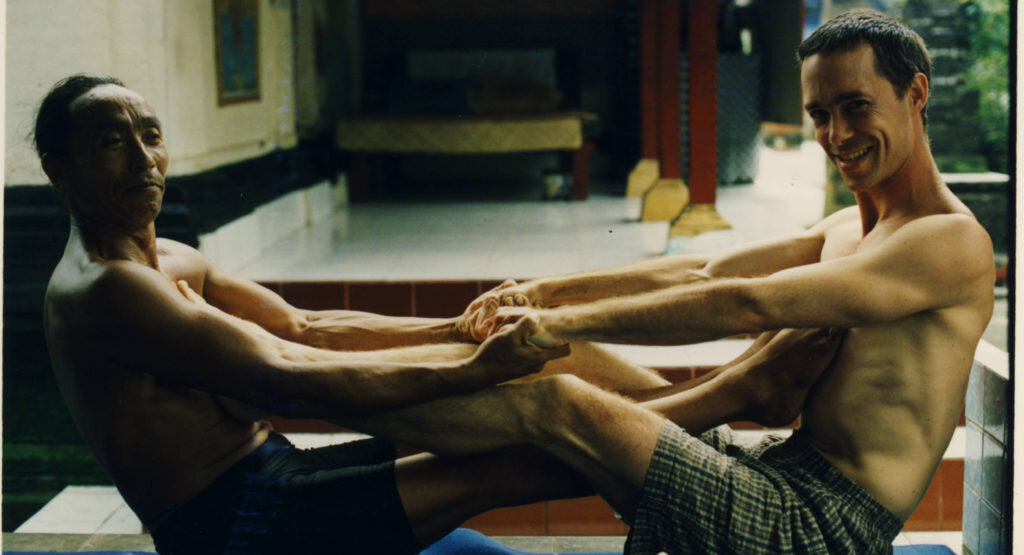
An Indonesian healer who believes he is possessed by the spirit of a leech and is seemingly able to cure the sick is the focus of director Dan McGuire’s feature documentary BALIAN (THE HEALER).

SFF audiences were first introduced to McGuire at SFF 2016 when he directed the short DUNK TANK CLOWNS. SFF program director Jeff Schmidt caught up with McGuire, ahead of his film’s screening at CinemaSalem on Sunday, March 31 at 5pm.

Jeff Schmidt: Most of the film takes place in Indonesia, how is it that you ended up traveling there and how did you come to meet Mangku Pogog?

Dan McGuire: I first went to Indonesia in 1984. I was 21 years old and I basically dropped out of college and embezzled my tuition. I bought one of those 6-stops-round-the-world plane tickets that cost $1000 back then. So I visited a bunch of countries but there was something about Indonesia that appealed to me. A couple of years later, after graduating from college, I got a grant to study shadow puppetry in Java, so I lived there for a while and learned Indonesian and some Javanese. I got in this routine of living in the USA and making money in the film industry then flying to Indonesia and staying several months until the money ran out. I did this on and off for ten years. But in 1996 I was living in the east village and saw a picture of Mangku Pogog on the cover of "Shaman's Drum" magazine. I read Robin Lim's article and was dumbstruck. I decided that I was going to make a documentary about him.

JS: Pogog is a lively, charismatic figure, but pretty unorthodox in his treatment of the afflicted and a bit of a wild man, did you have any hesitation in entering into a film project with him?

DM: I was afraid of saying something ignorant or dumb or coming off as a boorish western tourist. At the same time, (and it may seem cynical to note this) I knew I could get away with a lot because the Balinese are traditionally very welcoming to guests and deferential to westerners. It did come as a shock later in the shoot when I actually had some fear for my physical safety. I thought at several moments that Pogog might kick me out or kick my ass.

The longer I stayed with Pogog the more intense and fraught the situation became. But at the same time I was very much caught up in Pogog's reality distortion field. He never betrayed any insecurity or fear. He felt that his intentions were pure, the people in the village all believed him, and he felt that the spirit that provided his healing power would protect him. And it did, for over 30 years. I bought into it, to some extent, but there were alway a lot of nagging concerns.

I had a couple of questions going into the project. Was he was a fraud or a miracle worker? If he was a fraud, would I want to expose him? He's such a likable character. If he was a miracle worker, did I want promote him to an international audience, knowing how tourism, like power, corrupts?

Going into it, I wanted to know how he got away with all this outrageous behavior.  Indonesia was a military dictatorship at the time, and you could get arrested for having a copy of Playboy magazine. On top of that, traditional Balinese religious law has all kinds of taboos associated with "dirty" or "subuh" parts of the body - the feet, for example, or the genitals. A Balinese man won't walk under a clothesline because it might mean walking under a pair of woman't underwear! And Balinese culture is extremely coercive. Balinese people who break the traditional religious laws risk brutal ostracism. I wanted to know why Pogog was allowed to break all the rules.

BALIAN-1024x555.jpg

JS: This is a film you've been working on for 20 years, can you talk about the evolution of project? How much of the final film is actually the film you thought you would be making and how much of it changed over the years?

DM: I didn't really know what I was doing when I started. I had the idea to make a documentary about Pogog, and I imagined it might find an audience on the Discovery Channel or National Geographic - which turned out to be completely wrong! I was aware of Anthropological films in the academic world as well as the genre of personal documentary, but I hadn't studied it closely. And VICE News-style gonzo video journalism wasn't a thing yet.

I just showed up in Bali, hung out, and pointed my camera at anything that seemed interesting. When I got back to the states, I didn't really have a film. I had footage, and some scenes, but when I strung them together it wasn't a story. It was less than the sum of the parts. So I basically pushed the paint around for years, struggling to find a way to put it together so an audience would have an approximation of the experience of being with Pogog in Bali in 1996.

It was like a code that I couldn't crack. But I kept going back to Bali to get additional footage and try turn this "footage" into a Story. When I went back to Indonesia in 2014 and Pogog's son gave me a video of Pogog's cremation ceremony, I knew I had an ending. I know that sounds a bit callous, but there it is. The arc of the story became tangible, and I jumped back into the project.

I was very fortunate to meet Rachel Clark, who is a great editor and collaborator. She edited a number of great documentaries like FAMILY AFFAIR (SFF 2018 alum Chico Colvard BLACK MEMORABILIA) that tackles provocative material. This film never would have been made without Rachel.

I also took the project to graduate school at the Vermont College of Fine Arts. My first advisor was Nina Davenport, who is a master of the personal documentary. She was the person who forced me to put myself in the film and narrate the story, and she helped me get over that particular set of hurdles. I learned a lot from her. There were a lot of other people on the way who were helpful and supportive, my wife Injil Abu Bakar being number 1.

So the film ended up being very different than I originally intended. But the 30 year old who started the project was a different person than the  52 year old who finished it. That, along with Pogog's rise and fall, is one of the story arcs.

JS: A lot of the film is comprised of footage you shot long ago.  In revisiting the video tapes as you began editing the film with Rachel Clark, were you surprised by any of footage you had filmed, had you forgotten any of the time you had spent filming?

DM: I have a pretty good visual memory. I remember what I shoot, though sometimes the footage it is better or worse (for the purposes of the film) than I remembered. There were a couple of instances where we ran into a block in the edit room. Sometimes I would go back to my logs and transcripts and find a shot or a line of dialogue that solved the problem. There are moments in the footage I would like to forget - like when I asked a dumb or insensitive question.

Screen-shot-2019-03-26-at-1.07.02-PM.png

JS: As you've viewed the footage over the years, has your perception of what you filmed changed with the passage of time?

DM: I look at the footage and sometimes I'm quite pleased with myself. I think "That's a great shot". Other times I want to throttle the cameraman and yell "Why didn't you get other angles?" "Why didn't you hold that shot!". I certainly wish I could go back in time with some prime lenses and a 4k camera! I think this footage was taken at a moment in time just before iphones and instagram and gopros made digital images ubiquitous. I always thought that what Pogog was doing was important, though it took a long time to figure out why, and a longer time to figure out how to articulate my ideas, and even longer to sequence and contextualize the images and communicate these ideas to a general audience.

JS: It's not easy making a film at all, but it can be even more difficult when you must insert yourself into the narrative, as it can be hard to stay objective.  How do you walk the line between making a film for a wide audience, rather than ending up with a really expensive "home movie?"

DM: You need a good, simpatico editor. Someone who puts the audience first. I had cameraman's bias, which means I was in love with my own footage. As an editor, I could rough out scenes, but Rachel had the objectivity, taste and technical skills I lacked. Paradoxically, she sometimes seized on shots that meant nothing to me and say "This is amazing!". In some cases, I was jaded to the material and couldn't see its value. Rachel would explain that a particular shot had to go in because the audience needed it, perhaps as a release, or for pacing purposes, or whatever. It can be long process to emotionally and intellectually disengage from footage you've shot and see it objectively. A story has to unfold with a kind of momentum. If it doesn't move the story forward, cut it. What the cameraman experienced and photographed doesn't matter to an audience.

JS: If you could step back in a time machine and talk to your younger self about your film journey, what would you say?

DM: Value your own work enough to backup your footage and have a good archiving system!Some stories may take longer than you think. Find good collaborators. They are out there somewhere. Get feedback from smart people. Trust your instincts. Don't take no for an answer. Keep shooting. It's easier to ask for forgiveness than ask for permission.

Tickets are on sale now for BALIAN (THE HEALER) and can be purchased online.

Dan McGuire and Dr. Injil Abu Bakar will be present for a Q&A after the film screening.

Salem Film Fest screens ‘The Accountant of Auschwitz’

accountantofauschwitz_01.jpg

This article originally appeared in the Jewish Journal and is reprinted with permission.

by Shelley Sackett – March 22, 2019

In 2015, a frail 93-year-old former Nazi officer made international headlines when he went on trial in Germany, charged with complicity in the murder of 300,000 Jews at Auschwitz.

Nicknamed “The Accountant of Auschwitz,” Oskar Gröning was hardly the architect of the Holocaust. He was a 21-year-old soldier, following orders to collect and account for the items taken from Jewish prisoners as they were herded off trains and ultimately sent to their deaths.

Nonetheless, he was there, witnessing and abetting a system where 1.1 million people died at the notorious Nazi camp.

On the stand over 70 years later, with some who had survived Auschwitz in the courtroom as witnesses and testifiers, Gröning unemotionally described what he saw and what he did. He wanted to speak out as a witness because more than anything, he said, he wanted to debunk Holocaust deniers. On the other hand, as a participant, his hands were hardly clean. The issues raised were murky ethically and morally, asking questions with no clear answers.

Gröning was found guilty but died in March 2018, before he could begin the four-year prison sentence he was given.

If this sounds like it would make a great documentary film, director Matthew Shoychet and producer Ricki Gurwitz agreed. They teamed up to make the award-winning “The Accountant of Auschwitz,” which will screen at Peabody’s Black Box Theater (located inside the ArcWorks Community Art Center, 22 Foster St., Peabody) on Saturday, March 30, as part of the Salem Film Fest.

Shoychet, who grew up in a “pretty secular household” in Toronto, always was interested in Jewish subjects, but felt a special link through film. His grandfather showed him the 1959 film, “The Diary of Anne Frank,” which opened his 7-year-old eyes to the Holocaust.

Years later, “Schindler’s List” had a strong effect on him, Shoychet said. Although he is not a grandchild of survivors, many of his cousins and relatives were murdered. “I knew, as a Jew, I was connected,” he said.

Gurwitz attended Jewish day school in Toronto in a family she describes as a mix of conservative and reform. A “history nerd,” she was always interested in how her Jewish community has persevered through the centuries in the face of constant persecution.

Their paths crossed and they became friends in 2013 during an International March of the Living, the annual educational program that brings individuals from around the world to Poland and Israel to study the history of the Holocaust and to examine the roots of prejudice, intolerance, and hatred.

Shoychet took the trip again in 2015, where he met and befriended Holocaust survivor Bill Glied, who had to leave early to testify at the trial of another former Nazi in Germany.

“I didn’t know Nazi trials were even possible anymore,” Shoychet said.

By coincidence, Gurwitz, who was working as a TV producer, called Shoychet two months later to tell him about a story she just covered: the German trial of the former “Accountant of Auschwitz.” The two combined forces, created a pitch, and started filming as soon as they could.

They faced many challenges. German law does not allow filming inside courtrooms, so animations and graphics fill in the blanks. But the biggest challenge to Shoychet was for people not to dismiss the film as “just another Holocaust film.” His unique storytelling resists a chronological approach, instead interweaving side stories that take history and relate it to Gröning’s trial.

“There is a feeling of a race against time. Soon, Nazi perpetrators and Holocaust survivors will be gone,” Shoychet said.

For Gurwitz, making the film was a “life-altering experience. Witnessing a former SS officer testify in court is something I will never forget,” she said. “I want to challenge preconceived beliefs about justice, punishment, and culpability. There are two sides here, and I could argue both of them. I want audiences to explore the complexities surrounding this trial and ask questions about how we punish war crimes, who is responsible, and what is the statute of limitations.”

Salem Film Fest 2019 runs from Friday, March 29 to April 4.

Michael Sullivan Award for Documentary Journalism

Screen-shot-2019-03-21-at-11.44.41-PM.png

Salem Film Fest is proud to present the sixth annual Michael Sullivan Award for Documentary Journalism. This annual award is named in honor of FRONTLINE’s long-time Executive Producer of Special projects who passed away in 2013.

A trophy and $1,000 prize will be awarded to the filmmaker whose documentary most closely reflects the values Mike believed in: good filmmaking and good journalism.

This Year's Nominees

ALWAYS-IN-SEASON4-1024x555.png

ALWAYS IN SEASON directed by Jacqueline Olive

FALSE-CONFESSIONS1-1024x555.png

FALSE CONFESSIONS directed by Katrine Philp

FREE-MEN1-1024x555.png

FREE MEN directed by Anne-Frédérique Widmann

GRIT1-1024x555.png

GRIT directed by Sasha Friedlander and Cynthia Wade

Money-Stone-1024x555.jpg

THE MONEY STONE directed by Stuart Harmon

WHY-CANT-I-BE-ME.jpg

WHY CAN'T I BE ME? AROUND YOU directed by Harrod Blank

Previous Winners

2018 THE BLOOD IS AT THE DOORSTEP directed by  Erik Ljung
2017 AFTER SPRING directed by Ellen Martinez, Steph Ching
2016 INDIAN POINT directed by Ivy Meeropol
2015 DAVIDS AND GOLIATH directed by Leon Lee
2014 THE EXHIBITION directed by Damon Vignale

We want to thank all who have contributed to the Michael Sullivan Award. For more information, please contact Joe Cultrera at joe@salemfilmfest.com.

FILMMAKER SPOTLIGHT: Sarah Kerruish and Matt Maude, Directors of GENERAL MAGIC

GENERAL-MAGIC.png

GENERAL MAGIC
Massachusetts Premiere
National Park Service’s Salem Visitor Center
Sunday, March 31 - 12:15 p.m.

The hopes and dreams of a secretive failed startup in Silicon Valley ends up serving as the foundation for the smartphones that dominate our daily lives today in GENERAL MAGIC, directed by Sarah Kerruish and Matt Maude. Salem Film Fest program director Jeff Schmidt caught up with Kerruish and Maude ahead of the film’s Massachusetts Premiere at the National Park Service’s Salem Visitor Center on Sunday, March 31 at 12:15 p.m.

Jeff Schmidt: You both have really interesting backgrounds. Can you talk about your past projects and how you ended up as collaborators on GENERAL MAGIC?

Sarah Kerruish:In 2015, [executive producer] Mike Stern and I started to put out feelers to find a team of people who could devote their full, uninterrupted time to the project. One of the film’s co-producers, Ceri Tallett, suggested that I should meet Matt. I had no idea what kind of person would be walking through the door during our first meeting. I hadn’t made a film in over a decade. The film industry has changed hugely in that time, especially documentaries. We met at the Tate Modern in London and we hit into this immediate working chemistry. It’s that amazing—and it happens very rarely in my life—where it was just instantaneous. Trust established very quickly. We didn’t miss a beat. Matt is an extraordinary co-collaborator. We feel extremely lucky that it happened like that.

Matt Maude: We were, huh? The timing for me was amazing. I’d been making a lot of commercials for a couple of years and I felt like I was living in a constant whirlwind of nervous exhaustion. Nervous when you’re working: big budgets, big egos, short turnarounds. And nervous when you’re not–pitching yourself like crazy. I took a month off and went to New York to escape the phone ringing. At the time I felt like I could blink and it’d be 2025 and I’d have nothing but a series of 30-second clips to show for it. While I was in NYC I had one of those life changing meetings that seem to happen in New York, meeting a wonder of a woman called Ceri Talent who told me she just started work on a feature doc and after I’d asked an avalanche of questions about it, she suggested I meet with Sarah. We got into the same slipstream very quickly. When you’re directing something together you have to not only speak the same language but also know how the other person is going to say it. You have to be able to finish each other's...

SK:Texts?

MM:Yeah…

SK:Aside from the film, I have two other full-time jobs. During the day I’m the CSO of a med-tech startup. I’m also a mother to three teenagers. It’s a lot of juggling!

MM:I never feel busy when I’m sat next to Sarah. And I’m usually exhausted. I have no idea how you do it.

JS: Sarah, this film started many years ago for you. Can you talk about your involvement with the startup group General Magic and how that so many years later this film project came to be?

SK:Back in 1992 I travelled to Silicon Valley to film footage for a secretive startup called… General Magic!

I had no idea at the time what Silicon Valley was like. Why people dressed in T-shirts and board shorts. What drove people to work so late into the night. For colleagues to hang out all the time, whether at work or at home. I was blown away by every single person I met. How passionate, creative, and brilliant they were. For the next few years I returned back to the company again and again to film different sequences. The engineers, designers, and entrepreneurs who worked there, known as Magicians, became my friends, my family. I met my husband working there!

When General Magic went bankrupt I stayed in the Valley. Got involved in the tech industry. But it wasn’t until I went through my own catastrophic failure in business did I begin to think about the role of failure in future success. I wanted to specifically understand its role in bringing big ideas to life. I knew this experience wasn’t unique to me and in many ways is a central part of creation. I also wanted people to understand the different contexts for failure.

MM: It feels like you’ve been making this film for the last 23 years. It’s just the first 20 years you didn’t know you were.

SK:It certainly played around a lot in my head...Matt pushed the idea that there are a lot of problems to solve in the world and this is not just about the creation of one thing, but many things that affect our lives. It’s sort of a blueprint for how you affect change and bring ideas to life. Basically, how do we use this knowledge of technology and creativity to solve big, meaningful problems? We wanted to give this toolkit to the next generation and say look, this is what we’ve learned. Please take this and go. Go and make.

Screen-shot-2019-03-20-at-3.07.40-PM.png

JS: In a film that centers on technology, it would perhaps be expected for so much documentation to be available detailing the company and its inner workings, and yet the level of intimacy captured in all of the archival footage is a bit surprising as it's not staged corporate video. Can you talk about your approach in constructing a narrative around this historical snap shot in time?

MM:One of the great things about working with Sarah and all the experience she brings is that as soon as we started development she suggested that we script the documentary as if it’s a fiction film. It quickly became clear that the film was a three-act film. We built the documentary around that narrative spine.

SK:Right at the beginning we were told by everyone around us that we needed a narrator to guide the viewer and hold their hand through explanation or exposition. We felt that as soon as you put a voiceover in there, you’re dictating an opinion to the audience. Although some films do need it, the fear is that you rely on this ‘voice’ too much and it can be to the detriment of the characters. We didn’t want our audience to be spoon fed. We want them to be making their own judgements about the characters and the decisions they are making. It makes it much more challenging making the film, particularly in the editing. The structure has to be more thought out.

MM: We couldn’t have made the film without the archival footage and I think that’s what audiences have really responded to at other festivals. The footage allows audiences to really live at the company back in the 1990s, to really spend time living with the characters. Discovering as they do. There’s a wonder in that creation time. It’s infectious. It makes each of the characters relatable. They are brilliant, but ordinary people doing something extra to create extraordinary things, the products we all use today to live our lives.

JS: As a film that looks back at a moment in time you obviously spend a lot of time researching facts and determining who you should interview, etc. Was there anything that surprised you as you looked into the story of General Magic?

MM:Finding the archival footage was surprising! I describe it like a detective trying to solve a crime that never happened. This film could never have been made in the UK (where both Sarah and I are from). In the UK we’ve all got such long and boring, bloody, histories that no one really hangs on to belongings. In the US, with your relatively short history… you all hoard stuff in garages (am I pronouncing that right?) and huge storage containers. It means nothing gets chucked away. You need that when you’re making an archival documentary! We asked the people who worked at General Magic for all the photographs they had from the time. Once we received them we’d pour over them with a magnifying glass, looking for the faces and names of people in each of the photographs. Occasionally you’d see a stills camera in shot. Someone holding a Polaroid or 35mm. We’d get in contact with that person and ask for their photos. Then, magically one day, a photograph arrived with someone in the background holding a video camera. We found out who that person was and one sunny Monday morning, travelled to Hawaii to search in someone’s garage. We found 300 hours of VHS footage perfectly preserved in storage. In amongst that treasure troves was one tape that changed the film. An incredible 45 minutes of gold.

SK:That tape…

MM:Yeah...(pause)

SK: I still dream that we’ll find another tape out there.

MM:That’s not my dream, Sar… that’s a nightmare. We’ve finished the film!

SK: Have we?

MM:…Yes.

JS: What motivates you as filmmakers?

SK: Truth.

MM: I’m not sure it motivates me but can I talk about what inspires me as a filmmaker? It’s the best job on earth. I get to get up every day doing something I love. I get to meet people who I thought I’d never meet, go to places that I thought I’d never go to. It's a hobby we get paid to do. Every part of the filmmaking process is so addictive. You're by yourself in the editing room. Part of a massive team in the shooting. A witness with a record button. It’s stressful at times but even when it is the stress is enjoyable. Being part of filmmaking team is like surviving the Zombie apocalypse whilst building a Spaceship to go to the Moon. With gaffe tape. The skill base is so diverse. The ideas so crazy. Somehow you survive. You get to collaborate with people so capable and so emotionally intuitive. When you’re around people with that amount of empathy, confidence and intuition, it just rubs off on you. Or I hope it does.... That’s what motivates me.

SK: What he said. But truth mostly.

JS: What do you hope people will take away from GENERAL MAGIC?

SK: I hope it inspires people to pursue their passions. To look again at the failures in their lives and question whether they were actually really failures.

MM: I hope we challenge apathy. I hope that the film inspires people to pursue their own dreams. Or to re-think them after it may have previously failed. So much of success is based on timing. Was the market ready for it? Were you? Could it work now with the lessons you’ve learnt? We’re all capable of creating massive change. God knows the world needs it. It’s up to us all. We hope you enjoy the film!