Filmmaker Spotlight: Nadine Pequeneza, Director of LAST OF THE RIGHT WHALES

LAST OF THE RIGHT WHALES Director Nadine Pequeneza - Image courtesy of Dan Abravomici Photography

North Atlantic right whales are dying faster than they can reproduce. With less than 350 remaining, these great mammals rarely die of natural causes. Instead they are run over by ships or suffer lethal injuries from fishing gear. With unprecedented access to film the migration from their calving ground off the coast of Florida, to Cape Cod Bay and onward north to their shifting feeding grounds in the Gulf of St. Lawrence, LAST OF THE RIGHT WHALES brings a message of hope about a great creature on the brink of extinction. We bear witness to their struggle and see the promise of new fishing techniques that bring hope for their survival.

LAST OF THE RIGHT WHALES screens during the in-person portion of Salem Film Fest on Saturday, March 26 at 11am at the Peabody Essex Museum (PEM) and streams during the virtual festival, Monday, March 28 - Sunday, April 3. SFF Program Director Jeff Schmidt caught up with Director Nadine Pequeneza ahead of the festival.

Jeff Schmidt: How did you become aware of the plight of North Atlantic right whales and when did you decide that you needed to make a film about them?

Nadine Pequeneza: It was the multiple deaths, 17 in a few short months, that grabbed my attention in 2017. At the time I had never heard of a North Atlantic right whale. When I learned it was us who were unintentionally killing them, I knew I had to tell their story. Living in cities as most of us do, often many kilometers from the ocean, it’s not surprising that we are disconnected from the marine world. But people only need to see what is happening to the North Atlantic right whale to feel a sense of responsibility for their plight.

JS: The whale imagery in the film is incredible. How did you manage to capture such stunning footage of these animals?

NP: Wildlife films are always challenging to make.  The footage is even more difficult to capture when the animal is critically endangered and inhabits the entire North Atlantic coast from Florida to the Gulf of St Lawrence – ‘needle in a haystack’ was said more than once during production. With less than 350 remaining, right whales are rightfully protected.  In order to approach the whales we required multiple, hard to get federal permits. We had to rely on aerial cinematography because diving with North Atlantic right whales is prohibited, which meant waiting for behaviours that happen on the surface of the ocean – mom’s nursing, skim feeding, social groups. All these stars had to align in order for us to capture the incredible images featured in Last of the Right Whales.

North Atlantic right whale fluke in the Gulf of St. Lawrence at sunset. Image courtesy of HitPlay Productions

JS: In a film like this, finding characters isn't enough as you also need to research the science and figure out how to present it on screen in a compelling way, how did you approach this?

NP: Scientists have been studying these whales since the ‘30s. They’ve been cataloging them and naming them and following their life history. They’re not just whales. They’re whales with family – with calves and grand-calves and they actually have documented those family lines and have seen similarities in where they go to calve and raise their young, and even where they might choose to feed. The scientists have such a close relationship with these whales; I wanted to convey that in the film and for the audience to also have that deep connection.

The film introduces viewers to heroes who have dedicated their time and sometimes their lives to the protection of the North Atlantic right whale. It also introduces us to two individual whales – Snow Cone and her new born calf. Over the course of the film, we see the close bond that forms between this mom-calf pair, a bond that is ultimately destroyed due to human activity. It’s next to impossible to watch their journey and not feel empathy for these whales. Oftentimes the way we connect with animals that are not people is to give them human characteristics. That was a central goal for me – to show people those human characteristics that all animals share. The bond between mother and child and mom and calf; that’s something that all mammals share.

JS: As a filmmaker, were there any moments during filming that stand out for you as particularly revelatory?

NP:: We captured something that has never been filmed before or even witnessed by scientists who have been studying this species for decades – a fresh entanglement in fishing gear.  We know it was recent because scientists had photographed the same North Atlantic right whale gear free just four hours earlier.  What we witnessed was the brutality of a fishing gear entanglement. 

The public hears reports and sees images of entangled whales often, 85% of the right whale population has been entangled, but seeing the immediate aftermath of an entanglement demonstrates the trauma of this interaction.  For six hours we filmed 5-year-old male, catalog #4615, struggling to free himself from a rope caught in his baleen, wrapped over the top of his head, and weighted on the other end by what was presumably a trap. 4615’s struggle to free himself is difficult, but critical to watch.  It is one of  the most memorable things I’ve ever filmed over the course of my 20-years making documentary films.

Wildlife Photographer Nick Hawkins documenting the necropsy of North Atlantic right whale Punctuation (#1281) on Miscou Island, NB. Image courtesy of HitPlay Productions

JS: What do you hope audiences will take away from your film and is there anything you would like to encourage them to do?

NP: First and foremost, I hope the audience will come go away with a new found love for North Atlantic right whales. I hope they will feel connected to them. I hope that they will feel empathy for Snow Cone and her calves – the one that died and the new one that’s miraculously just been born despite the mom coping with an ongoing entanglement.

I also hope that they will see solutions. That they will see that there is a possibility for us to correct our behaviours in a way that makes coexistence possible. The commitment and determination of the people featured in the film is inspiring. There’s a lot of fabulous work going on with engineers and fishers trying to develop safer ways of fishing. There’s been a lot of testing happening over the last four or five years. Some of these systems have been used successfully in other parts of the world for many years already. I’m very encouraged by the fact that people have been moving in this direction in Canada and the U.S.

The collaboration between the film’s impact partners who have joined forces to protect the North Atlantic right whale is powerful – IFAW, The Pew Charitable Trusts, Sierra Club Canada Foundation, Canadian Wildlife Federation, Canadian Whale Institute and Oceans North. People’s reaction to the film and their desire to get involved is palpable.I am hopeful that our species can do the right thing for these whales, for ourselves and the planet

LAST OF THE RIGHT WHALES screens in-person - Saturday, March 26 at 11am at the Peabody Essex Musem (PEM) - and streams Monday, March 28 - Sunday, April 3. Purchase tickets to the film here.
Filmmaker Spotlight: Regan Linton and Brian Malone, Co-Directors of IMPERFECT

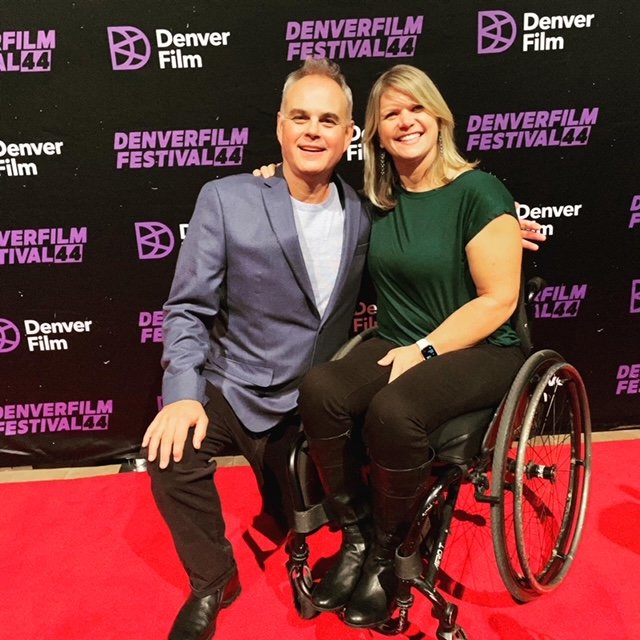
IMPERFECT Co-Directors Brian Malone and Regan Linton

A theater troupe with all types of disabilities – from spinal cord injury to Parkinson’s Disease, cerebral palsy to autism – attempts to stage an unprecedented version of Kander, Ebb, and Fosse’s beloved musical Chicago. Capturing the raw, honest stories of these talented actors both inside their production process and their everyday lives, the film reveals a rare behind-the-scenes look at artists pushing to succeed, no matter the obstacles. IMPERFECT crushes stale notions of disability and affirms the human condition - in all its many forms.

IMPERFECT screens during the in-person portion of Salem Film Fest on Saturday, March 26 at 7pm at Endicott College’s Rose Theater in the Manninen Center for the Arts and streams during the virtual festival, Monday, March 28 - Sunday, April 3. SFF Program Director Jeff Schmidt caught up with Co-Directors Regan Linton and Brian Malone ahead of the film’s East Coast premiere.

Jeff Schmidt: What is the origin story of IMPERFECT - how did you meet each other?

Regan Linton: Brian was doing some educational videos for Craig Hospital, where I did my spinal cord injury rehab in Colorado after my injury. He heard I was an actor and invited me to do voice-over for the videos. We got to talking about Phamaly and my desire to make a documentary, and suddenly we found ourselves saying, let’s do this!

Brian Malone: We both thought there was a great untold story to tell around the Phamaly Theatre Company and its actors. I went to one of their productions... and that was it. Sold.

Megan, Mark and Erin

JS: Tell us about your collaboration process in making the film, as it is my understanding that this is the first time Regan has worked in the film medium.

RL: Yes, ironically, I started my college career in film production at USC. But a professor said, “You’ll never be a great filmmaker if you don’t have a good story to tell.” So I decided to leave film studies and center in the humanities, where I felt I could explore the world for good stories. A year later I was paralyzed, and then didn’t think that any artistic discipline - be it Theatre, film, etc - would be accessible to me. After I found Phamaly and got back into theatre, I still had the bug to make a film. I created a couple of smaller on camera projects, including a webseries with Phamaly. But I still wanted to do a larger project. I feel like I am adept at the aesthetics of storytelling and in film and theatre, but I needed a great “mechanic” to execute it. So Brian and I made a great team, as his technical experience complemented my awareness of the narrative. Our collaboration was a great example of the fruits of interdependence and contributing different skill sets.

JS: Brian, you have a lot of prior experience working in production, had you worked on any theater related projects before?

BM: IMPERFECT makes documentary number 23 for me. I had not done any theater-related work in film before. But, because of my sister, Beth being in the center of music theater, I've been around it in the outer orbit over the years. My closest theater was when I was shooting on my mom's VHS camcorder in college. I would steal Beth's music theater friends to make really bad horror movies. Inevitably, someone would end up getting stabbed by a pitchfork or an ax in the skull, wrapped around some flimsy plot with made up dialog. It was great fun!

I will say that even though this was Regan's first film effort, she already had a very high level of storytelling talent built in, from her theater experience, both acting and in directing plays. So, for us, the process was an easy transition. There were some mechanics along the way that are specific to documentary filmmaking that Regan had to learn along the way... but her instincts in mining out the value in our stories and our characters were spot on.

Adam sings

JS: Regan, you are actually featured in the film, serving at the time of filming as the Artistic Director of Phamaly Theatre Company. Can you talk about your personal connection to the story and how you felt about it while being filmed and then further into the filmmaking process?

RL: As a person with a visible disability, you learn to absorb the gaze of others all the time. I also developed an extraordinary amount of self awareness as I was completely re-learning everything about my body and how I would live in this world with a new identity. And being an actor enhanced my ability to do that in my life. So I felt pretty comfortable with just doing my thing while the camera was on, and I really had to focus on the tasks at hand with the production. Post production was the more challenging thing. At first I really didn’t want to be a subject of the film. But at a certain point I realized that the character of Regan was important to the story. I had to separate myself as the director from Regan the subject, and just think of what parts of her story we’re most supportive to the film.

JS: Brian, what were some of the challenges for you in making the film?

BM: Editing. We had so much good material, deciding what to keep and what to cut was, at time, painstaking. In the end, we really just had to ask ourselves about the content and ask if it helped propel the story forward or not. We joke that we could have made a miniseries out of the amount of footage we have.

Lenoard

JS: What do you hope audiences will take away from IMPERFECT?

RL: I hope it’s HUMANIZES people with disabilities, especially for those who don’t have a direct connection to disability in their personal lives. For folks with disabilities, life is just life, even if the spectrum of our daily experiences is higher stakes. But rather than be seen as humorous, joyful, compelling, our lives are often treated by nondisabled folks with fear, misunderstanding, and distance. Hopefully folks leave with a belief in what is possible, even when you think things are impossible. And with a desire to engage more deeply with folks who have disabilities…cuz otherwise you’re missing out!

IMPERFECT screens in-person - Saturday, March 26 at 7pm at Endicott College’s Rose Theater in the Manninen Center for the Arts - and streams Monday, March 28 - Sunday, April 3. Purchase tickets to the film here.

If you or a companion require wheelchair seating at our in-person screening, please email us at ticketing@salemfilmfest.com

Filmmaker Spotlight: Marq Evans, Director of CLAYDREAM

Will Vinton in the studio - Image Courtesy of Oscilloscope Films

A modern day Walt Disney, Will Vinton picked up a ball of clay and saw a world of potential. Known as the “Father of Claymation,” Vinton revolutionized the animation business during the 1970s, ’80s, and ’90s - along the way winning an Academy Award and pop culture recognition after creating a series of commercials featuring the California Raisins. But after 30 years laboring in relative obscurity as the unheralded king of clay, Will Vinton’s carefully sculpted American dream comes crumbling down at the hands of an outside investor… Nike’s Phil Knight.

CLAYDREAM kicks off Salem Film Fest as the festival’s opening night film on Thursday, March 24 at 7:30pm at Cinema Salem. SFF Program Director Jeff Schmidt caught up with Director Marq Evans ahead of the film’s Massachusetts premiere.

Jeff Schmidt: What is your background as a filmmaker and what attracted you to filming CLAYDREAM?

Marq Evans: I came into filmmaking a little later in my career. I wasn’t someone that grew up wanting to be a filmmaker. I wanted to be a baseball player but that didn’t pan out. After college I got a job in sales and did that for 7 years. But all the while my older brother, Kevin Noland, had been in LA and in the film industry and we started talking about working together on creative projects. When the earthquake hit Haiti in 2010 we went down there and made a documentary (which we’re actually still making to this day). That project was kind of my film school and really got me into making documentaries. Not long after that I made my first feature, THE GLAMOUR & THE SQUALOR (recently named one of the Top 20 Music Documentaries of all time by American Songwriter) and it was towards the end of making that when I discovered the story of Will Vinton. I knew of Will and I grew up with many of his characters. But it wasn’t until reading an article about the rise and fall of his company when I realized there was a big story here that would make for a great documentary. I remember reaching out to him that day when I read the article. He wasn’t too interested in doing a documentary at first but we kept in touch and after about six months I finally won him over. After that, it was such a pleasure working and getting to know him.

Filming CLAYDREAM - Image Courtesy of Oscilloscope Films

JS: I don't think a lot of people realize the legal drama that surrounded Will and his animation company. While your film goes into the creative aspects of his career and those California Raisins that many of us remember, the business aspects of his journey are really fascinating. Did you know from the outset that this would be a significant part of the film?

ME: I knew it would be a big part of the film, but I didn’t know how that part of the story would be told. Looking back, I still don’t really know how I would have told it had I not gotten my hands on the deposition footage from his court case against Phil Knight of Nike. I didn’t get that footage until about 2 years into making the film. In fact, I didn’t even know it existed! Will just casually asked me one day, “Did you ever get the deposition?” I thought he meant there was a written transcript of it but he clarified, “No, we shot the whole thing.” He actually hired a film crew to shoot the deposition. It was all on old beta tapes so we had to get them transferred, but when I finally get them from the lab I knew we had something really great.

Will Vinton and Marq Evans - Image Courtesy of Marq Evans

JS: What surprised you most during the production of the film?

ME: Just how down to earth and normal Will was. He was just a regular guy, not eccentric or hard to deal with. Just a guy that was fun to hang around. There were many days I’d show up at his house and we might have had a loose plan to shoot some things, but I ended up leaving the camera in the car and we’d just hang out. He’d take me out on his boat. I just really liked being around him.

JS: Taking a film on the festival circuit the past 2 years has been a challenge for filmmakers, what has the experience been like for you? We're excited to host you in Salem on opening night!

ME: There hasn’t been much of a circuit for the film! It premiered at Tribeca last year but it was totally virtual. On the same day of the virtual premiere, I was able to host an in person screening at the arthouse theater where I live and had a couple hundred friends and family and people from the community out. So that was fun and felt like a premiere. And then we had the international premiere at the Annecy Film Festival in France, which was a lot of fun. That was lucky because we got to do that in a tiny window when things had opened back up. There have been a few other small in person screenings, and a ton of virtual screenings and Q&As. I’m really looking forward to screening the film for an audience in Salem and honored that it is playing on opening night.

CLAYDREAM screens in-person only as the opening night film of Salem Film Fest - Thursday, March 24 at 7:30pm at Cinema Salem. Purchase tickets to the film here.

BLOG BITE: Radovan Síbrt, Director of TWO ROADS

Two_Roads_2.jpg

The Jedlicka Institute music class, currently known as The Tap Tap band, was founded 21 years ago to give people with handicaps an opportunity to succeed outside of their daily institutional care. Its members, all of whom have degenerative disabilities, want to enjoy every minute of life and to taste fame as rock stars. The Tap Tap is a vivacious and uplifting example of how some of life's most difficult obstacles can be overcome in unorthodox ways.

SFF Selection Committee Member Kereth Cowe-Spigai, caught up with TWO ROADS Director Radovan Síbrt ahead of the film's US Premiere.

Kereth Cowe-Spigai: Filmmaking can involve periods of travel and being away from home. When you're on the road shooting, what do you miss most about home? Conversely, when you are at home, what do you miss most about being on the road shooting?

Radovan Síbrt: I do not really travel that much anymore. It is more being mentally away. Once you start working (and I believe it is not only filmmaking, it is any creative activity), you get distant from the world around. And I do not think you really realize it. And in that stage of mind I do not really miss anything. And when I am home, I am so happy to be with my family that I do not really miss anything about being on shooting.

Radovan.png

KC-S: Think back to when you embarked on your first film project. If you could give your past self one piece of advice about film, what would it be?

RS: You have to be very opened to what you are seeing in front of you. Come with a concept in your head but be ready to change it while shooting. Be ready for a “documentary miracle”. And do not be lazy!

Two_Roads_3.jpg

KC-S: This question is optional and totally off-topic: A fun way to get to know a person is to eat their favorite food. What's yours? Share a recipe if you feel so inclined!

RS: I am a hummus lover. And I would never dare to make it myself. I would probably stop being a hummus lover after that.

TWO ROADS streams as part of Salem Film Fest from Friday, March 19 - Sunday, March 28. Tickets to view the film can be purchased here.

FILMMAKER SPOTLIGHT: Lulu Wei, Director of THERE'S NO PLACE LIKE THIS PLACE, ANYPLACE

TNP_DAVID MIRVISH updated resized 1.jpg

Honest Ed’s discount store served as a beacon in Toronto for a diverse community and recent immigrants for nearly 70 years. When a luxury developer buys the entire block — small businesses, gallery owners and artists must vacate. The transformation of this iconic community is told through the stories of its displaced residents as they reconcile their history with inevitable change, all while facing the biggest housing crisis Canada has ever seen.

SFF Program Director Jeff Schmidt caught up with THERE'S NO PLACE LIKE THIS PLACE, ANYPLACE Director Lulu Wei to talk about the origins of the film and her own role within it.

lulu HE.jpg

Jeff Schmidt: Your own story is intertwined with what we see on screen in your film. At what point did you realize that you should be filming what was unfolding?

Lulu Wei: I think it's when we found out about the closing date for the stores on Markham street and Honest Ed's is when I realized that I should be filming what was unfolding. As they say, you don't know what you have until it's gone and I think that realizing everything would be gone for good, really pushed me to start documenting what was happening in the neighbourhood. I think I was compelled by wanting to document how magical the block was for future generations since they wouldn't get to see how special the block was first hand.

JS: Some filmmakers like placing themselves in a story, while others would prefer to stay behind the camera. Ultimately you chose to appear in the film, can you talk about that decision?
LW: It was a really difficult decision to put myself and Kathleen in the film, it's hard to watch yourself and your relationship on screen. I think part of the reason I ended up being in the film was how I was shooting it and there was a sense of intimacy and my presence in a lot of the verite footage. When we found out that our landlords had decided to sell our apartment to the developers, I realized that the redevelopment would be directly affecting us. I felt that we were a representation of most people I know, a generation that's unable to buy a place since real estate is so expensive in Toronto, and constantly facing rental uncertainty.

IMG_5612.jpg

JS: Often times in a Q&A, we end up asking filmmakers what has happened to the characters since filming ended... in this case, you're one of the characters! What have you been up to since filming completed?

LW: Since we finished the film, we've been lucky to have had a good digital festival run and are still figuring out the rest of the rollout for the film. I'd love to have an in-person screening sometime, since I've never been able to watch the film in a theatre or with an audience and I'd love to see Gabor and Itah on stage for a Q&A. I'm in pre-production on a documentary feature that I'm directing that will hopefully be finished next year and I'm shooting on a few other projects for other productions. I've been able to visit Gabor outdoors, a few times since the pandemic began and we're working on a way for him to sell his artwork. Itah and A Different Booklist are fundraising to renovate and move into their new space and people can visit https://adbcc.org/ to help support their journey!

THERE'S NO PLACE LIKE THIS PLACE, ANYPLACE streams as part of Salem Film Fest from Friday, March 19 - Sunday, March 28. Tickets to view the film can be purchased here.