Filmmaker Spotlight: Catching up with SFF Alum Jay Cheel

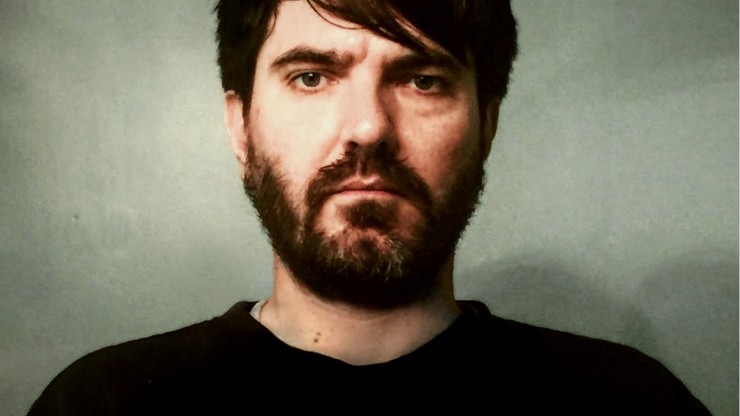
Jay Cheels' film BEAUTY DAY was shown at SFF 2013 and this year he returns to Salem Film Fest with HOW TO BUILD A TIME MACHINE.  SFF program director Jeff Schmidt caught up with the Canadian based filmmaker to talk about his work as a documentary filmmaker.

-1

JS: How did you first get into filmmaking?

JC: I was a big movie watcher as a kid, so I was drawn to filmmaking at an early age. That led to making short films throughout high school and eventually film school. After a brief stint at a video game company -- where I filmed behind the scenes documentaries -- I decided to make my first film, BEAUTY DAY. I was offered support from Primitive Entertainment, and I've been working professionally in film and television since.

JS: We were first introduced to you when we screened BEAUTY DAY at SFF 2012.  Can you talk about filming that documentary and update us on what Ralph is up to these days?

JC: Filming BEAUTY DAY was one of the best times of my life. It was a summer of hanging out with Ralph and filming him coming up with crazy stunts. It was great having the opportunity to experience that first hand. Since then, Ralph's continued to grow his bike business and I keep in touch with him and see him as much as I can.

Subject: Beauty Day information On 2011-03-14, at 4:00 PM, Kavita Gill wrote: Hi Peter, Here is part 2 of the pictures. Best, Kavita Gill Primitive Entertainment 585 Bloor St West, Suite 300 Toronto ON, M6G 1K5 T: 416-531-3087 x 338 F: 416-531-4961 www.primitive.net BD_PIC7.jpg BD_PIC8.jpg BD_PIC9.jpg BD_PIC10.jpg BD_PIC11.jpg BD_PIC12.jpg On 2011-03-14, at 12:14 PM, Kevin McMahon wrote: Hi Kavita Can you please resize and send out these BD photos ASAP? thanks Kevin Kevin McMahon Primitive Entertainment 585 Bloor Street West Toronto ON M6G 1K5 Canada 416 531-3087 ext 333 www.primitive.net http://waterlife.nfb.ca Begin forwarded message: From: PETER GODDARD peter_g1@sympatico.ca Date: March 14, 2011 12:12:15 PM EDT To: Kevin Primitive kevin@primitive.net Subject: RE: Beauty Day information Kevin: If it is not too much trouble, would you please resend the images to photodesk@thestar.ca in jpeg format 300 dpi. Thanks. Also: Do you have hard dates for the May release and the Sept. showings? Thanks, Peter Goddard From: kevin@primitive.net Subject: Subject: Beauty Day information Date: Fri, 11 Mar 2011 18:03:35 -0500 To: peter_g1@sympatico.ca Hi Peter I have attached the text from the press kit in a Word document. Yes, Beauty Day is going to be released in movie theatres in Toronto and across Canada in May by filmswelike, Ron Mann's distribution company. In September, it will be shown on television on The Movie Network and Movie Central. Thanks again for taking the time to check it out all the best Kevin Kevin McMahon Primitive Entertainment 585 Bloor Street West Toronto ON M6G 1K5 Canada 416 531-3087 ext 333 www.primitive.net http://waterlife.nfb.ca On 2011-03-11, at 5:17 PM, PETER GODDARD wrote: Thanks Kevin: I've got the images. Is their any TO window where the piece will be show - on Bravo, or anywhere? Also would it be possible to send to me only the textual elements in the PDF file? Thanks Peter Goddard Subject: Subject: Beauty Day information From: kevi

JS: This year, we'll be showing your most recent film, HOW TO BUILD A TIME MACHINE.  Can you talk about how this film came to be and how you met the two men that are at the center of the documentary?

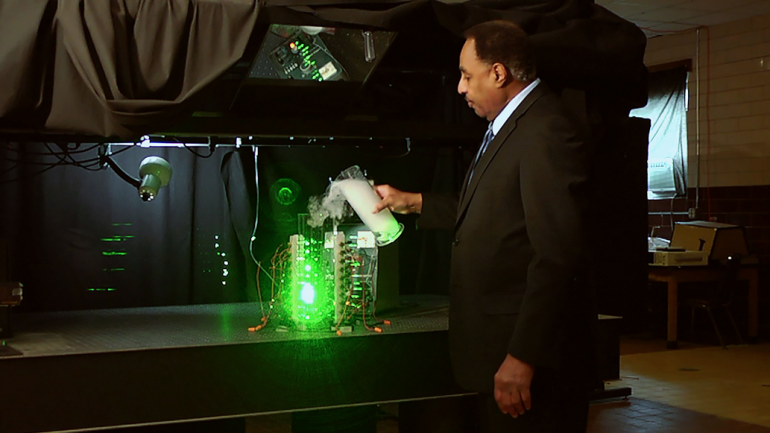
JC: HOW TO BUILD A TIME MACHINE started as a short film which I made in film school. That film was called OBSESSED AND SCIENTIFIC, and feature Rob Niosi in the early days of building his time machine replica prop (at that point he was three years in).  I stayed in touch with Rob, and years later felt it was worth revisiting the subject matter on a bigger scale. The film started as one thing, and eventually morphed into what it is now. I think the film ended up being a little more sincere, sentimental, and emotional than I'd originally expected. I'm glad to see it's really resonating with people.

JS: If you could go back in time to talk to yourself when you were beginning as a filmmaker what would you tell yourself?  Or would that disrupt the time-space continuum too much that you might just pass yourself an anonymous note?  Ok, this is just sounding strange... help!

JC: I think I would simply encourage myself to be more aggressive in my pursuits and get moving sooner, because time flies!

How to Build A Time Machine

JS: Do you believe traveling back in time will ever be possible?

JC: I think Ron Mallett (featured in HOW TO BUILD A TIME MACHINE) makes a convincing argument that suggests it might be possible. I'll go with his answer.

JS: As a documentary filmmaker, what motivates and inspires you?

JC: I just like the idea of telling great stories which feature interesting and unique people. I've been lucky enough to form long lasting relationships with the people in my films, so that's been the best part of the process.

JS: As we celebrate 10 years of Salem Film Fest, what do you think is the importance of documentary film in our daily lives and society?

JC: There are many different types of documentaries with varying goals. For me, I'm drawn to films that entertain, enlighten, and push the boundaries of cinematic documentary storytelling.

HOW TO BUILD A TIME MACHINE screened on Tuesday, March 7 at 8pm at CinemaSalem

Filmmaker Spotlight: Estephan Wagner LES SAUTEURS (THOSE WHO JUMP)

Les Sauteurs2

In LES SAUTEURS (THOSE WHO JUMP), over one thousand African migrants live in a makeshift camp in the forest overlooking Melilla, from where they repeatedly try to jump the high-security border fences that separate Africa from Europe. When filmmakers hand a camera over to Malian emigrant, Abou Bakar Sidibé, and step away, the result is a uniquely authentic inside look at a parallel world.

Salem Film Fest program director Jeff Schmidt caught up with Estephan Wagner, one of the co-directors of the film and the editor.

JS: LES SAUTEURS (THOSE WHO JUMP) is rather timely and quite unique in its vantage point regarding the difficulties faced by refugees, how did the film come about?

EW: In 2014, Moritz and I read a lot about the situation in Melilla, where THOSE WHO JUMP takes place.  We were really emotionally touched.  On the the one hand shocked by the border itself, the institutionalized violence that lies in this border that we actually all pay for with our taxes in Europe.  On the other hand we were really impressed by the strength and the resilience of these young men on the other side of the border, that even when people die or get badly injured - it looks like they just clench their teeth and keep on trying again and again and again.  That for us really deserved some sort of recognition and we felt the urge to make a film about them.

Screen shot 2017-03-06 at 1.16.49 PM

We very quickly realized that there are many films out there about refugees and also at this very place there have been films before, so we were wondering what we could add to the theme, to the place and even more so to filmmaking by doing this film.  We discussed that the discourse about refugees always seemed to be the same, which was out of a position of power - we were talking about them.  In the best of the cases, we were talking with them.  But very rarely, if ever, were they talking to us.  So we decided to give away power, to engage in, let's say, a game of empowerment and democratization.  We gave away the camera, decided not to shoot a single frame, to allow them - later on it became Abu -  to shoot what they felt was important.  And to shoot it in the way he wanted to shoot it, and to make aesthetic choices.

Les Sauteurs

Later on we realized, actually by doing this, he was more than a character and the cinematographer, he was making aesthetic choices, he was making narration choices and that in our eyes made him really into a co-director.  In the course of the editing, we decided to credit him just as us, and so we have three co-directors now.  And that also has practical repercussions, we for example share all of the income, we share all of the prizes and any prize money, and we are very happy that we made that choice.

JS: As a filmmaker, the experimental, almost found footage-like nature of the film must have been both a challenge and quite a rewarding experience as an editor, once you were able to figure out how to tell the story. 

EW: Yes!!  I'm one of the three directors but I am the film's sole editor. It was a challenge, obviously it was - the footage was fragmented, there were great things about the footage about the intuitiveness of the footage and the intimacy - but there were big challenges.  It was very fragmented, very often scenes would not have a beginning or not have an end or the camera would pan away as something important was happening.  There was very little coverage of scenes as you might expect, so there was a lot of work to be done there.  At the same time, I reminded myself that the very strength of the footage was in this amateur like, found footage like quality and I always wanted to find the balance between how you shape scenes in a way that they work, but also how do you keep this strength and authenticity that they have so that it gets transmitted to the audience.  I think we achieved that very well.

JS: What was your workflow process with Abou Bakar Sidibé, who not only serves as our guide, but also the film's cinematographer?  I'm guessing you might have been holding your breath awaiting the first batch of footage to see if the collaboration was going to work?

EW: Actually, funnily enough no.  At the beginning we were really testing, we didn't know that he was going to be our man.  At the beginning we gave out three cameras, but quite early on we realized that Abu was going to be the main character.  And that was partly because we got along really well with him, which was very crucial, there was an element of mutual trust, but also in his footage there was something special, there was some sort of sensitivity that transcended his lack of experience.  Obviously he had no training whatsoever as a cinematographer or filmmaker, so the images he shot at the beginning were vertical, like shooting with your mobile phone.  So we had to start from scratch really.  But on the other hand he had something authentic he brought to it and he had a joy in filming, which developed really into a love for filming, which is part of the film now, this process of falling in love with it.  But as the project evolved we didn't really hold our breath each time, we knew we were either going there to pick up images or someone from Malia, a fixer, was going to send us images.  Those were really enormously tense and beautiful moments, as we were sitting in our nice cozy editing room and these folders would be slowly ticking in through the internet.  It felt like being a small child on Christmas eve and you had to wait for the moment where you could unwrap presents.  We were not present during the shooting, that was one of our rules, as we didn't want to interfere.  Very often we didn't know what to expect and we wouldn't understand the images that were coming in,  we would need to watch 10,15-20 clips until we finally realized, "oh wait a second, they are hiding, right" or that the police were raiding the camp, so they were really strong scenes that unfolded in this very bizarre way in front of our eyes.

JS: As a documentary filmmaker, what motivates and inspires you?

EW: Humanity, in all of its ups and downs, and pros and cons, humanity/real life is what motivates me.  I've never been interested in making fiction films, though I like fiction films, I watch them, but I think my time is much too precious to invent stories when life is so full of incredibly, strong, beautiful and important stories. Humanity inspires me.

JS: As we celebrate 10 years of Salem Film Fest, what do you think is the importance of documentary film in our daily lives and society?

EW: It's about inspiring people and diversifying our social conversation.  We seem to get more and more trapped in these small facebook-like groups, where everybody is thinking the same way as we do and then there are those out there that think differently and that are almost our enemies.  For them, it's obviously the same way.  Documentary films I think can go beyond those closed circles and open up our minds and bring nuances into this very complex world.  As filmmakers, I really think we have a responsibility there, to go beyond the easy elements of entertainment - not that entertainment is bad, it's something good to have in your films as it can help audiences engage, but it can't be the goal, it has  to be a means to get your goal out there.  I hope that documentary films can impregnate our society and help us to live a tiny bit more aware.

LES SAUTEURS (THOSE WHO JUMP) screened on Monday, March 6 at 6pm at CinemaSalem

Fighting for Freedom of Speech: DATELINE-SAIGON

unspecified

By Olga Nazarenko

“But I mean, they’re impossible, aren't they?” asks John. F Kennedy inquisitively about the press reporting news from the war in Vietnam

.“Terribly difficult. Halberstam and Sheehan are the ones that are just causing a lot of trouble. They’re allowing an idealistic philosophy to color all their writing,” Secretary of Defense Robert McNamara replies to the 35th President of the United States haughtily.

This conversation from October 1963, captured in a declassified White House tape recently released to the JFK Library, is incorporated into the documentary film DATELINE-SAIGON. It illustrates the hardships that reporters faced to honestly depict the truth of what was happening during the Vietnam War, even when the government opposed it.

The film DATELINE-SAIGON, produced and directed by Thomas Herman, chronicles the stories of five young Pulitzer-Prize winning journalists who challenged the status quo in media and went against the grain —and government, by honestly reporting the war in Vietnam. The five men represented in the film include David Halberstam, Neil Sheehan, Malcolm Browne, Peter Arnett, and Horst Faas.

David Halberstam was a 29-year-old reporter covering stories on the civil rights struggle in Mississippi when the New York Times offered him the job as Saigon correspondent. As a man who desired a ticket to history by being in the center of action, he jumped on the opportunity. Neil Sheehan, who was in his mid-20s, was the youngest of the five journalists featured in the film DATELINE-SAIGON. He was sent to Saigon within weeks of joining United Press International. Although originally planning to be a chemist, Malcolm Browne switched careers to journalism after being assigned to write articles while serving in the U.S. Army in Korea. At the age of 30 he was recruited to join the Saigon Associated Press office from Baltimore, where he had been working as a desk reporter. Originally from New Zealand, Peter Arnett worked in Southeast Asia as a freelance journalist before being hired at the age of 28 by Associated Press in Saigon. In 1962 when the United States began to intensify their involvement in the war, Berlin born photographer Horst Faas joined the Associated Press's Saigon team as chief photographer. DATELINE-SAIGON vividly narrates the passion and dedication that fueled these five journalists to endanger their lives to report the facts during the early years of the Vietnam War.

At the beginning of the war, many questioned America's involvement in the land of elephants and tigers, Vietnam. The premise of the war depended on the domino theory: if South Vietnam fell to communism, the entire region of Southeast Asia would be sure to follow. Then America would have no option but to fight communism closer to home, on American land in Hawaii or California. At the beginning of the war, a black and white mentality cornered John F. Kennedy into denying a United States involvement in combat in Vietnam. However, the journalists could see that this was clearly not the case. They reported the truth, often choosing to follow American generals and troops straight into the gunfire-filled rice paddies of Saigon to get the full scoop on the story.

The five journalists confronted dangers unflinchingly and were subjected to such terrors as threats of being fired, a ban on correspondence initiated by government officials, censorship and oppression by the United States government, beatings by the Saigon government's secret police, and even near death experiences at sites of warfare.

“David Halberstam’s running the most political campaign. Every sentence there is an effort that causes us to do something,” exasperates John F. Kennedy in a declassified audio excerpt from August 1963.

Assistant Secretary of State, Roger Hilsman, zealously replies in the taped conversation, “Halberstam is the one correspondent that is in, that fears for his own personal safety, as well he might.”

Halberstam, Sheehan, Browne, Arnett, and Faas stuck to their convictions and were ready to die to report the truth. Their legacy and contributions to American history continue to live on as present-day journalists, news reporters, radio and television correspondents, and historians pick up where they left off in the fight for freedom of speech.

Thomas Herman on the making ofDATELINE-SAIGON:

Thomas D. Herman is a Boston-based filmmaker, as well as a practicing lawyer. According to Herman, he practices law to fund his bad habits (making films). Herman was the Co-Producer of the Emmy-award winning feature film Life From Baghdad starring Michael Keaton and Helena Bonham-Carter. Herman spent twelve years researching, documenting, filming, interviewing, and bonding with over 50 reporters, photojournalists, radio and television correspondents, historians, and government officials to create the film DATELINE-SAIGON Herman speaks with Salem Film Fest's Olga Nazarenko about the making of DATELINE-SAIGON.ON: What sparked your interest in creating DATELINE-SAIGON?

TH: I first became aware of the controversy surrounding reporters in the Vietnam War after reading David Halberstam's groundbreaking book, The Best and the Brightest. Some reporters take it as the bible; they ask themselves "What Would Halberstam Do"? In 2000, I was a CNN field producer in Vietnam covering a story on the anniversary of the end of the war. I met a number of journalists that had covered the war and listened to their compelling stories. I set out to interview as many reporters, radio correspondences, and historians as possible. Captivating stories from the most important chapters in American history emerged, this one included.

ON: What was your biggest challenge while making DATELINE-SAIGON?

TH: This film took more than ten years to make. We had to stop periodically to make more money for the film, and finding time to make the film was difficult, since I had a day job. Another major challenge was maintaining a rigorous focus on the story of these five men, which was challenging because there had been so many courageous men and women sacrificing their safety and their lives to report on the Vietnam War. It was difficult not to veer off and create side stories. I had a very disciplined Editor.

ON: How did you become interested in historical documentary films?

TH: Before studying law, I spent three years in graduate school for history. I love history and story telling. I'm a lover of character-driven films. This film, DATELINE-SAIGON, is not a history channel film. It's dynamic. It's based on those five characters and their crises of conscience during the Vietnam War. Throughout the film, the five reporters progress and dynamically change as the war progresses and these five men make a direct impact on the war itself.

ON: DATELINE-SAIGON elucidates the themes of censorship and freedom of speech through the lens of five journalists in the Vietnam War era. How do you think the challenges that the protagonists faced during the war parallel the obstacles in freedom of speech that today's journalists, as well as the general public, face in our current political climate?

TH: All of us in our lives feel some pressure to adhere to the opinions and conclusions of others, whether it be family, friends, or teachers. It’s essential to stand up for what we believe in. That is a lesson that resonates throughout this film.

The story of these young men was largely unknown. These journalists arrived in Vietnam as inexperienced, patriotic, children of the Cold War with expectations that they would be writing positive, favorable reports on the American involvement in the war. Once the five journalists saw that what was really happening in Vietnam was at odds with what the government was conveying to the American public, they stuck to their beliefs and reported critically.

At the end of the day, these men were proven to be right; however, it was a number of years before people realized these journalists were documenting the truth and they faced extensive criticism up to that point.

Following the government’s backlash at honest reporting during the Vietnam era, there are barriers to obtaining information in the present day. At one time reporters could go anywhere they wanted to. There was little censorship. Conflicts between the government and media involvement following the Vietnam War resulted in reporters being cut off. One of the biggest challenges that journalists face today is the government silencing reporters and even discrediting reporters.

Press freedom is not a given right. It is a continuous struggle. Freedoms are precious. The truth is not just a point of view. It does not adhere to those that are the most powerful or those shouting the loudest. When creating this film, I felt a responsibility to all five journalists to tell the story as truthfully as I could. These men risked their lives to report the facts so I do feel a responsibility to gather all of the evidence. This has guided me through the entire filmmaking process.

DATELINE-SAIGON screens Monday, March 6th at 8PM at CinemaSalem. 

WRESTLING ALLIGATORS: More from director Andrew Shea

unspecified-1

Now that WRESTLING ALLIGATORS has screened, here is the rest of of my conversation with Andrew Shea, as promised. Here he discusses an upcoming project, a recent development in the Seminole tribe's efforts to reach an agreement with the state of Florida, as well as the origin of the film's excellent title. Enjoy!

KCS: I noticed that you are working on a documentary called BUZZED?

AS: Yes, that’s my newest project. It’s also a documentary. That film is about the writer and journalist Buzz Bissinger who’s my oldest friend—we grew up in New York City together. The film is about me trying to understand all the changes in his life. Because he’s become a well-known writer—he’s just finishing a year that he’s spent with Caitlin Jenner because he’s collaborating with Jenner on her new memoir. So the film is about my friendship with Buzz but also about Buzz’s professional relationship with Jenner. It’s a pretty interesting story.

KCS: That does sound interesting. Maybe a good segue—I recently read on the news that Donald Trump has reversed President Obama’s mandate allowing transgender students to use the bathrooms of the gender they identify with. Can you talk a little bit about how documentaries might become even more important in this unique political climate?

AS: Sure I guess I can. I mean, I don’t teach documentary. You know, I actually came here to teach narrative filmmaking. So I’m actually working with actors. I teach an acting for filmmaking class, so in a funny way, my work on documentaries has been a little bit of a tangent in relationship to what I teach, so I don't talk about documentary that much even though I’m making them.

KCS: Right, right.

AS: I do think documentarians, some of us at least, are working, loosely speaking, or sometimes not so loosely, as journalists as well, and I do think this is a critical time for journalists, I think for obvious reasons. Obviously a lot of journalists and media outlets are under attack at the moment, and I do think it’s an important time for journalists to continue to tell the truth and to tell difficult complex stories. And I think documentary filmmakers fit into that group. But not all documentary filmmakers. Some of us are making personal stories that really don’t touch on the broader political scene. But a lot of documentary film does intersect with journalism. And in that respect I do think it’s a pivotal time for documentary.

KCS: I think WRESTLING ALLIGATORS does fall into that category.

AS: Oh, yeah. Definitely.

KCS: Can you talk a little bit about how you became interested in that subject and how you got started on that film?

AS: Sure. This project I was actually brought into—it wasn’t my idea. I was hired to direct it by the producers in Los Angeles, Udy Epstien and James Eowan. They had the idea to make this film. Udy in particular was working with David Cordish who had had a relationship with the Seminole tribe of Florida and had developed the Hard Rock Hotels in Tampa and Hollywood, Florida. He and Udy had a series of conversations with James Billie, the former Chairman of the Seminole Tribes of Florida about a film.

I think their initial discussions were actually about a fiction film. But eventually they decided on the documentary approach. When I was brought into it the first thing I did was go down to Florida to meet with the Chairman, and it was immediately clear that this was a very rich subject for a documentary film because he’s such an extraordinary person and political leader. and he’s such a lively larger-than-life character. We use that term loosely so often in film, but I think that Chairman Billie actually does fit that description of being larger-than-life with his background as an alligator wrestler and a musician and such an extraordinary political career. So many ups and downs. I don’t know if you know or not, but he was recently ousted from the tribe yet again. This happened about two, maybe three months ago.

KCS: I did actually read that he had been ousted again. I was curious to know how you think this will affect the tribe’s ability to finally come to an agreement with the state of Florida.

AS: You know, I just don’t know. The politics of these things are kept pretty private. So I’m not privy to what’s really happening internally with the tribe. Particularly since the film was finished I haven’t been in close contact. But I don’t really know the circumstances under which the Chairman was removed. I don’t know what the motivation was and what it had to do with the negotiations with the state. But I do know that since that happened that the tribe won a major victory in court, which puts them in the driver’s seat really, in terms of a new compact.

The tribe accused the state of violating the initial 2008 compact by allowing pari-mutuel facilities to have banked card games. The court in Florida agreed with the tribe, so the tribe was relieved of its obligation to continue paying the state and because the state had breached its obligations of the compact, the tribe can actually continue to offer these card games without reaching a new agreement with the state. Now, it’s in the tribe’s interest to maintain exclusivity, so the tribe wants to have a new agreement, but they’re really in the driver’s seat.

KCS: That’s a pretty significant development. You know, as I was watching the film the first time it really struck me how fantastic the title works as a metaphor for the relationship between the Seminole tribe and the state of Florida and even the federal government. As someone who writes, I find that title-making is sometimes very simple but it can also sometimes induce a little madness. How did you come up with it, or was it something you always had in mind?

AS: I wish I could take credit for it, but that was Udy’s idea. I do think it was a stroke of genius. I think it’s a very fitting title given the relationship between the tribe and the state as you say or between the tribe and the federal government. But also given James Billie’s personal relationship to the internal battles within the tribe, and given James’s history as an alligator wrestler. So it works on so many levels.

A big thanks again to Andrew for taking the time to chat with us about his film and his upcoming projects!

American Cinematographer announces Cinematography Award

Screen shot 2017-03-04 at 7.37.14 AM
american cinematographer

Stephen Pizzello, Editor-in-Chief and Publisher of American Cinematographer, has once again served as the jury for the American Cinematographer Award for Cinematography at Salem Film Fest.  Below is his statement regarding this year's nominees and the winner.

All of this year’s documentary contenders for Best Cinematography offer compelling visual interest and reflect excellent work by the projects’ directors of photography and additional camerapeople. Each of the entries is well-shot, with assured lighting, composition, close-ups, camera movement and continuity that enhance the storytelling objectives. Ultimately, the winner may have benefitted the most from the cinematographer’s format choice, which adds additional luster to the imagery.

Before announcing the winner, I’d like to comment on some of the qualities I admired in each of the entries.

In Death by a Thousand Cuts, cinematographer Juan Carlos Castañeda creates a strong sense of place in a true-life drama about the brutal murder of a Dominican park ranger, which stokes the already tense relationship between residents of the Dominican Republic and Haiti. The camera provides emotionally charged perspectives from the key people involved in the dispute, as well as evocative glimpses of life on both sides of the island.

I Am the Blues, shot by John Price, also makes the most of its locations, taking viewers on a tour of Mississippi’s Chitlin Circuit, where aged but still charismatic blues musicians show off their homegrown skills while sharing lively and poignant memories. The film’s landscapes and the close-up portraiture of the musicians’ faces are equally evocative, reflecting hardscrabble lives that produced authentic, hard-earned artistry.

Winter at Westbeth, directed and shot by Rohan Spong (with additional cinematography by Duncan Hewitt and Bart Mastronardi), offers a moving, life-affirming visit with the elderly residents of an artists’ community in New York’s West Village. Spong’s observant eye and cinematic aesthetics lend the images a poetic realism; his unconventional style of coverage and creative compositions capture the subjects’ vibrant personalities and effectively convey the inner spark that drives their artistic ambitions.

The Happy Film uses a whimsical mixture of techniques — including stick puppetry, high-speed photography and stop motion —while following its protagonist, Austrian designer Stefan Sagmeier, through a three-stage “life experiment” to see if meditation, therapy or drugs can help make him a happier person. Director of photography Ben Wolf, Sagmeier and additional cinematographers Julia Dengel and Ben Nabors lend the journey a playful but also melancholic tone that makes Sagmeier’s very personal experiences both engaging and entertaining.

Ultimately, however, I was most impressed by the cinematography in God Knows Where I Am. Shot by Gerardo Puglia, this haunting doc blends film (16mm, Super 16 and 35mm) with digital formats (captured with the Arri Alexa camera and Canon’s C300) in a way that produces very rich, almost painterly images. Beautiful landscapes blend with shots that roam through an abandoned New Hampshire farmhouse where a mentally ill woman found shelter before tragically starving to death — a downward spiral she faithfully recorded in her diary. These daily reflections on her dire situation are presented in voiceover, but the imagery creates an eerie embodiment of the subject’s lonely final days. Puglia’s atmospheric use of natural light lends interior compositions the quality of still-life canvases that would not look out of place on museum walls, and the visuals place the viewer in the dead woman’s mindset while also approximating her POV. God Knows Where I Am meets the considerable challenge of showing a story driven by an absent protagonist while also encouraging the viewer to feel the pain of her plight; it’s a triumph of visual narrative that engenders enormous empathy, and a very worthy winner of this year’s prize.

Stephen Pizzello
Editor-in-Chief and Publisher
American Cinematographer