FILMMAKER SPOTLIGHT: Bing Liu, Director of MINDING THE GAP

MINDING THE GAP is the directorial debut for Bing Liu, who will be attending both the Salem Film Fest opening night screening at CinemaSalem on Thursday, March 22 at 8pm, as well as a special encore screening at Endicott College's Walter J. Manninen Center for the Arts, Rose Performance Hall on Saturday, March 24 at 4:30pm.  Liu's film was awarded the jury award for breakthrough filmmaking in the U.S. Documentary Competition category at this year's Sundance Film Festival.

Salem Film Fest program director Jeff Schmidt caught up with Liu to discuss his film:

JS: How did you become interested in filmmaking?

BL: I broke my arm when I was 14 and started filming skateboarding as a way to keep hanging out with my buddies while I was convalescing. Eventually I fell in love with filming--like skateboarding, it gave me a feeling of control and a way to interact with others and step outside of my shy shell. I think it was when I saw Richard Linklater's film WAKING LIFE that I realized I wanted to take my love for shooting and editing skate videos and translate it into other forms of media. That film really blew me away--to this day I think it's the film I've seen more than any other.

JS: MINDING THE GAP's roots begin with the early skateboarding videos we see early on in the film - when did you realize that you had a deeper story that you wanted to tell?

BL: After graduating with an English degree, I set out on a year-long couch-surfing mission across the country to try to understand my upbringing by interviewing other skateboarders. I discovered a pattern of family disfunction that felt oddly familiar. A couple years later, I assembled all my footage and brought the project through Kartemquin's Diverse Voices in Documentary fellowship.

Over the next six months, Kartemquin introduced me to cinema verite, to films like HOOP DREAMS, to character-driven documentary storytelling. Somewhere along the way the name MINDING THE GAP was born, I wrote my first log line, and I made a demo video to pitch the project to funders. After the fellowship, Kartemquin brought me on as a co-production. I continued traveling around the country following up with the skateboarders I'd initially interviewed, but kept returning to my hometown of Rockford, Illinois. I think it was my executive producer Gordon Quinn who encouraged me to keep following a teenager I felt an indescribable connection to: Keire Johnson. We bonded quickly and then when I found out our mutual friend Zack was about to be a father, I started following him too. Eventually all the other subjects tapered off as I dug deeper into Zack and Keire's lives. Even from the get go, everyone I was filming knew that I was making a documentary about skateboarders' relationships with their fathers, which was the logline I'd put up on our website and Facebook page. So a lot of the time it felt like just waiting around for the roman candle fights and skate sessions to end, so I could ask them about why they didn't get along with their dads (laughs).

Over the years of making the film, I actually had to learn to pull back on the issues and lean in to those seemingly mundane moments. So I guess I started off wanting to make a deep issue film but learned that what actually engages people is a story. The structuring of the film in which audiences get to experience me coming into my own as a filmmaker was kind of an accident--I don't think my co-editor Josh Altman or I really realized that'd be a takeaway. We thought of it more like an interesting way of setting up my relationship with Zack and Keire.

JS: The main characters of your film, also happen to be friends that you grew up with - that must have been both helpful and challenging at times. What was that like?

BL: It was helpful in that they put 100% confidence in me and gave me permission to access the deepest parts of them. The trust was already established--and trust and access are the main ingredients of documentary storytelling. But there's this idea of loyalty with friends, and I think that was tested during the making of the film. This isn't the first time this has happened in a documentary, but I feel like we dealt with it in Minding the Gap in a way that was both fair and transparent about how difficult it was for all of us.

JS: There are some really great skateboarding shots in your film that required you to skate and film at the same time, how long did it take you to perfect this unique skill set?

BL: Actually the one time I was on the board was when I was bombing the parking garage and doing that long intro shot. Most of the time I was running on foot. I used a 5D and a Canon 16-35mm lens mounted to a Glidecam, which is like a poor man's Steadicam. I picked up tips and tricks from Steadicam operators I assisted for, so I got the hang of it pretty quickly but it wasn't until about a year in that I felt like I'd become completely fluent in the tool. Like fluent to the point of being intuitive If that makes sense. And a lot of it was learned from just being a skateboarder and knowing how they move, too, which is more like dancing than anything else. And my Glidecam technique allowed me to dance along with them.

JS: You picked up an award at Sundance for MINDING THE GAP, what has the reaction been from your friends and family that appear in the film?

BL: We showed everyone the film before we picture locked--it's something we believe is the ethical thing to do at Kartemquin and they do it for all their films. I sat down with everyone separately and watched with them, secretly trying not to let them know that I was micro-analyzing their body language and facial expressions. Keire's reaction was sort of like mirroring his emotions on screen but in real-time, it was kind of classic Keire (laughs). Watching with Zack was hard for both of us. But when the credits rolled I looked over at Zack and he was overwhelmed with emotion and we talked for hours about everything with the same sort of emotional openness he had in the interview by the river that's in the film. It was a sobering moment for him I think. But he told me he appreciated the honesty of the film and how I'd put myself in it as well. For Nina it was frustrating because it was sort of like re-living memories she thought she had moved on from. My co-producer Diane and I, along with a Kartemquin consulting producer, Maggie Bowman, sat with Nina for a while and listened to Nina process all her thoughts. In the end, Nina also told me she appreciated that I told both sides of the story. I sent my mom and brother links, I don't think I was able to bring myself to watch with them. They both told me they're just proud of me.

In terms of winning the award, I don't think it really registered on them. In the end, even high-profile film festivals can still be a distant and insular bubble for people who aren't involved in that world. I'm excited now that we have some smaller fests coming up. I'm so grateful that Sundance believed in the film enough to have us there, but I think it was a little overwhelming for the cast. With some of the more intimate screenings, I think it'll be a way for them to see how much people connect to them and their stories. I hope they can feel like their participation has made a difference.

JS: What do you hope audiences will take away from your film?

BL: At Sundance I was thrilled that everyone walked away with their own takeaways, it communicated to us that we'd made a film that was both complex and emotional; some people really connected to one aspect or one character while others appreciated a specific issue--many because of similar personal experiences. One thing I've been thinking about lately is how our society's mission of ending violence in the home is at odds with how much we value privacy. I think that's a thing that the film grapples with, too. I hope that we can start thinking about how these issues are not only emotionally difficult to talk about but can be ethically paradoxical as well. But at this point I'm just glad that audiences walk away feeling like they need to talk about it to process it.
Salem Film Fest announces PEM programming slate at SFF 2018

 Salem Film Fest has begun to unveil its programming slate for SFF 2018, revealing nine feature-length documentaries, a shorts program and the Doc-a-chusetts Pitch event - all take place at the Peabody Essex Museum (PEM), Friday March 23 - Sunday March 25. 

Friday, March 23

4pm - SHORTS BLOCK 1|
A collection of short documentaries from around the world. 

6pm - THE NEXT GUARDIAN
Directed by Arun Bhattarai and Dorottya Zurbó
The contrasting dreams of two generations clash within an ancient Buddhist monastery in Bhutan. 

8:10pm - MR. FISH: CARTOONING FROM THE DEEP END
Directed by Pablo Bryant
An outrageous editorial cartoonist tries to raise a family and maintain his defiant voice when dangerous humor has no market. 

Saturday, March 24

10am - THE DOC-A-CHUSETTS PITCH
Local filmmakers pitch their upcoming documentaries to a panel of industry members in a competition before a live audience, in which you have a vote. The winner receives a $5,000 prize package from Modulus Studios. Free Admission. 

12:15pm - American Experience presents INTO THE AMAZON
Directed by John Maggio
The remarkable story of the 1913 expedition by President Theodore Roosevelt and legendary Brazilian explorer Cândido Rondon into the heart of the South American rainforest. 

3:15pm - WAITING FOR THE SUN
Directed by Kaspar Astrup Schröder
The children of China's death row inmates long for their imprisoned parents. 

5:35pm - THE EXPERIMENTAL CITY
Directed by Chad Freidrichs
A visionary scientist, alarmed by the growing environmental crisis in 1960s America, dreams up a futuristic metropolis.

8:10pm - BEAUTY AND RUIN
Directed by Marc de Guerre
Does art matter to a city on the verge of extinction? With Detroit in bankruptcy, masterworks from the Detroit Institute of Art are in peril. 

Sunday, March 25

11:30am - RAMEN HEADS
Directed by Koki Shigeno
Chef Osamu Tomita takes cameras into his kitchen, where he shares recipes, trade secrets and his thoughts on flavors. 

2pm - A SUITABLE GIRL
Directed by Sarita Khurana and Smriti Mundhra
Three young women strive to reconcile their “new India” contemporary values, identities and dreams with their ancient tradition of arranged marriages. 

4:50pm - THE JUDGE
Directed by Erika Cohn
The first woman judge to sit on a West Bank Palestinian Shari’a court redefines how the law treats women. 

Tickets for films screening at PEM are now available at the Peabody Essex Museum box office and online or at http://salemfilmfest.com/2018/all-films-events/films/

In addition to events scheduled at PEM, festival screenings will also take place at CinemaSalem and the National Park Service Visitor Center in Salem, as well as The Cabot and Endicott College in Beverly.

More announcements and a full schedule of films will be released in the upcoming weeks - visit www.salemfilmfest.com for more information.

Salem Film Fest presents FOR AHKEEM

The Salem Film Fest selection committee is already hard at work programming for 2018. As usual, we are looking for films that tell compelling and thought-provoking stories--films that introduce fresh perspectives and ways of looking at and understanding the world. But March is pretty far off still. The good news is, we will be screening a film at the Cabot on November 26th to help satisfy your craving for quality documentary filmmaking. Many of you may remember the excellent film GOOD FORTUNE from SFF2010, directed by Landon Van Soest and produced by Beverly native, Jeremy Levine. This year we have the privilege of screening Levine’s new film, FOR AHKEEM, which he co-directed with Landon Van Soest.

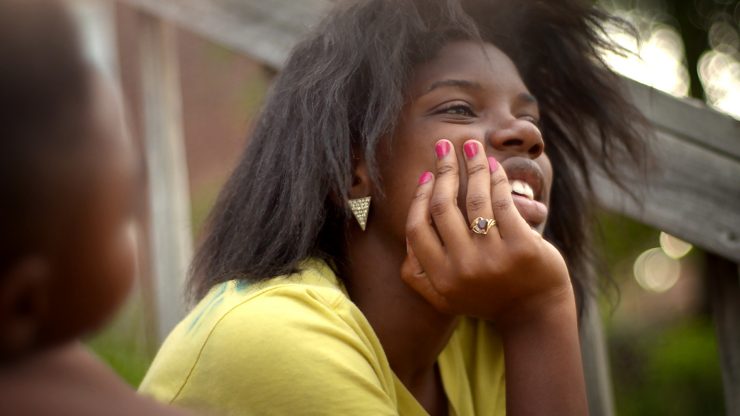
The film tells the story of Daje Shelton, a Black St. Louis teen, as she enters an alternative school to avoid being expelled from public school. Truly an expertly crafted coming of age story, FOR AHKEEM humanizes the complicated intricacies of structural inequality and racism in public schools and in the justice system.

Levine and Van Soest sought to craft a narrative as dramatic and compelling as a fiction film, and rather than take a passive, fly-on-the-wall approach, the filmmakers collaborated extensively with Shelton in crafting the story. The result is an immersive journey into the life of one teenager, who like any teenager, struggles with algebra, hangs out with her friends, has a boyfriend, and occasionally argues with her mother. Beyond those typical teenage experiences is the spectre of death that looms as an ever-present reality. I had the opportunity to chat with Levine about his experience making FOR AHKEEM.

KCS: My biggest question for you is, having seen GOOD FORTUNE, and having watched FOR AKHEEM, your interest in social justice filmmaking is apparent. How did you develop an interest in filmmaking in general and how did your interest in tackling what are some really complicated social issues come to be married with that filmmaking interest?

JL: That’s a good question. I definitely knew at a pretty young age that I wanted to make films. When you’re a teenager and you see a film that kind of breaks out of the mold of what you expect, it ends up kind of being a life-changing event. I had many growing up and immediately felt “this is what I want to do.” I think around high school I also started paying attention to the world for whatever reason and realized how screwed up it was. It was a revelation. I’m not necessarily the hugest Michael Moore fan, but the first time I saw BOWLING FOR COLUMBINE, I thought, “Oh, you can actually do filmmaking and make it about something important.” Yeah, that was a big moment for me--that realization. By the time I was applying to colleges I was pretty committed to that approach to filmmaking. [In looking for subjects], we kind of always start with an issue that interests or infuriates us, or feel it needs more attention than its getting. But then really approach it as much as possible as a character story that plays out like a narrative film, and so we definitely are feeling with this piece we’ve taken that the furthest, and it’s the piece I’m most happy with.

KCS: I was really blown away by the film. You captured some really incredible moments. The one that really stuck out to me is when Daje learns Ahkeem is a boy, and at first she is very excited to be having a son, and you guys captured on film that moment of realization that she’s going to have a child who’s going to have a high risk of dying at a young age.

JL: It’s shocking as an outsider where they want a boy or a girl, and I’m talking mostly about white friends and family. You can be happy or you can be like, “I really wanted a boy,” or “I really wanted a girl,” but the stakes and the implications are just so much more extreme for Daje.

KCS: You mentioned in your director’s statement that there were some consultants that you brought in to help you kind of question assumptions that you had made. You were conscious of being two white male filmmakers making a documentary about a young Black woman. Were there any moments where you did have an assumption challenged and it became a transformative moment for you?

JL: There were so many. We had different editing consultants come in and explode the structure in a way that seemed totally insane to me but ultimately made so much sense, having to remove yourself from exactly what you shot--like, how do we best tell this story? In the director’s statement we wrote about how our producer Iyabo [Boyd]actually set up some incredibly targeted screenings. We had a group of Black activists in St. Louis, some academics in St. Louis. We had one screening that was only Black women, or almost exclusively Black women watch a cut. I think a lot came out there. The fact that Ferguson happened was a really confounding thing in production. Because it felt like something monumental was happening. It clearly was hitting on a lot of these themes that we had set out to explore from the beginning, like criminalizing black youth, the assumptions that are made about people, all of that with these awful, lethal consequences. So we shot a lot of it because we didn’t want to miss it. Hopefully in the end film it’s maybe not so apparent, but it took us some time to really figure out, how does this fit into Daje’s story. I think earlier on we had so much more of it [Ferguson footage] but it was happening separately from Daje, and it just felt like we had this crazy footage of police doing these awful things, people standing up and putting their foot down. But Daje wasn’t out on the front lines. She was pregnant. She was really terrified of going out there. Definitely that screening helped bring forth that we just needed to go back to what we set out to do, which was just to tell Daje’s story and what these huge national issues mean to her on a personal level. Obviously being pregnant with a black boy who she’s going to bring into St. Louis and the world, that really became the heart of how we approached it.

We haven’t talked about this publicly, but I think it’s interesting. We debated a lot about how much we need to own up to our position as outsiders, as white filmmakers. I think in that cut we actually had kept in a very brief scene in the moment when Daje is in front of that Obama poster that’s kind of become the poster image of the film. And a few moments after we cut out in the final film, she says, “I don’t want to do this anymore,” and takes off her microphone. I think it’s my hand, my white hand reaches in and grabs the microphone from her. It’s a really small moment to acknowledge ourselves and position ourselves. In the screening, I think it was pretty unanimous, this was the screening of exclusively black women, they were like “What are you doing? This was such a poignant moment and you’re now making it about yourselves.” It was actually great to hear that because for us it’s not a film about ourselves either. We didn’t want to do that either, so it felt like reinforcement to kind of follow our vision and really just let this play out as Daje’s story.

I did talk some more with Levine about how Daje is doing these days. He was at the airport about to board a plane to St. Louis to see her in person when we spoke. I don’t want to reveal too much before the screening, but he says they still talk a lot and that, “she has a lot going that’s really exciting, but she also has incredible challenges every day.” Fortunately, Levine will be here for the screening to give more details in person.

FOR AHKEEM screens at The Cabot on November 26th at 4:30, followed by and Q&A with Jeremy Levine. Tickets are available online or at The Cabot box office.

Filmmaker Spotlight: Daniel Cross, director of I AM THE BLUES

IMG_5519

Daniel Cross is a Canadian documentary filmmaker, producer, and social justice activist. He is the co-founder of the Montreal-based cinema production company EyeSteelFilm and is also the founder of Homeless Nation, a non-profit online-based organization that aims to build and strengthen homeless communities across Canada by spreading awareness on homelessness and helping homeless populations transition off the street. Cross has directed many award winning films, such as The Street: A Film with the Homeless and S.P.I.T: Squeegee Punks in Traffic.

Salem Film Fest's Olga Nazarenko caught up with Daniel Cross to talk about his experience filming I Am The Blues.

ON: What sparked your interest in creating I Am The Blues?

DC: I have always been a blues lover. Barbara Lynn and Lil Buck Senegal came to Montreal with the Ponderosa Stomp and I was blown away by their charisma and performance quality. I approached Dr Ike from the Stomp and he agreed to introduce me to these beautiful, elderly blues musicians living across Louisiana and Mississippi.  My only request was to work with musicians without managers so we could get close and go deep without interruption.

ON: Can you describe the biggest challenge you faced in the filmmaking process during the time you spent on the film?

DC: Getting the musicians to behave! They are real characters. Carol Fran was eyeballing the camera operator and asked him if he knew what a Cougar was…. But, seriously, this film was fun to make. It is full of life - vim and vigor.

There were also challenges from a demographic perspective. The musicians are Black - I am White. They live in the deep South - I live in the dark North. They are in their 80’s and actively still performing - I am in my 50’s and still a working stiff. They were raised on plantations and experienced extreme racism and yet still have a twinkle in their eyes - I deeply respect them and learned so much about my world view from hanging out with them.

ON: How did you choose Bobby Rush as the central character of the film? 

DC: Bobby Rush is kind and he is generous. He caught on quickly to what I was trying to do - filming the last of these old blues devils before they pass. The next generation will perhaps play the blues, but they will not have the base experiences where the roots of the blues derive from. This had to happen now. It was a last opportunity, just a matter of time. Bobby helped me connect with the other musicians. They all knew Bobby Rush and were interested, even excited, when he came around, which was a great motivator for dynamic and engaged scenes. Bobby Rush won the Grammy last month. He is a champ. I love him.

ON: Due to time constraints, did you need to cut out any characters or a particularly interesting story? 

DC: I recorded 100’s of hours and scores of musicians not in the final cut. More was cut out than is in the movie. Please visit www.iamthebluesmovie.com where you will find many video clips not in the film. You can also take a 360-degree virtual tour of the Blue Front Juke Joint and see performances, listen to the Juke Joint, and hang out listening to stories at the bar.

ON: The film captures the passion that these musicians had for blues music. When did you first become interested in the blues?

DC: When I was a teenager in the late 70’s, the world’s Largest Winnebago was bringing a caravan of blues devils to perform at the Vancouver Folk Festival. I headed to Jericho Beach hours before the opening act and spotted blues harmonica legend Frank Frost dressed up in polyester showman black. He was one of the blues devils I dreamed of meeting. I nervously said “hi” ... he said, “Where’s the Liquor Store”? Off we went to the Kitsilano branch where he handed me an empty liquor box and proceeded to fill it up with 40’s of Vodka.  After safely delivering the case of booze, I was christened an honorary roadie and spent the week inside that Winnebago listening to the most incredible blues music and stories. At the time, I wasn’t a filmmaker, but this experience motivated me to become a documentary filmmaker and taught me the beauty of first person lived experiences, a story telling approach that my films are renowned for. So, today I am making this film about the last remaining blues devils and documenting their historic stories, filming the last originals before time runs out.

ON:  Was creating the film all work, or did you have a chance to enjoy the music, moonshine, and crawdads? 

DC: I had more fun making this film than any other, a true guilty pleasure. Believe me, there is certainly work involved and discipline required to get things right. But honestly, documentary is about sharing life with people, gaining trust, becoming friends, and getting to know each other on a profound level. Life long friendships with music, moonshine, crawdads and humor shared along the way! 

I AM THE BLUES is the closing night film of Salem Film Fest 2017, screening on Thursday, March 9 at 7pm at CinemaSalem.

I AM THE BLUES: A Look into the Lives of the Last Blues Legends

By Olga Nazarenko

The pungent odor of boiling crawdads mixes in the air with the aroma of cigarette smoke. The hazy, blistering sun encourages drops of sweat to trickle down the back. Cold Bud Light soothes the aching thirst that accompanies an afternoon of raspy singing. The distant sound of croaking bullfrogs and crickets in the bayou are drowned out by the sultry twang of a 12-bar blues scale on an old Epiphone guitar played by an old blues legend.

From the swamps of the Louisiana bayou to the dive bars of the Mississippi delta, Montreal-based director Daniel Cross takes viewers into the intimate lives of a few of the last remaining blues legends still touring the Chitlin’ Circuit in his Canadian documentary film, I Am The Blues. The soul-shaking guitar licks and heart-melting lyrics belong to musicians Bobby Rush, Barbara Lynn, Henry Gray, Carol Fran, Lazy Lester, Bilbo Walker, RL Boyce, Jimmy ’Duck’ Holmes, Lil Buck Sinegal, LC Ulmer and their friends in the North Mississippi Hill Country.

"The blues made me. So now I'm making the blues,” explains one Chitlin' Circuit old-timer in the film. The blues devils of the deep American South, many now in their 80's, still continue to sit on their porches and the dilapidated benches of "jukes", music joints, to play jam sessions and share memories from the good ol' days. I Am The Blues commences with a scene of one of the last jukes left on the Mississippi Blues Trail, the Blue Front Café, owned and still operated by Jimmy "Duck" Holmes. The Blue Front Café, run by the Holmes family since 1948, first served as a second home to those tilling the cotton fields during the segregation era. The Blue Front Café and the other jukes on the southern side of the "Dixie" line in the backwaters of Mississippi and Louisiana were the only places that African-American blues musicians felt "free".

Cross's central subject in I Am The Blues is Bobby Rush, a blues musician born in 1933. With intricate guitar licks and sequined suits, Rush still dazzles the present-day crowds that linger in the worn-down jukes along the Chitlin' Circuit. Rush chronicles his history playing blues music along the Mississippi delta, recalling playing for hamburgers and at the most, a couple of dollars at the end of the night. In the era of the Jim Crow laws, the connected string of music venues, diners, juke joints, and theaters throughout the eastern, southern, and upper midwestern areas of the United States, known as the Chitlin' Circuit, provided a place for African-American musicians to find employment long before the Civil Rights movement.

"When I get lonesome, I stay in and sing the blues. And have me a drink," states Bud Spires, before busting out a melancholy tune on his harmonica in I Am The Blues. Blues music provided emotional release and a creative outlet for African-American classic roots players, who constantly faced tension from racial discrimination. According to Rush, in the time of segregation white audiences would want to listen to the music of African-American blues players, but requested for the stage curtain to be drawn shut to refrain from seeing the faces of the musicians. Not only did blues music provide African-American musicians with an outlet for expression, it cultivated a sense of community among the bayous and Baptist churches of the Deep South. In I Am The Blues, Daniel Cross films a crawdad BBQ party attended by many of the musicians in the film. Blues music brought these performers together and love kept them together as friends and family. When discussing blues music with one musician in the film, Cross asks whether love is involved when creating the intricate tunes. The musician replies, "Yeah, yeah, you gotta feel it in the heart."

I Am The Blues captures the hope and sense of freedom that a generation of African-Americans experienced while plucking the old, worn strings of a guitar and singing stanzas about the devil. The documentary film depicts an oral history of the powerful, yet nearly extinct genre of blues music founded in the deep American South. Although contemporary audiences respect blues music as the origin of genres like rock 'n' roll, r&b, hip-hop, and reggae, will blues survive into the next generation? Or will blues as a music genre and art form disappear with the fade of the blues devils in the Chitlin' Circuit?

I AM THE BLUES is the closing night film of Salem Film Fest 2017, screening on Thursday, March 9 at 7pm at CinemaSalem.