FILMMAKER SPOTLIGHT: Michal Bielawski, Director of THE WIND. A DOCUMENTARY THRILLER

Screen-Shot-2020-03-08-at-4.26.38-PM.png

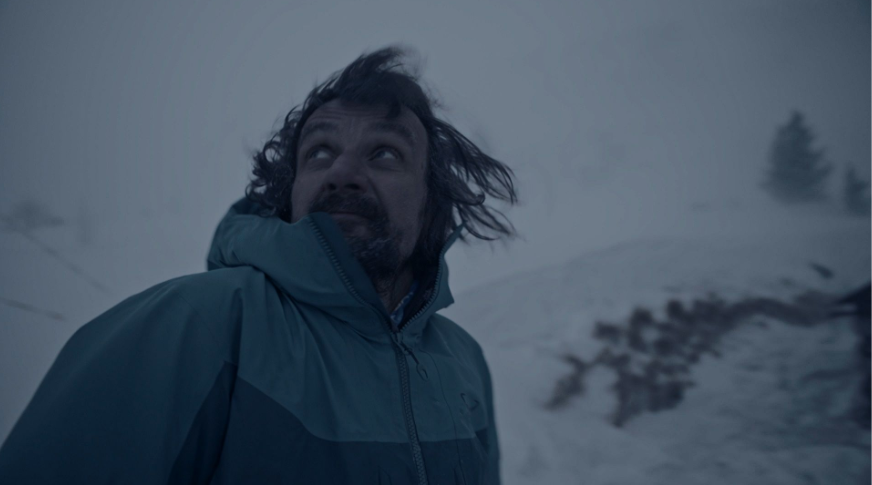
In THE WIND. A DOCUMENTARY THRILLER, director Michal Bielawski  captures the Halny wind cycles, which surge through the mountains of Polandevery spring and autumn—one never knows if or when the Halny will turn into a destructive gale. When the wind arrives, people become more anxious and aggressive, drink significantly more alcohol, suffer adverse health conditions, and suicide rates reach their highest level. In the small community of Zakopane, residents are terrorized by the windstorm as it transforms picturesque mountain trails into a stage for a performance of human struggle against the destructive forces of nature.

SFF Blog contributor Connor Ryan spoke with Bielawski ahead of the festival - THE WIND A DOCUMENTARY THRILLER which screened as part of SFF 2020.

Note: This interview contains mentions of suicide and domestic violence.

Connor Ryan: This is your fifth film. How does The Wind compare to your previous work? In what ways does it differ?

Michal Bielawski: Before this project, my focus was mostly on historical topics. My first film was a result of very long preparation, historical research, many interviews, unique archives and shaped storyline. That first film was a success – my colleagues from television were astonished that I did much more than someone who works with television is supposed to. That was a start of a new profession for me. In all other projects I was looking how to expand my skills as a documentarist. Initially, I thought I would just play it safe and conduct interviews with selected protagonists. I am very happy I didn’t do that. THE WIND was totally a different experience. I had to learn a lot, understand how accessing characters for observatory documentary differs from an interview based story. I had to really know my characters to be able to project their possible steps in the story. Build a lot of alternatives for scenes, try to stimulate characters but not manipulate them in order to get some important behavior from them, see how that appears in front of camera. I would say that this work was a true film school for me.

THE WIND. A DOCUMENTARY THRILLER director Michal Bielawski

THE WIND. A DOCUMENTARY THRILLER director Michal Bielawski

CR: How did you come by this project? Had you heard of the halny wind before?I was approached by producer Maciej Kubicki some time ago. He signaled that he has “something that would interest me”. He was building that tension and mystery around project that he keeps for me, for a while and when we’ve finally met he told me that there is still not a real film about Halny wind, and maybe I would like to try to do it… it sounded great and that’s what I told him. I thought that it is worth a lot of risk. I also thought that I knew something about Halny wind—like most of the people in Poland, because that's very famous wind here, almost a legend. From that moment I started to collect stories about it. I was told by a judge that the number of crimes committed grows because of Halny. But what is interesting here, is the fact that violence occurs right before it starts to blow, not during. But there are many elements connected to Halny closing: not only domestic violence but also heavy drinking and suicidal incidents. 

CR: How did you prepare to tackle so large a subject? How did you plan/organize around a meteorological phenomenon? How long did it take to make this film? What were some of the challenges? 

MB: It took us 5 years from the beginning to end. I started with concept of another movie and I felt that it might go easy if the film will be treated like my other work—through good archives that would picture famous historical winds. So, at the beginning I believed that it would make sense to spend enough time in libraries, reading all that was printed about that wind. I focused on that, but after some time I realized that it wasn't the right way. A very crucial decision was the search for a cinematographer. We felt that it had to be someone from Zakopane city which is the biggest town in Tatra mountains and usually the first and the most troubled place by Halny wind. Fortunately I found someone. Bartek Solik, very talented photographer from Zakopane, who in that time, collaborated with Tatra National Park making short films for them. With his skills and knowledge about mountains, Bartek became the most important crew member. Another element of preparation was settling good relations with national meteorological institution, so they kept us informed about all weather changes in the Zakopane area. During these several years of work I’ve witnessed and filmed 5-6 Halny winds. The most important issue was communication with characters before and during the wind, so we knew with whom it seemed to be the most interesting and the other important issue was our safety, because these conditions were quite heavy.

Screen-Shot-2020-03-08-at-4.29.26-PM.png

CR: How did you meet the four characters you follow?MB: First we started with Teresa, the poet—thanks to our cinematographer, Bartek Solik. He knew her already, because once,  he photographed her for a newspaper. When I said that it would be great to have someone who is living between rational and metaphysical he immediately pointed to her. And Teresa loved while idea. Staszek, the “windmill guy” inherited metal frame of his future windmill from his neighbor also photographed by Bartek. We worked with both of them almost the whole filming. Ewa, the paramedic was the third paramedic in my film, she seemed to be totally different from the others, very modern, focused and motivated. I must confess that when I asked her if she could compare her life to the Halny wind she answered in very convincing way: sure, you should come and see us when I go to work… So, we did and filmed it. The meteorologist was chosen because he stays in remote and alienated place, in very old wooden hut, and I also found him very photogenic, with a look of mountain hippie. It created very interesting cocktail of personalities and places.

CR: Some of the scenes have a real sense of danger. How did you prepare for them? Did you have any rules about when you'd stop filming and seek shelter? 

MB: In general we were trying to keep away from danger but finally, when the wind came someone had to film all that material. Before that, we were talking and talking with my producer about security, thinking about special metal cages for cameras, special gear for cinematographer, how to react, what will be the limit... and that was for hours. But then, when the first Halny came we were taken almost by surprise, with our costly insurance in our hands and a lot of tension that we have to work a lot right now. It ended up quite badly for me, because after few hours I started to suffer from severe migraine. First night went well,  we were following fireman squad by car into the forest where trees were literally breaking into our heads. Cinematographer, Bartek had some concerns, but we decided that we have to film but the next day we will organize at least special helmets from fireman to protect ourselves. And it ended up in an unexpected way—for whole second night, our helmets were traveling in the trunk of another car and something else happened: when I watched the material I heard my voice saying: “guys, I suppose we leave now…” All these experiences helped us a lot while we were filming the last Halny—we entered the forest following our character and we filmed her in extreme weather without hesitation.
Screen-Shot-2020-03-08-at-4.29.08-PM.png

CR: None of your characters address the experience of living through the Halny directly. Was this a conscious choice on your part? How do you think it shapes the film's message?MB: The uniqueness of Halny wind is connected to the very wide and various experience people have with it. Some feel edgy and go for a drink and after few more glasses they get into a fight—there are so many calls to the police when Halny is coming. Some others become violent, hurt close ones or animals—you can hear about it from their neighbors. Almost everyone who calls emergency number 112 is already in specific state of mind, because of their circumstances might have very dark thoughts and become suicidal.

CR: There are a few moments that have almost a playful feel to them, (e.g. a boy on crutches jumps on a trampoline; Teresa and her husband argue about the car seat). Were these moments serendipitous, or did you look for them specifically? How necessary do you think moments of comedy are in relation to such a large, daunting subject?

MB: Generally, I believe that comic elements make the story more credible. These particular scenes were caught accidentally while we were filming other things. The dispute between Teresa and her husband happened because something was in the air already—Teresa was going to present herself on public and that wasn't easy for her husband, who believes and cultivates traditional, patriarchal model in which the man is in the spotlight. The scene with a boy jumping on trampoline is a long story. When I was trying to work with doctor from hospital in Zakopane I suggested that she might visit Staszek—that’s part of her routine, so it might have happened anyway. The scene with Staszek and doctor didn’t work great, but she discovered that Staszek's grandson has one leg that shorter than the other and she send him to hospital for examination. The orthopedist discovered that boy has some problems with growth of his acetabular cup (in his hip) and he was told to walk on crutches for almost a year. The moment when he started to jump on trampoline was funny and bitter in the same time, because he really wanted to be like other kids. The cinematographer  took notice of this moment while we were preparing to shoot a scene with a rooster. Later, my editor Hubert Pusek felt in love with that scene and we felt that sort of scene works very well before something dramatic approaching.

Screen-Shot-2020-03-10-at-2.59.19-AM.png

CR: While some characters suffer from the effects of Halny, others seem almost to thrive in its environment. How does this contribute to the message of the film?

MB: There aren't many who thrive in it, but you can find people whom wind gives a kick. Some of them look for inspiration like Teresa or like Staszek, who wishes to transform that immense energy into something else—maybe useful electricity. I heard from a man who works as a mountain rescuer that for him working during Halny was uplifting. I think that experience of Halny is very complex and I wanted to show many different facets of it. When I worked on the film, I focused a lot on translating the experience of the wind onto the screen and the message was always connected with it, but became clear during editing process. I guess my film is about the way nature is shaping people lives and that life itself has repetitive circles. It is tragic and very human that people leaving in severe conditions fall and get up to prepare for another hit. Somehow all characters and the way their stories turn out in the film are proof of it.

THE WIND. A DOCUMENTARY THRILLER screened as part of SFF 2020.
FILMMAKER SPOTLIGHT: Amy Geller and Gerald Peary, Directors of THE RABBI GOES WEST

Screen-Shot-2020-03-08-at-3.35.45-PM.png

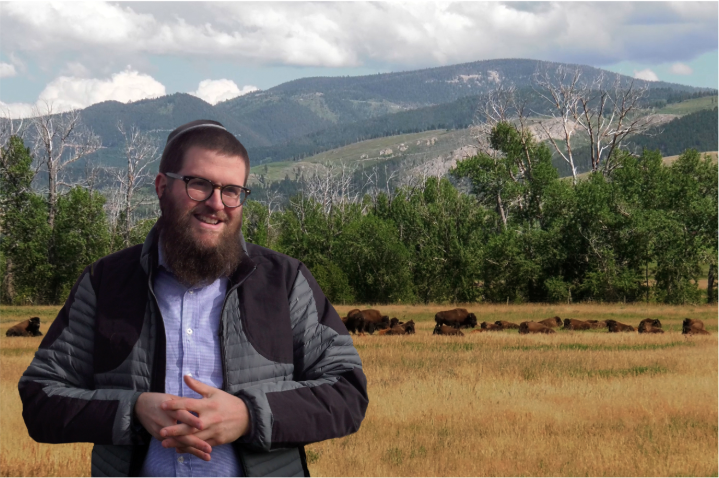
The co-directors of THE RABBI GOES WEST are filmmakers Amy Geller, who teaches courses on production at Boston University and was previously the Artistic Director of the Boston Jewish Film Festival, and Gerald Peary, a veteran film critic for the Boston Phoenix and programmer for Boston University Cinematheque. In the film, they follow Chaim Bruk, a charismatic 34-year-old Hasidic Chabad-Lubavitch rabbi from Brooklyn, who brings his evangelical strand of Judaism to Bozeman, Montana, with the mission to place a mezuzah (encased Jewish prayer offering) on the doorpost of every Montana Jew. As he travels across this “big sky” landscape, Chaim faces obstacles, including a terrifying neo-Nazi threat, objections from some skeptical Jews and the state’s Reform and Conservative rabbis. Will Chaim succeed in his Chabad expansion, and at what cost?Salem Film Fest will present THE RABBI GOES WEST during Week 2 (Friday, July 17 - Thursday, July 23) of our virtual film festival.  Tickets may be purchased to view the film here.SFF Selection Committee member Shelley Sackett spoke with Geller and Peary ahead of the festival.

Shelley Sackett: How did the idea for THE RABBI GOES WEST first start?

Gerald Peary: It started with wanting to make a film which somehow dealt with my identity as a very secular Jew, but someone who considers myself very Jewish. I asked myself,"What do I really care about with Judaism?" I realized I love mezuzahs. Should I make something called The Mezuzah Movie? I read everything there was to know about mezuzahs, saw every movie with a mezuzah in it, learned every mezuzah song. One day, trolling the internet, I came across the true-life story of a rabbi in Montana who had a pledge to put a mezuzah on the doorpost of every Jew in the state of Montana."I thought, That could be interesting." I telephoned Rabbi Chaim Bruk in Bozeman, Montana, and asked if we could come out and watch him put up mezuzahs. He said, "Sure," and Amy Geller and I, soon as co-directors, flew out to Montana to film. This was the beginning of our movie.

THE RABBI GOES WEST directors Amy Geller and Gerald Peary

THE RABBI GOES WEST directors Amy Geller and Gerald Peary

SS: Could you walk us through the process from initial spark to finished film? Did your focus change as the film progressed?

Amy Geller: Like some of my favorite observational documentaries, the film definitely evolved during the filmmaking process. At the beginning, we thought it would be a short film about a charismatic believer on a mission. But during our first shoot, we discovered that in addition to Rabbi Chaim’s Chabad shul, there was also a Reform synagogue in Bozeman. Not only was there more than one rabbi in town, but the rabbis didn’t always get along. Conflict. And then, we also discovered how little we understood about Chabad, the Hasidic sect that our main character Chaim Bruk is part of, and how controversial they were within Judaism. More conflict. Finally, you never want this to happen to people you care about, but when a group of Neo-Nazis threatened some of the Jewish leaders that we were documenting, we knew that horrific incident had to be part of our story, too. What ended up on screen was our journey of discovery in making the film.

SS: As documentary filmmakers, what motivates and inspires you?

AG: Gerry likes to say that documentary filmmaking, like fiction, is all about casting, finding a compelling subject who can command the screen. While I agree that’s an important aspect, what gets me excited is the journey of discovery, learning about other people, places, worlds, time periods. And through that discovery, I have the chance to connect and relate to those who have different experiences. Getting to share these experiences, through film festivals and public screenings, with audiences all over the world, completes the experience. I guess it boils down to empathy, discovering that we have more in common than what divides us.

Screen-Shot-2020-03-08-at-3.39.34-PM.png

SS: What has audience reaction been so far to the film?

GP: It’s been amazingly positive. We thought we were making a controversial film, and that we would get a lot of flack from Chabad for showing not everything Chabad does in a positive light, and that progressive Jews would be angry at us for making a film which is not out to bash the Hasidic world, for being too friendly to Chabad. So far, every Chabad person who has seen the film has loved it for showing Hasidism in a non-judgmental way. Secular and progressive Jews have also thanked us for teaching them things about Chabad that they didn’t know, and for making such an interesting movie!

SS: What message do you hope viewers take away from the film?

GP: We have great respect for progressive documentaries which have a strong point of view and are aiming to persuade audiences on social consciousness questions of importance. But the kind of documentary we choose to make is not one with an obvious, overt message. We are much more open-ended, committed to giving all sides their best arguments and counting on the audience to decide for itself what to believe, whose side to take. We have great faith in the intelligence and critical thinking of those who watch our movies.

SS: What do you think the importance of documentary film in our daily lives is?

AG: What’s particularly special about long-format documentary is that, as a filmmaker, you have the ability to get into the complexities of a subject or issue, to show it from different sides and, in some cases, to offer opposing perspectives. In our consume and discard media culture, I want to tell stories that encourage audiences to think critically about topics and to question their own assumptions about the world around them.

Screen-Shot-2020-03-08-at-3.42.13-PM.png

SS: What's next for you two?

GP: We are contemplating a project, perhaps a short film, about rabbis in the American civil rights movement.

SS: Anything you'd like to add?

GP: Come see THE RABBI GOES WEST in Salem! We’d love to hear your reactions and answer your questions!AG: And if you want to book a screening at your synagogue or community group, please contact us.

THE RABBI GOES WEST screened as part of SFF 2020.

FILMMAKER SPOTLIGHT: Karen Whitehead, Director of IMITATING LIFE: THE AUDACITY OF SUZANNE HEINTZ

Imitating-Life.png

In IMITATING LIFE: THE AUDACITY OF SUZANNE HEINTZ, director Karen Whitehead follows Suzanne Heintz, a "loud-mouthed" girl from Yonkers, who embarks on a strange and entertaining 15-year global photographic crusade to challenge persisting stereotypes about women’s roles and lives. With her provocative eye, sharp sense of humor, and feminist’s soul, Heintz creates glamorous portraits of mid-20th century domestic bliss by placing herself at the center of scenes where she is the perfect wife and mother of a meticulously dressed mannequin family. When social media catapults interest in work, Heintz’s resilience is put to the test.

SFF Selection Committee member Shelley Sackett caught up with the director of the film, Karen Whitehead ahead of the film being available to watch during Week 2 (Friday, July 17 - Thursday, July 23) of our virtual Salem Film Fest.

Shelley Sackett: How did the idea for IMITATING LIFE first start? 

Karen Whitehead: I met Suzanne Heintz when we were both asked to participate in a film festival panel about women artists as “change-makers” called “She Crossed the Line.” This followed the Denver screening of my documentary, HER AIM IS TRUE , a film that revealed the hidden story of rock n roll photography pioneer Jini Dellaccio. Heintz’s first short film about her Paris photo shoots with mannequin family props in tow was screening at the same film festival. As we discussed our work and excitement about using photography and film to address women’s roles and portrayals behind and in front of the camera, we found much common ground.  Soon afterwards, I was plotting the creative strands with my producing partner, Katherine Wilkins De Francis, for a documentary around Heintz’s surprising journey in art activism. From the start, we both felt this was access that takes the audience somewhere other than the usual artist profile.

IMITATING LIFE director Karen Whitehead

IMITATING LIFE director Karen Whitehead

SS: Could you walk us through the process from initial spark to finished film? Did your focus change as the film progressed?

KW: The entire film evolved around our incredible access to Heintz’s archive and personal footage spanning more than 15 years of surreal self-portraiture. That was the first critical layer for us - to be flies on the wall of Heintz’s photographic crusade and bring the audience into Heintz’s process. We asked Heintz to make additional video diaries for us that would delve a bit deeper into her life’s work and her personal challenges around it. This is because from early into the film, it was evident to us that the lines between her life and her art were blurring. All the struggles and frustrations Heintz had to navigate as she pursued her life’s work amidst viral social media waves, and how that impacted her life, work and relationships were important to document. Heintz remarked she did all her thinking when she was driving to work - so  this gave us an opportunity to collect some off- the-cuff, very real moments with Suzanne: for example, when she stuck her smartphone to her car dashboard and gave us some "dashboard confessionals" as she put it!

Combined with our more traditional documentary production shoots -  adding interviews with family and friends, filming around Suzanne’s home, observing her in production mode on a big photo shoot such as the one we followed for her New York "To Die For" holiday card and treks further afield such as London - we were able to keep building this intimate portrait of an unusual artist, one who is very much outside the mainframe of the art world.

Obviously, along the way over a multi-year project like this, life happens and we adjust our focus. Situations developed that led us off into some different chapters, if you like. But I don’t think our overall storytelling vision for this film changed. We did not know when we started exactly where we would conclude the film—as is the nature of documentary filmmaking—but framing the structure of the film around the progression of Suzanne’s holiday cards was key. I think we ended where we intended to, giving audiences unprecedented access into one ordinary woman and her funny yet serious act of defiance!

Screen-Shot-2020-03-08-at-2.44.46-PM.png

SS: What was the biggest challenge in making this film? The biggest reward?

KW: For all indie filmmakers, the constant challenge during production is the dual task of fundraising and storytelling at the same time, including finding innovative ways to keep the documentary going despite gaps in funding. We definitely took a lesson out of Suzanne Heintz’s own book, re: keep on moving forward, with resilience and endurance!

Related to this, working on a project that is very much outside the mainstream without celebrity content to draw attention to it  or a major production partner such as Amazon or HBO, requires a Herculean effort in terms of building support for something that is quirky, off beat  and maybe hard for people to totally get until you are at the finish line with your film festival trailer!

But the biggest reward is sitting in the back of a sold out screening, such as our world premiere at DOC NYC, and witnessing  the sheer enjoyment and engaged reaction from the audience during the screening and afterwards, at our Q & A. This experience showed Katherine and me that we had created something thought-provoking and relevant for our times.

On a minor note, concerning the filmmaking challenge itself—i.e. crafting this film in the editing process which involved juggling a huge amount of material we had amassed—it was extremely challenging to achieve a balance in the final film between video diaries and the intensity of life & art interactions for Heintz over an almost two decade stretch. Given the reaction we have garnered so far, I think we found the right balance!

SS: As a documentary filmmaker, what motivates and inspires you?

KW: For me it is about telling a good story, one that draws the audience in and takes them somewhere different than they expected. I love capturing off guard, fun moments, as well as the raw, candid footage—especially now that camera technology and production gear has advanced so much in this field. Being able to access and create a more intimate feel in the storytelling process is an invaluable tool.

Generally, I am motivated by filmmaking that invites us into ordinary lives, untold stories, and particularly women’s experiences that have been very much under the radar, hidden from mainstream media and history.

Screen-Shot-2020-03-08-at-2.46.30-PM.png

SS: What has audience reaction been so far to the film?

KW: We have recently enjoyed sold out screenings at our world premiere at DOC NYC in New York. Audience members came up to us after the Q & As to say how much they were blown away by Suzanne’s story and the film. Here’s a few comments we have had so far:

“An interesting and entertaining look into the life of a truly fascinating woman. “

“A unique combination of comedy and drama.”

“I love that she says, ‘I feel I have to be extra loud to be heard!’ Pretty accurate!!  It’s brilliant.”

SS: What message do you hope viewers take away from the film?

KW: There’s the obvious: that conducting film shoots with mannequins is really hard work and not for the faint-hearted, and that having a good sense of humor as filmmaker and subject really helps!

But seriously—I think there are several things to say here about messaging, not least of which is having one hell of a gutsy, fearless woman at its center. We need to keep telling more stories like Suzanne’s, and get them into the mainstream. This connects back to why we were drawn to Heintz’s work in the first place and the issues that are raised in the course of our film, from persisting stereotypes about women’s roles to the impact of social media in our daily lives. Perhaps viewers will find Suzanne’s story an inspiring one about being true to oneself, although she is an extreme example of this.

I hope there is something here that deeply resonates with viewers about situations they encounter in their own lives. Our film is about much more than the difficulties of mannequin wrangling in New York, Paris and London.  But what viewers get out of it in the end is entirely in their hands. We made the film, and now it belongs to audiences to respond to it as they want.

Screen-Shot-2020-03-08-at-2.53.49-PM.png

SS: What do you think the importance of documentary film in our daily lives is? 

KW: For me, the art of documentary filmmaking is telling an engaging true story. Drawing an audience in might lead them to think more deeply about something in their own lives, community or wider society. I think it can be as gripping as any work of fiction, and is often more powerful - like a catalyst for social change.  Documentary films have the same value to me as investigative journalism. We need them both very much! A documentary can have an unmeasurable impact on how we explore our world, live our lives and the choices we make. When I am behind the camera, on this journey with my film subject, I don’t know exactly where we might end up. All sorts of situations are continually unfolding in front of the camera, at all times in the process. But I am always asking myself: "What do I want the audience to feel here? What questions does this provoke?" It is a very transformative process and I love it because it is truth-seeking in its purist form.

SS: What's next for you?

KW: My producing partner on IMITATING LIFE, Katherine Wilkins De Francis and I have a couple of film projects in development. One of them is a unique story about an underserved, underemployed and sadly often segregated community of young adults who are on a mission to radically change the way the world sees their neurodiversity and intellectual "disabilities".

SS: Anything you'd like to add?

KW: We hope audiences will share the film: discuss it within their personal networks and encourage others to discover Suzanne Heintz’s work. Indie documentaries like this depend on having a strong connection with film festival audiences -word of mouth recommendations help us connect to more screenings and distribution chances... we have no Hollywood-type PR machine behind us! It definitely helps to re-post about the film on places like Facebook and Instagram and to share photos of attending festival screenings, tagging the film. This is how we reach new audiences. Please follow us on our Facebook and Instagram accounts, too.

https://www.facebook.com/imitatinglifefilm/

https://www.instagram.com/imitatinglifefilm/

IMITATING LIFE: THE AUDACITY OF SUZANNE HEINTZ screened as part of SFF 2020.

FILMMAKER SPOTLIGHT: George Gittoes, Director of WHITE LIGHT

George-with-Chantal-and-Pics-of-Kaylyn-IMG_8951.jpg

George Gittoes is an Australian painter, photographer and filmmaker – for nearly 40 years, he has documented areas of conflict around the world, immersing himself in countries such as Iraq, Pakistan and Afghanistan and creating unique art with members of the community. His latest film WHITE LIGHT focuses on Englewood, South Side Chicago, an area known for gun violence. Interviewing friends and family, Gittoes documents the victims and their neighborhood. In doing so, he explores why these civilian deaths are happening and highlights the ways the community is working to bring peace and end the cycle of revenge and retaliation.

Salem Film Fest and the Peabody Essex Museum are presenting a FREE screening of WHITE LIGHT this Saturday, November 2 at 2pm - FREE tickets may be reserved online here or picked up in person at PEM.

SFF Selection Committee member Shelley Sackett spoke with Gittoes ahead of the screening.

Shelley Sackett: Why did you choose to focus on Englewood?

George Gittoes: Englewood is the area which people refer to as Chi-Raq. Since I made SOUNDTRACK TO WAR in Iraq, I felt it was my duty to make a comparable film in the US.  When in Baghdad, I visited the Gangster Palace of Saddam's son Uday where I filmed a rap battle in what the US soldiers called the "bull ring". Two of the most talented rappers were Elliot Lovett, who is African American from Miami, and Yonas Hagos, who is Ethiopian-born but from Chicago.  I felt that they were both geniuses, and offered to speak to their officers to see if they could be sent out on fewer combat missions. I was worried that the world would lose two very special artists and poets if they were killed.   Elliot laughed and said, "But George, it is more dangerous for me in Brown Sub, Miami."

Then Yonas countered this claim, saying, "Chicago is much more dangerous than Miami."I followed Elliot back to Miami and made RAMPAGE and Yonas never stopped criticizing me for this. He insisted I do Chicago.  Yonas is now a very successful millionaire and businessman, and his wife will not let him go back into the Southside of Chicago, as she fears for his life. But Yonas was the first person I met when arriving in Chicago, and he told me I should focus on Englewood. Yonas was embarrassed that he could not come with us to film, and warned that I would need a bodyguard with "a license to carry." He also told me I would not be able to live there, but would have to transit in and out to film.  I took his advice on Englewood but did not get a bodyguard. We rented two apartments in the heart of the community.

SS: How did Englewood compare to other war zones you've covered? Did you feel less or more safe? Why?

GG: The constant danger in Englewood is more exhausting and pressured than in most of the war zones I have worked in. Usually, it is possible to find somewhere safe to sleep and repair - even in Baghdad, at the height of the war, I felt my apartment was something of a sanctuary. Police broke into my apartment four times while I was in Englewood. There was also the problem that where we were living was Gangster Disciple Territory, and our film was mainly shot with members of their rival gang, the Black Stones.  I had to make an agreement with the local Gangster Disciples to allow passage of Black Stone members to visit safely.  I also had a strategy of having my morning cup of tea and afternoon shot of vodka on the corner where the local drug gang did their business. As a result, the people around us felt we had become part of the community and were friendly, but there was always the chance that while outside we could get caught up in the crossfire of a drive by or street shoot out. We never once thought we had become or were targets.

SS: Sprinkled throughout the film, you include many shots of yourself Either shooting or reacting. Why?

GG: Why shouldn't I be seen in the film?  While I understand that your question is innocent and without malice, I do not understand the kind of limitations that are starting to be placed on doc makers. I am guessing that the people who are teaching documentary making must be like missionaries of some strange undeclared religion that promotes a kind of documentary makers Ten Commandments of 'do and don'ts'. As a visual artist who grew up with Cubism and Dada, I find the kind of restrictions that are placed on documentary makers ridiculous.

In my opinion, the person making the film and the cameras that are being used are part of the reality of what is going on. To edit the filmmaking presence out of the final film has always seemed dishonest to me. We are not 'flies on the wall', but humans who are affecting the situation around us, and that is the truth of it. Every time I do a Q & A after any of my films have been screened, I always get the same formula questions. I can only guess that these purist views are coming from students who have been indoctrinated by a set of rules and principles which are totally artificial. The question about being in the film is typical and worries me that it is a symptom of a kind of religious fanaticism that is taking over the once liberated field of documentary making.

There should not be any restrictions on the way documentary makers create their films - our job is to break the rules and not follow them. The one thing I believe in the most passionately is freedom of expression, which includes the artistic freedom to create using intuition and without rules. In Communist China, the State is using facial recognition and a point reward and punishment system to reduce the freedom of individuals, while in America there is something happening where rules of political correctness are attacking the individual freedom of artists.

Screen-Shot-2019-10-29-at-6.53.50-AM.png

SS: How did you establish your first toehold with the locals?

GG: It only took about 15 minutes to gain the trust each of the people in the film. In a dangerous environment, like Englewood, everyone has learned that they have to be able to figure people out very quickly. Their lives can depend on being able to make fast judgements of people.  My first interview was with Solja in his apartment. I was the first white person to ever come into his living room. Solja and his friends only know about white people through watching them on TV and in movies. They have only ever physically met them other than in the form of white cops. In the 12 months we were filming, we never saw another white person except the police and Pastor Pfleger.  Within 15 minutes, we were filming Solja and his friends, and these were some of the most engaging conversations in the final film.We are still friends with all those people filmed in Solja's room, and have taken the film to them at all stages for them to give feedback. I explained that the film would be a platform for them to speak out about the things they felt needed to be said but were never discussed in the media. I have always believed that to show fear of someone is a kind of insult.  If you are showing fear, this is read as, "this person thinks I am scary and bad because they are nervous in my presence.” To be calm, comfortable and relaxed with people is the best way to show you are no threat and are not judging them.

SS: What steps did you take to protect yourself and your crew? How did this differ from other places you've filmed?

GG: Everyone who has seen me working in dangerous situations observes that I use the "hug factor.” I show love to everyone I meet and let them know I appreciate their situation, and would never judge them. That is our protection.There are only two crew members filming, myself and Waqar Alam. We film all situations with two cameras, simultaneously. Waqar is from the Tribal Belt of Pakistan, and has been my film partner for 12 years. We both have the same trusting approach, and both know how to show full respect to those in front of our cameras unless, of course, we are filming cops or military in situations where we do not have approval to film.I often compare what I do for protection to the 'force field' that the Starship Enterprise puts around itself in the Science Fiction series, “Star Trek.”  I believe in magic and feel that it is possible to create a 'force field' of protection around those I am working with. Making and sustaining this kind of 'force field' takes a lot of energy, so it is important never to go into dangerous situations when unwell or at an emotionally low point.

Screen-Shot-2019-10-29-at-7.03.13-AM.png

SS: In the film, one subject says, "The Chicago police is the biggest gang in Chicago," and the scene where the police ask you for your permit was full of tension. How did you feel? Can you compare that vulnerability to how you felt when riding around with some of the gang members? (i.e. which was scarier, potential police or gang violence?)

GG: We never felt scared with anyone in the Englewood Community. The May Block group do not like to be referred to as a 'gang' - there is a sensitivity to the words 'gang' and 'gangbangers'. 'Gangbanger' has become as much of a negative issue in the Englewood community as using the 'n' word.  They resent the way that everyone in their community are referred to in a racist and derogatory way as 'gangbangers' by what they see as White America.We approached the police media department and office of Superintendent Eddie Johnson on several occasions, but were refused access and cooperation. Bottom line— the police have good reason to hate cameras. They are antagonistic to being filmed, and this defensive posture has increased since the success of the Black Lives Matter campaign and the release of videos showing police shooting unarmed people of color.

SS: What do you hope audiences take away from this film?

GG: It is time for America to reform its gun laws and stop being hypocritical about what is happening in other countries while something as terrible as what WHITE LIGHT documents is going on in its own backyard.  People should leave the film wanting to help bring about change to segregation, urban poverty and gun violence. We are cooperating with local groups in Englewood, like Bullets for Peace, and doing community discussion screenings of WHITE LIGHT. Our film was designed as a tool to be used to help bring positive change, and we are delighted to see the enthusiastic way this is coming about.

SS: Have you thought about setting up something like the Jalalabad Yellow House (an arts and community center featured in SNOW MONKEY) in Southside? Why or why not?

GG: We have set up a temporary Chicago Yellow House that coincided with the period of filming. It has lasted two years and is getting stronger. The large multi-panel painting created at the Chicago Yellow House as a collaboration between myself and local artists has been acquired by the Peabody Essex Museum in Salem, and recognition is coming to many of the young artists and musicians who have participated in our activities.  We are presently trying to get support for renovating the Forum Theatre in Bronzeville as an arts center. Bronzeville is a well-established neutral zone where rival groups of people can meet without the fear of attack. It is similar to Switzerland during WWII. A lot of progress is being made with realizing this dream, and we are on our way back to Chicago to take this to the next phase.

SS: How do you see the future for young doc makers who are just starting out?

GG: Of  all the mediums I work in —painting, performance art, music, drama and photography—a wonderful kind of  liberation has  never stopped, which means the mediums get freer and freer every year that passes. But with documentary filmmaking, the medium keeps slipping back to old attitudes towards creative freedom that should have disappeared in the early twentieth century. If documentary filmmaking is ever going to be seen as an art form, the way its sister medium of drama filmmaking is, then these restrictive dogmas about how a doc should be made need to go.

The problem is the that fanatical and Inquisitional people who want  to enforce laws and rules in the medium are making advances on stealing away our artistic freedoms. This is so negative, it would be impossible for any doc maker to please them. No documentary would ever qualify to be accepted by their standards. I worry for young and new-to-the medium documentary makers, as these restrictions on their freedom must be incredibly inhibiting.

These purists are damaging the doc medium in ways that could be irreparable, unless people begin to see the foolishness of what they demand and begin a revolution to free the medium and  allow  it  to find itself and begin to develop like all the other art forms. The tragedy is that the most idealistic people are attracted to documentary making because they want to make a difference and help the world and humanity to end many of the serious problems that youth are facing. Then, they come up against the frustrating and illogical world of the documentary rule makers. Many of those I speak with are so confused, they want to give up on documentaries and work in another medium.

FREE Tickets for WHITE LIGHT screened November 2, 2019 at the PEM here

A Q&A with Director Director George Gittoes, Producer Hellen Rose and special guests will take place following the screening..

FILMMAKER SPOTLIGHT: David Sutherland, Director of MARCOS DOESN’T LIVE HERE ANYMORE

MARCOS.png

MARCOS DOESN’T LIVE HERE ANYMORENew England PremiereCinemaSalemWednesday, March 3 at 8:00p.m.

Elizabeth Perez is a decorated U.S. Marine veteran and mother living in Ohio. When Marcos, her undocumented husband, is deported to Mexico, her tireless efforts to reunite her family hit a legal brick wall. MARCOS DOESN’T LIVE HERE ANYMORE is a love story about a couple grappling with the realities of our nation’s immigration system. With its raw intimacy, the film examines the inner workings, and failures, of deportation and reveals the human cost through an unforgettable portrait of a couple and their children.Award-winning Director David Sutherland screened KIND HEARTED WOMAN at SFF 2013. He spoke to Salem Film Fest writer Sarah Wolfe before the New England Premiere of MARCOS DOESN’T LIVE HERE ANYMORE on Wednesday, March 3 at 8:00pm.

SW: Welcome back. Your latest film captures a side of deportation we rarely see in the media – the personal toll on families.DS: These stories of separation often live in the shadows. When undocumented workers – many without criminal histories – are sent away after decades of living in this country, there’s often family left behind.

SW: How did you discover Elizabeth Perez and her story?

DS: I wanted to do a film about immigration. I spent a week in Washington, DC, at a conference for The National Domestic Workers Alliance, which advocates for immigrant workers, and found several potential people to profile. And then I contacted my son’s best friend who works with immigration issues, and he connected me to Veronica Dahlberg at HOLA, the undocumented workers advocacy group in Cleveland that we see in the film. I went out there several times and filmed people for test footage — what I like to call sketchings.

SW: That’s a great term for it.

DS: It helps me plan for the film’s overall portrait. I often start out doing something and then make numerous adjustments. For example, for my film THE FARMER’S WIFE, I worked with 52 farm families over 2 ½ years – a minimum of four days with each family – until I found the right subjects.

SW: Woah, that’s quite a process!

DS: And it’s different with every project. I was interested in filming Dora and Luis first, who we see in this piece. And then Veronica mentioned Elizabeth’s powerful story and had her drive me to the airport after my second shoot in Ohio. We had lunch before my flight and really got along. Half of Elizabeth’s family is also from eastern Kentucky where I filmed COUNTRY BOYS. She reminded me of one the kids in the piece. I decided to film Elizabeth’s story in parallel with Dora’s, but the latter woman’s situation changed when she got her citizenship. So, in the end, Elizabeth’s family became the focus.

SW: Your films have been described as unfiltered and deeply intimate. We see Elizabeth and her husband, Marcos, at their best and worst. How did you gain the trust of this couple and of Elizabeth’s fellow HOLA members?

DS: What works for me is keeping an open mind and speaking from the heart. And I try to present a person the best I can by capturing their likeness – by creating a portrait.I really got to know all these people when my crew and I were riding in cars with them, visiting their homes, and when we saw them after they were detained by ICE and had the preacher and civil rights advocates there. So this was very close up for me. All my films are like that, but this was different in that the years were dragging on to get Marcos back, he and Elizabeth were both becoming depressed, and questions started arising about whether the relationship would last.

SW: We learn that Elizabeth and the children tried joining Marcos in Mexico prior to this film, but it was too much.

DS: Elizabeth didn’t want to live there because of the bad conditions and especially because Marcos was in such a dangerous part of Mexico. I had to film down there with bodyguards. At least 20 of the people you see in the piece were deported and some are dead because of the violence.

SW: That’s so frightening. I imagine you learned a lot about the U.S. immigration system while making this film.

DS: I certainly did. Veronica introduced me to David Leopold, the lawyer in the film, and he was very clear about immigration law. For example, say someone is an illegal immigrant and has been accused of a crime. If they’re deported before being convicted, their record will say they were charged with a felony. They’ll have no chance to prove their innocence while out of the country and that felony will be used against them trying to return to U.S. soil. There are so many things about immigration rules we don’t know. Things were bad during the Obama administration when we began filming, though it was different from the current administration’s approach – especially in regards to the treatment of children.The only thing that’s consistent about immigration policy is that the rules continually change.

SW: I can see this film creating a divide among viewers. Those who believe that our immigration laws need to be upheld, that ‘you come here illegally, you get deported.’ And those who want the laws changed — who call out the U.S. for knowingly providing jobs, homes and schooling to illegal immigrants, only to take it all away and separate families.

DS: I do hope this film creates a conversation. The one thing, though, that people can’t disagree with is that Elizabeth has done a lot for her country as a Marine and veteran. She lives semper fidelis – always faithful to this country and always faithful to Marcos. And part of her patriotism is every so often being able to take a stand. We’re not saying Marcos deserves to come back or doesn’t. Let the chips fly and let viewers decide. The bottom line is you get to see a family going through this hellish experience with our immigration system. And, even if you don’t want to, you can’t help but care about them as human beings.

MARCOS DOESN'T LIVE HERE ANYMORE screened as part of SFF 2019
Q&A with Director David Sutherland following the screening.