Winner of the American Cinematographer Magazine Award Announced

American-Cinematographer-Logo.png

Each year we partner with Stephen Pizzello, Editor-in-Chief and Publisher of American Cinematographer to present the award for best cinematography at Salem Film Fest.  Below is his review of the nominees and the announcement of the winner of the award.

Screen-Shot-2020-07-11-at-2.12.54-PM.png

All of the documentaries competing for this year’s American Cinematographer Award offered impactful imagery and insightful visual storytelling, but one stood out for its photographic merits.

SOMEWHERE-WITH-NO-BRIDGES-1024x552.png

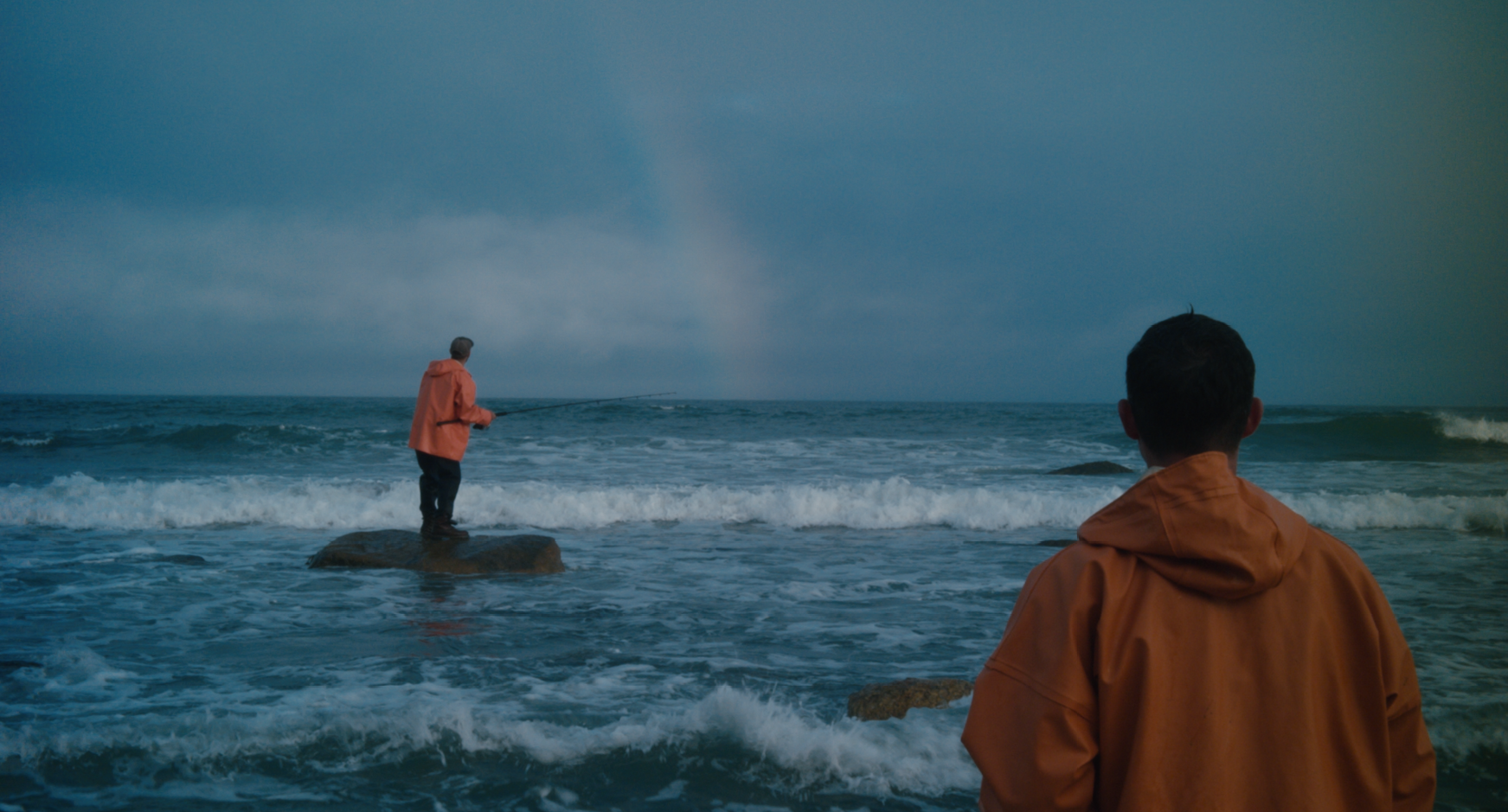
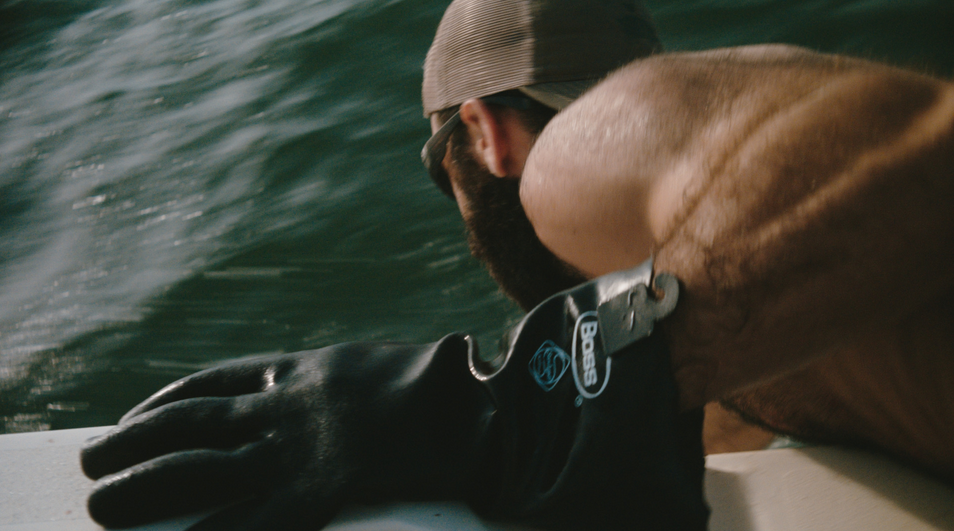
SOMEWHERE WITH NO BRIDGES, an hour-long entry directed by Charles Frank with cinematography Jeff Melanson, captures an abundance of local flavor in presenting memories of Richie Madeiras, a beloved fisherman who disappeared off the coast of Martha’s Vineyard 20 years ago. To create a portrait of Madeiras, Frank and Melanson roamed the island, capturing its flavor, before deciding to interview the missing man’s family and friends. The result of their efforts is a very emotional and evocative document that truly captures the essence of Madeiras, the setting, and the island community that adored him.

MOSSVILLE-1024x552.png

MOSSVILLE: WHEN GREAT TREES FALL, which takes its title from a poem by Maya Angelou, also places viewers in a very specific setting — a Louisiana town devastated by the environmental poisoning caused by 14 plants built by the chemical company South African Synthetic Oil Limited (SASOL). In profiling both the town and its centuries-old Black community, director/cinematographer Alex Glustrom focus on Stacey Ryan, the last resident in a desolate town that was once home to 8,000 people. The documentary’s unflinching tour of the area exposes not only the toxicity of the chemical plants, but of racism itself.

The-Wind-1024x552.png

THE WIND. A DOCUMENTARY THRILLER reveals the harsh effects of Halny, a powerful windstorm that blows through the valleys of the Tatra Mountains, which form a border between Poland and Slovakia. Striking shots of wind-blasted landscapes record the wind’s destructive effects on the region, but the documentary’s portraits of the area’s inhabitants reveal its psychological perils as well. Directed by Michal Bielawski and handsomely photographed in rugged locations by cinematographer Bartłomiej Solik, THE WIND underscores humankind’s vulnerability in the face of nature.

OUR-TIME-MACHINE-1024x552.png

If I were to hand an honorable mention to one of this year’s entries, I would present it to OUR TIME MACHINE the heartfelt and life-affirming account of a Chinese conceptual artist’s deep reverence for his father, a former director of the Shanghai Chinese Opera Theater whose memories have been gradually erased by Alzheimer’s disease. As the older man loses his memory, the son attempts to mount an ambitious stage production — a sci-fi play with mechanical puppetry — that will serve as a “time machine” which allows the father to revisit various moments from his life. As presented by directors Yang Sun and S. Leo Chiang and cinematographers Sun and Shuang Liang, this touching family chronicle draws parallels between the preparation and mounting of the stage show and the family’s own narrative. Along the way, viewers are also treated to artful interludes of shadow puppetry and animation, comments on the artistic suppression that occurred during China’s Cultural Revolution, and cinematically crafted storytelling.

HAVANA-FROM-ON-HIGH-1024x552.png

However, since the American Cinematographer Award is weighted heavily toward visual style, this year’s prize must go to the gorgeously shot HAVANA, FROM ON HIGH, directed and photographed by Pedro Ruiz. Taking his camera to the rooftops of Central Havana, Ruiz offer’s a bird’s-eye view of the city while profiling impoverished residents who have been forced to construct makeshift homes on those roofs amid the city’s chronic housing shortage. Immersing the viewer in these hardscrabble circumstances, the filmmaker demonstrates a painterly sense of composition and portraiture in beautifully shot exterior and interiors, making tremendous use of natural light and shadow. The documentary’s vibrant and lyrical imagery is complemented by the insightful and occasionally poetic observations of the residents themselves, who provide testimony to their own resilience — helping to make HAVANA, FROM ON HIGH a very worthy and deserving winner of this year’s prize.

Stephen Pizzello
Editor-in-Chief and Publisher
American Cinematographer

FILMMAKER SPOTLIGHT: Olympia Stone, Director of ACTUALLY, ICONIC: RICHARD ESTES

Actually-Iconic1.png

Richard Estes has been called the “father of photorealism” due to his hyperrealistic paintings. He has humbly avoided media attention over his long career, yet is admired by artists ranging from Salvador Dali to Chuck Close. ACTUALLY, ICONIC: RICHARD ESTES invites viewers into Estes’ world with unprecedented access to the artist and his masterpieces. Through detailed discussions of his technique and inspirations and interviews with leading curators and critics, this delicate portrait does more than just explore Estes’ pioneering genius—it humanizes it.

SFF Program Director Jeff Schmidt caught up with Olympia Stone, the director of ACTUALLY, ICONIC: RICHARD ESTES, ahead of the film's premiere during Week 1 (Friday, July 10 - Thursday, July 16) of our virtual Salem Film Fest.

ACTUALLY, ICONIC: RICHARD ESTES director Olympia Stone

ACTUALLY, ICONIC: RICHARD ESTES director Olympia Stone

Jeff Schmidt: Our audience might remember your last film that screened at SFF 2016, CURIOUS WORLDS: THE ART AND IMAGINATION OF DAVID BECK - can you tell us about your background and how it has led you to focus on artists as the subjects for your films?

Olympia Stone:  I make intimate films that profile singular artists people might otherwise never know about. I believe I have a unique viewpoint and access because of the environment I grew up in.

My father owned an art gallery in New York City but, more than that, he was obsessed with and consumed by art. The home I grew up in was like a cross between a warehouse and a museum.  It was crammed floor to ceiling with all kinds of art - Congo nail fetishes, pre-Columbian artifacts, folk art, and all kinds of classical and contemporary western art, from sculpture to abstract expressionist paintings. It is really almost impossible to convey how much stuff there was—I was 12 years old before I realized that there were 2 fireplaces in our living room! The house was the greatest place for hide and seek, and also the scariest place to be a child at night.

Needless to say, this early exposure to all manner of art and objects stamped me with an appreciation and interest for not only art, but for people with obsessions—like my father and the artists he so admired. What does art bring to our lives? Why did my father feel the need to collect art the way he did? Why do artists feel so driven to create? What drives obsessed people to do what they do? The desire to answer these kinds of questions motivates me to make the films I make.

Richard Estes — Jone’s Diner. 1979

Richard Estes — Jone’s Diner. 1979

JS: How did you first meet Richard Estes?

OS: My father was Richard Estes' art dealer for many years, and Richard had his first show at my father's gallery in 1968 before I was born. I "met" Richard probably when I was a baby, but my earliest memories of him are from when I was around 6 years old. Richard and his partner, Jose, lived in Maine where my family would go in the summer. They would have these wild dinner parties with lots of music and dancing and delicious food, and as a kid, I remember being quite dazzled by them. Jose was a great dancer and definitely the life of the party, and Richard was quiet and shy but always extremely kind to me.

JS: What was it about Richard that convinced you to make a film about him?

OS: First of all, Richard has not received the recognition he deserves.  As one of the founders of the photorealist movement, he has had a huge impact over his long career (Richard is 88) but he has never been given a retrospective by a major NYC museum.  I think this is pretty outrageous. His work is so compelling that I wanted to help provide him the spotlight I believe he's entitled to. Secondly, Richard is such a lovely person and is so humble that on a personal level, I was drawn to him as a film subject.

Screen-Shot-2020-07-04-at-8.12.43-PM.png
Screen-Shot-2020-07-04-at-8.12.11-PM.png

JS:  What was it like observing Richard in the studio?  His attention to fine detail in his paintings is quite striking and must be extremely time consuming to create. 

OS: Richard is a private person and that extends to his painting. It took some coaxing for him to allow us to film him painting. As a result, I didn't spend hours and hours of time watching him paint. Still, what I was able to observe was how painstaking the process was and the many steps required (and redos) to get to a completed painting. I was also struck by Richard saying that it doesn't get any easier to paint as you get older--that he still struggles with the lights and darks, and has his share of bad days in the studio. Perhaps somewhat perversely, I find that to be inspiring--the dedication to the work despite the struggle, day in and day out.

JS: What has Richard's reaction been to the film?

OS: As you can imagine, I was quite nervous about showing him the film but he was happy with it. His friends also told me that they felt that I was able to show the "real Richard" and that was gratifying to hear.

Richard Estes — Telephone Booths. 1968

Richard Estes — Telephone Booths. 1968

JS: What do you hope audiences will take away from your film?OS: Most of all, I hope people will be in awe of the beauty of his work, and how many incredible paintings he has made over the course of his career. And I hope that people will be as inspired by Richard's talents as I am!

ACTUALLY, ICONIC:  RICHARD ESTES screened as part of SFF 2020.

FILMMAKER SPOTLIGHT: Charles Frank, Director of SOMEWHERE WITH NO BRIDGES

SOMEWHERE-WITH-NO-BRIDGES.png

Twenty years after a beloved local fisherman, Richie Madeiras, goes missing off the shores of Martha’s Vineyard, a distant cousin finds Richie’s kind, indelible spirit in the stories of family, friends, and the sweeping sea which has defined their lives. A stirring, lyrical journey swims beneath the brusque, reticent surface of this New England fishing community.

SFF Selection Committee member Shelley Sackett caught up with Charles Frank, the director of SOMEWHERE WITH NO BRIDGES, ahead of the film's premiere during Week 1 (Friday, July 10 - Thursday, July 16) of our virtual Salem Film Fest.

SAS: How did the idea for SOMEWHERE WITH NO BRIDGES first start?

CF: The majority of my extended family works and lives on Martha's Vineyard year-round and I've always felt compelled to make a movie there. Honestly, when we began this project, we just started filming without a very clear vision. In the early stages of the film, we had this loose idea to capture the absurd influx of tourism (around 100,000 additional people come to the island in the summer) in stark contrast to the everyday lives of the locals in the off-season. We wanted to dig beneath Martha's Vineyard's reputation for being a playground for the wealthy and celebrate the people that keep the island running and are more connected to it as a deeply spiritual, magical place.

There are hints of that original idea in the final piece, but it's now a very different film. I never like having too distinct of a concept going into any project- I prefer to be taken away by whatever feeling we discover in a place. To me that's the ultimate luxury as a filmmaker - a luxury I feel very fortunate to have indulged in.

Screen-Shot-2020-07-04-at-7.27.25-PM.png

SAS: Could you walk us through the process from initial spark to finished film? Did your focus change as the film progressed?

CF: For months, the cinematographer (Jeff Melanson) and I roamed the island aimlessly, filming random scenes with locals. There was a period of time where our editor (Nicollette Bovat) would just cut these disparate scenes and store them away for later use. While we were filming these vignettes, my cousin Richie (a beloved fisherman who went missing at sea when I was a child) would naturally come up in conversation. In fact, it seemed like everyone we ran into had a story to tell. My father has been telling me stories about Richie my whole life, but I had never quite grasped the gravity of his life and death within the island community.

Our decision to make this a film about Richie came pretty late in the game. We started doing interviews and collecting home video after we had already essentially completed filming. The most amazing thing to me was the ways in which all these disparate scenes we filmed early on supported the stories and sentiments we later captured in interviews. I loved making the film kind of backwards like this. I think it allowed for more interesting visual and narrative pairings.

As a quick aside... our cinematographer (Jeff Melanson) was also our composer and he wrote and recorded much of the original score on the island in-between shoot days. You can listen to the Spotify album here.

Screen-Shot-2020-07-04-at-7.29.07-PM.png

SAS: What was the biggest challenge in making this film? The biggest reward?CF: The biggest challenge was most certainly making a film about and involving my own family. I was plagued by feelings of guilt, fear and anxiety about overstepping boundaries or dredging up painful memories. That said, I think this emotional struggle is part of what made the project so rewarding. The process of making the movie helped me strengthen and forge entirely new relationships with my family members. I think any creative pursuit that translates into some kind of personal growth like that is worthwhile.

SAS: As a documentary filmmaker, what motivates and inspires you?

CF: I believe documentary storytelling is one of the most powerful mediums to inform and educate audiences about the world's pressing issues. With that in mind, I am particularly inspired by documentaries that manage to do this in subtle, nuanced ways. I appreciate films that create a powerful feeling without needing much exposition; ones that prioritize the telling of relatable, human stories as a way to enact change (HONEYLAND is a supreme example of this in my opinion). There seems to be a rise in this more thematic, lyrical approach to non-fiction storytelling and it is so exciting to me.

Outside of filmmaking, I'm obsessed with author Haruki Murakami. He explores such grand themes with the simplest writing - it's the exact balance I'd love to one day achieve in the films I make.

Screen-Shot-2020-07-04-at-7.29.34-PM.png

SAS: What has the audience reaction been so far to the film?

CF: I never really had the chance to know Richie, so I feared and expected the film to disappoint those who were closest with him. I worried I just wouldn't get it right, or that the film didn't spend enough time telling stories about him. This is not a very straightforward biopic, after all. However after sharing it with friends and family, I now realize how silly my thinking was.It seems that no one ever expected it to be this perfect, objective picture of who Richie was. They all just seem happy that I went searching for him - so to speak - and found fragments of who he was and still is on the island. I am so, so excited to share the film at Salem Film Fest with audiences that didn't know Richie. I think they will have an entirely different experience and I cannot wait to hear how it makes them feel!

SAS: What message do you hope viewers take away from the film?

CF: My goal with this film is to show the varied, beautiful, and mystical ways that one's legacy can live on. I hope this film can help audiences feel more connected to someone they've lost or even someone that just feels distant. To me, it's a film about building bridges, even in the places that seem to have none.

Screen-Shot-2020-07-04-at-7.26.44-PM.png

SAS: What do you think the importance of documentary film in our daily lives is?

CF: On one end of the spectrum, there are documentaries that deliver such powerful stories of injustice that the most powerful people and institutions are pushed to reform. Those films have the most obvious and arguably the most important role in shaping our society and thus our daily lives.On the other end of the spectrum, there are documentaries that inspire a less obvious, and less definable internal shift. They help us see something previously unseen or feel something previously unfelt. Sometimes it's tough to quantify their impact, but I believe they also play an important role in how we experience our daily lives.

SAS: What's next for you?

CF: I'm currently developing a documentary about a volunteer-based community radio station that's been in operation since 1968. We'll take a look at their storied history, as well as a handful of their unique, present day programs and the people behind them.

SAS: Anything you'd like to add?

CF: One thing I found quite moving while making this film was the level of discomfort that the interviewees (particularly the more reticent fishermen) were willing to endure in order to honor Richie. While I did my best to provide a safe, welcoming space, I imagine that for them, the mere thought of sitting in front of big lights and cameras while being questioned by some young filmmaker probably sounded about as appealing as having their pinky finger severed by a lobster. But they showed up, they sat down, and they spoke from the heart. It makes me tear up just thinking about it.

SOMEWHERE WITH NO BRIDGES screened as part of SFF 2020.


FILMMAKER SPOTLIGHT: Martha Shane, Director of NARROWSBURG

Narrowsburg.png

In NARROWSBURG, A French film producer and a mafioso-turned-actor turn the tiny town of Narrowsburg, New York, upside down, peddling Hollywood dreams that it can become the “Sundance of the East.”Persuading the townspeople that they can be movie stars, the pair create a fever pitch of excitement, launching a film festival and shooting a gangster movie titled FOUR DEADLY REASONS. As this stranger-than-fiction tale unspools, it becomes a meditation on the power of cinema, and the fine line between dreams and delusions.

SFF program director Jeff Schmidt spoke with the film's director Martha Shane ahead of the festival – NARROWSBURG screens during Week 1 (Friday, July 10 – Thursday, July 16) of our virtual Salem Film Fest and tickets can be purchased here.

Screen-Shot-2020-07-06-at-2.39.59-PM.png

Jeff Schmidt: Was it difficult to get people to talk about the film festival and FOUR DEADLY REASONS?  Or were they just as eager to be in your movie as they were to be in Richie's film?

Martha Shane: There was definitely some hesitance for the people who lost money or who felt most betrayed by the Castellanos. Some of those people had been promised roles in the movie, so when I came along, asking if they would agree to be in another movie (mine), it makes sense that they would think twice! I think that often when folks get conned or scammed, there's some shame and embarrassment that accompanies the experience, and so that was definitely an obstacle to overcome for some people, and I'm so grateful to those who decided to participate. And some folks ultimately decided that it would be too painful to talk about the experience again in detail so they chose not to be part of it.

For those who didn't get ripped off, I think it was a lot easier to go on camera! I think Narrowsburg, given what a tiny place it is, has an incredibly high number of great storytellers -- maybe the best ratio of great storytellers per mile anywhere. So there were definitely a good number of folks who were happy to take their chances on the big screen once again.

JS: Richie is quite the charmer, why do you think so many people were drawn to him?

MS: Richie always felt like a character out of a movie to me -- larger than life. If you're living in a small town (or anywhere for that matter!), and a guy walks into your world who could easily be straight out of the cast of GOODFELLAS, you're gonna pay attention. Plus, he was friendly, outgoing, personable. He would apparently walk into the local restaurant on Main Street and pay for everyone's coffees. He was a generous guy...until he started conning people.

Screen-Shot-2020-07-06-at-2.41.47-PM.png

JS:  There are a lot of twists and turns in this story, did you expect that when you started the project?

MS: I knew some of the twists and turns right off the bat, but there were others that definitely surprised me! And those discoveries, large and small, kept me going during the many years of trying to get this project made. I don't want to give too much away, but I'll say that the part of the story that I knew well from the very beginning was the part that takes place during the last fifteen minutes of the film in NYC. All the details of what really happened in Narrowsburg were a discovery for me. As a kid, I was obsessed with mystery novels, and I really love the process of investigation -- pulling on every little thread to see where it leads.

JS:  What do you hope audiences will take away after watching your film?

MS: Most of all, I hope it will provide entertainment and enjoyable distraction during this incredibly unusual and difficult time. But I also hope it prompts people to think about the power and the romance around cinema and filmmaking, as well as the line between ambition and delusion. It's interesting to think about what movies mean in our culture and why we care so much about them, especially during this time when so much production has been shut down and so many movie theaters shuttered.

NARROWSBURG screened as part of SFF 2020.

FILMMAKER SPOTLIGHT: Harald Friedl, Director of BREAD: AN EVERYDAY MIRACLE

5e16ef7478411_c-e1593031368438.jpg

BREAD: AN EVERYDAY MIRACLE takes us on an enlightening journey into the European world of bread and its production today. We meet traditional artisan bakers and cereal farmers who can vouch for quality and sustainable ingredients. Director Harald Friedl also shows us the baking factories of transnational food corporations, who go to great technological lengths on their mission to recreate authentic taste. Industrially produced bread is fast becoming an artificial product. How can the craft of baking survive? And what will the bread of the future be like?

SFF Blog contributor Connor Ryan spoke with Friedl ahead of the festival - BREAD: AN EVERYDAY MIRACLE screens during Week 1 (Friday, July 10 - Thursday, July 16) of our virtual Salem Film Fest.

Director Harald Friedl

Director Harald Friedl

Connor Ryan: How did you find this project? Did you know its scope and shape from the outset, or did it evolve over time?

Harald Friedl: It evolved. I love to eat bread and buy it from outstanding bakers in Vienna. So they know me and we talk. I got impressed by their philosophy and started to see the complex relationship between soil, grain, flour, dough, bacteria and yeast, baking skills, techniques and technologies, health issues and the role of the customer. Bakers showed me their skills as flour and dough do not always react the same way every day. Bakers need to be able to handle that. I learned to understand fermentation as a pre-digestive process.

First I thought, this might become a nice TV-documentary about great bakers and their special, individualistic breads. Then I learned about industrial production techniques and their dependence on additives that do not need to be declared on the label. That opened up many more questions. The topic became bigger and more political. I found the industrial baker, a great entrepreneur from Hamburg who is motivated by turnover, profit and market shares, and later the speaker and the CEO of a big Belgian company that sells dough-mixes with enzymes and other additives. By far most industrials, however, would not even talk to me.

CR: How long did you film? Was filming over the course of multiple visits, or did you stay on location for a prolonged period of time?

HF: We had 1 block in two German Harry-factories, 3 blocks with the Belgian Puratos company, 2 blocks with the farmer/EU-politician Martin Haeusling and the Swiss scientist Joelle Ruegg in Stockholm & Brussels, 2 blocks with gourmet-baker Christophe Vasseur and cult-status Apollonia Poilane in Paris and about 6 blocks or so with the natural bakers, the Oefferl family in Austria, which were close and easy to visit.

Screen-Shot-2020-07-04-at-7.00.22-PM-1024x568.png

CR: How much of this film was planning, how much was filming, and how much was editing? Is there one aspect you enjoy more than another?

HF: It took me one year to research and understand. A big part of it was to select fact from nonsense.  In the second year I deepened my understanding, searched and found my protagonists. And in the third year we shot, edited and did post production.  And of course we were busy trying to get all of this financed.  As to the second question I have to say, no.

CR: How did you find and choose your subjects? HF: Every one of the protagonists is excited about what he is doing. So their subjects should circulate around that excitement. Everyone has a particular function in his or her professional life and everyone should remain in his role.

CR: Watching bakers mix, shape and cut dough is strikingly alluring. Why do you think these actions are so evocative? And, as an aside, where did you find the opening clip, and when did you know you would use it?

HF: The actions are basic and simple, and what they create is basic and essential.  Much of what the Austrian family bakery shows has been done like this for thousands of years. And what makes their work particularly alluring today is, that they work with such outstanding diligence. They love what they are doing. Old knowledge und understanding are being revived and bring something to life, as we can see on the Oefferl-Family's dough. The industrial dough looks lifeless by comparison.

And as for the opening clip: We were looking for a funny historic opening and tried the Salvador Dali video first that now appears later in the film. German Co-producer Carl-Ludwig Rettinger had a vague recollection of some archival footage he once saw of a man squeezing toast bread to a ball. Editor Martin Kayser-Landwehr found BALLING WONDER BREAD from 1976 by US-American artist Karl Simon. Karl Simon granted us the permission to use it, what we are very glad about and greatful for, as this short film sets the right "tone" for the film.

Screen-Shot-2020-07-04-at-7.02.43-PM-1024x579.png

CR: How would you describe the making of this film compared to your earlier works? Has your career followed an arc or progression?

HF: I had greater resources for BREAD compared to previous films. I don't see an arc in my career and always pursue projects that fascinate me. These can be several at a time. So I once make a film about happiness research in Bhutan (WHAT HAPPINESS IS, 2012), or about old family stores in Vienna (OUT OF TIME, 2006, that won awards in the USA and Canada) or about a US-American friend of mine, who lived, sang and loved in Austria until she passed away (MY LIFE AS AN APPLE TREE, 2012). Or I help a pioneer of organic food in Germany, Volker Schmidt-Skoeries, to write his book on entrepreneurial ethics. Furthermore I write and publish one or two short stories a year in literary anthologies or on Austrian Public Radio. I sing in an Indie-Band and I have been a frequent guest at US-Universities.

All of my films deal with ambiguity – that at last is a only common trait. And I want them to be beautifully shot.

Screen-Shot-2020-07-04-at-7.11.34-PM-1024x570.png

CR: What is the message of your film? What would you like your audience to walk away thinking about?

HF:  One message is, that even something as simple and everyday like bread bears fundamental conflicts and chances. By the example of a loaf you can narrate a big story. And above all, people should walk out with an appetite for the best bread.

BREAD: AN EVERYDAY MIRACLE screened as part of SFF 2020.