Filmmaker Spotlight: Margo Guernsey, Co-Director of NO TIME TO FAIL

Salem Film Fest is happy to be collaborating with Marblehead High School on some of this year’s Blog Posts and we are grateful to MHS Teacher Connor Ryan who has been working with his students in exploring this year’s festival.

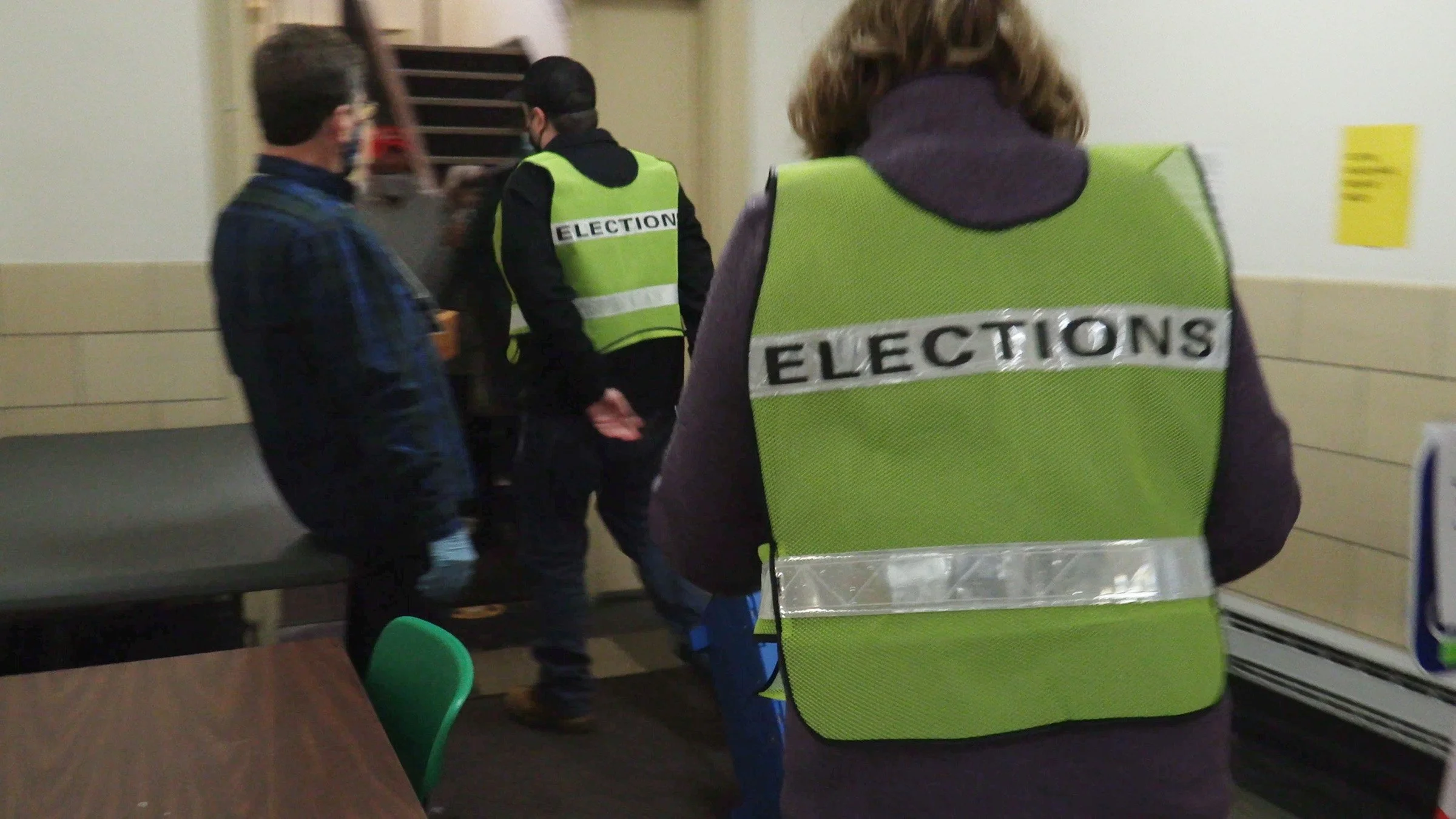
2020 is the year Americans discovered the existence of the elections administrator. Once invisible to the general public, these civil servants are central characters in an ongoing public debate about the integrity of our democracy. With unprecedented access to its frontlines, NO TIME TO FAIL is a verité film that tells the story of election officials across the state of Rhode Island. Amidst an onslaught of attacks from a sitting President and the deadly threat of a global pandemic, these public servants worked around the clock to secure the vote for their community. This film is an invitation to the American electorate to meet the people whose job it is to uphold the scaffolding of our republic and protect free and fair elections in what emerges as an unprecedented voting adventure in one of the most significant elections in US history.

Co-Director Margo Guernsey directed COUNCILWOMAN, which screened at Salem Film Fest in 2019. Co-Director Sara Archambault produced COMMUNITY PATROL, which screened at Salem Film Fest in 2018.

NO TIME TO FAIL Co-Directors Margo Guernsey and Sara Archambault.

MHS: Can you tell us about your collaboration on NO TIME TO FAIL - how did you find this project?

Margo Guernsey: Sara has a close friend who works in the Sec of State's office. As things were shutting down, the reality of having to run one of our most important elections in recent history during a global pandemic was setting in. Conversations about that led to the idea of documenting the process. My work has always centered on labor, specifically the work that runs our economy and is rarely seen or recognized. I had also made a film in Providence's political circles, so I had connections in some of the spaces where we would need access. Sara and I had been work colleagues in other ways, but had never made a film together. She reached out to me and proposed the project, and the collaboration grew from there.

MHS: How long did it take to make - from pre-production to final editing?

MG: We started research and pre-production in June 2020 and finished the film in July 2022.
MHS: What were some of the challenges you faced in making this film?

MG: This is a pandemic film, and that was the challenge. It wasn't safe for a crew or for the film participants to bring extra people into their offices. So Sara and I picked up cameras and sound gear and did it ourselves. We did some training sessions with cinematographers and sound recordists, and went through some different camera options. We actually started filming on iPhones! The film participants had to take an incredible leap of faith in letting us in. Their work is particularly scrutinized by the public, and the trust that was required for us to be hanging out with cameras during the most stressful time in their careers required them to believe in us. We had to build trust quickly because the idea for the film didn't form until they were already under the gun.

MHS: Please describe some of the highlights of making this film: is there an interview or scene -- or even a shot -- that you're particularly proud of?

MG: It is the most mundane scenes that make me most proud. The palpable sense you get of the everyday work in these older offices sheds light on what it means to be doing this work in a way that cannot be captured any other way.

MHS: How did you find and choose your subjects?

MG:  We went through a pretty rigorous process looking at the entire State of RI, and reaching out to folks in diverse places. We wanted to cover urban and rural, conservative and liberal, so that people from across the state would feel seen.

MHS: There are a number of emotionally charged moments throughout the film. Do you discuss with your subjects the potential for these ahead of time? Are there any sequences you excluded because they felt too personal?

MG: We talked at length with the film participants about what it would mean for cameras to be around filming sensitive moments. We did not cut anything for personal reasons, but there were planty of super stressful days when we did not film. Sometimes one of the film participants would just say, "I can't do it today." Our role is to document an election, not to dramatize their lives for the purposes of entertainment.

MHS: More generally, were there any privacy issues concerning the voting process that made filming difficult?

MG: We were very careful not to include names or personal information from any of the paperwork in the offices. In fact we had to go through and blur out things that got in by mistake. We were also very conscious of privacy issues when voters were casting ballots. Since voting is a public act, and it is meant to be transparent, we could film more often than you might realize.

MHS: What do you want your audience to take away from this film?

MG: We want viewers to have a greater appreciation for the people who administer elections. We refer to them as the footsoldiers of democracy. Without them we would not have elections. They are the ones that make sure you can register to vote, cast a ballot, and that your vote will be counted. They are extremely non-partisan and work incredibly hard to make sure that we have a constitutional right to vote. Most Americans do not understand their work, and yet it is crucial to our political system. We hope viewers walk away with a new understanding of what it takes to administer elections, and a desire to support that work.


MHS: Would you like to tell us about any new projects you’re working on?

MG: I have a film about the women who defied the Episcopal church to be ordained as priests in 1974, challenging two thousand years of patriarchal Christendom coming out next year. It is called THE PHILADELPHIA ELEVEN.

NO TIME TO FAIL screens in-person at Cinema Salem on Saturday, March 25 at 12:20pm followed by a Q&A with Co-Director Margo Guernsey - tickets available here

The film is also available for streaming during the virtual portion of the festival, March 27 - April 2 - tickets available here.

Behind the Scenes of SFF 2022 - Lodging Director, Liz Cronin

This post was written by Zoe, Summer, Caitlin, Cate, Arielle, Martha, Madeleine, Yasen, Celine, Lilly, Lia, Lauren, Griffen, and Griffin -- Marblehead High School's glorious G block AP Language and Composition class. Salem Film Fest is grateful to MHS Teacher Connor Ryan who worked with his students to explore this year’s festival.

After two years of a virtual film festival, Salem Film Fest 2022 saw a return to an in-person festival with filmmakers traveling from all over the United States to the North Shore.  Liz Cronin works behind the scenes as SFF’s Lodging Director ensuring that filmmakers enjoy their time at the festival and in Salem.

SFF Lodging Director Liz Cronin - Photo by Joey Phoenix, Creative Collective

MHS: How did you get into event planning?

Liz Cronin: In my first job out of college, I graduated with a psychology major and had absolutely no idea what I wanted to do. I didn't think I wanted to be a psychologist, but I also knew one aspect of psychology was called organizational development. Basically, you help a company develop its employees and come up with training ideas to keep employees motivated. The company that I got my first job with did what's called incentive travel. They would have their sales employees participate in a contest and would sponsor the winner and a guest on an all-expense-paid trip for one week. We’d have [everything] planned, so that's where I got involved. I started in sales and then I had a knack for coordinating travel, … and I basically just fell into it.

MHS: What is your role with Salem Film Fest?

LC: For the past 15 years, I have been the Lodging Director for Salem Film Fest. Prior to that, I worked for various corporate companies to coordinate incentive travel programs, a way for employees to earn rewards for their hard work. In addition to my current role at Salem Film Fest, I work remotely for a company based in Switzerland that informs doctors and patients about emerging pharmaceutical drugs.

SFF Lodging Director Liz Cronin and SFF Music Coordinator Brian Donnelly at SFF 2022 after YUNG PUNX: A PUNK ROCK PARABLE - Photo by Shane’s Maine Photography

MHS: Filmmakers attending screenings is a large part of what makes a film festival exciting.  How have you approached local accommodations to convince them to host filmmakers?

LC: I build relationships. I think in the 15 years, I’ve kept all my relationships because I make it a win-win. It’s not a take, take; it's building a partnership, and when I call, I don't have to sell [the festival lodging sponsorship] every year because they know I respect their hospitality.

 MHS: Has there ever been an interaction with anyone where you’ve said ‘I quit’?

LC: Actually, no. I have really good relationships. I get snappy at the end [when I’m stressed about stuff], and then when it's over I just have a good [sigh] of relief all went well. [During the festival] everyone is calling me, filmmakers are stuck, their flight didn’t get in, I have to go back another two hours later to get them. We had one filmmaker that brought her subject from India who didn’t speak English. The filmmaker was late but the subject was there. A teacher from Marblehead went and said ‘Hey I’m from the film festival’ and showed her her shirt and got the woman to believe that she wasn’t abducting her. She finally trusted her to go up to Salem with her but it's those fun stories.

MHS: Were you always a fan of documentaries?

LC: Never. I’d watch them, but now I know it's more than just someone talking to a camera like Frontline. There's so much more to it than just what you think documentaries are and I think that’s what exposed me to it. Another thing about documentary films is there's no good guy or bad guy. You come out of the film thinking ‘I’m not sure what I think about it but at least I have a 360-degree picture of an issue.”

After SFF 2022 screening of CAT DADDIES - Photo by Joey Phoenix, Creative Collective

MHS: In your opinion, what documentary theme has been the most attended or the most recurring over the years?

LC: Inspirational stories. We had a musician who all of a sudden became paralyzed and lost his ability to play music. He struggled through years of rehabilitation and actually at the live event came and did his first performance. That was amazing because you saw the film (LIFE. SUPPORT. MUSIC.) and then you saw the live person.

MHS: What is the one thing that makes you keep doing this, keep working so hard?

LC: Oh, it's the fun. We have parties, we get to talk to the filmmakers. It’s so interesting to talk to some of these directors and see how they got into the documentary film industry.

Behind the Scenes of SFF 2022 - Co-Director, Sadry Assouad

This post was written by Zoe, Summer, Caitlin, Cate, Arielle, Martha, Madeleine, Yasen, Celine, Lilly, Lia, Lauren, Griffen, and Griffin -- Marblehead High School's glorious G block AP Language and Composition class. Salem Film Fest is grateful to MHS Teacher Connor Ryan who worked with his students to explore this year’s festival.

SFF 2022 Co-Director Sadry Assouad - Photo by Shane’s Maine Photography

Sadry Assouad and Michael Johnson served as Co-Directors of the 2022 Salem Film Fest. After two years of virtual screenings, SFF returned to in-person screenings in both Salem and Beverly. Assouad shared some of his thoughts regarding this year’s festival.

MHS: How long have you been working with Salem Film Fest and how did you get involved?

Sadry Assouad: I joined as a volunteer in 2013. I’ve always loved films, so volunteering at a local fest was something that intrigued me. When I first joined I volunteered in a variety of ways including driving filmmakers, helping out with crowd control, and overall making sure it was a positive experience for everyone. A few years after that, they reached out to me with the opportunity to step in as Sponsorship Director. I continued to be that for a few years, and then this year stepped into the role of [festival] Co-Director. My role as Co-Director is to make sure we get to show films on opening night and throughout the festival so that everyone has a great time. There's not a specific job description for my role because as Co-Director when problems arise, you are responsible for creating solutions for them.

CLAYDREAM Director Marq Evans introduced by SFF Co-Directors Sadry Assouad and Michael Johnson - Photo by Joey Phoenix, Creative Collective

MHS: What challenges did Salem Film Fest face throughout the pandemic?

SA: This past year was particularly challenging because we basically had to plan for two festivals. Some theaters opened up again, but restrictions and the specter of another variant potentially shutting everything down made us want to make sure we had a contingency plan in place. We decided to go hybrid with both an in-person and virtual fest, so in the event that a variant came and shut down the state, we would still be able to promote and show the films that we selected. Two years ago, we had over 30 films selected and (after the pandemic occurred) the question was: what do we do? We couldn’t push them off to next year because it wouldn’t be as relevant. Ultimately we decided to go virtual and that is where we introduced the streaming element to the fest. We essentially pivoted to streaming in order to be able to still show the films and also do well by our community partners and sponsors.

MHS: What do you do outside of Salem Film Fest? And how do you manage your time between both?

SA: I work for a company that provides language services. If you have a website and you need that to be localized in a different language because you’re going to be marketing a product abroad, we would take the content, process it, and localize it to that particular market. My role is Director of Operations; we have many people abroad, in-country linguists that we partner with, who actually produce the translations, and the team inside that essentially takes those translations and makes sure that they can render properly in the context that they need to be rendered in, and my role is essentially to make sure that we can scale to the demand, and meet schedule deadlines, and so, I’m kind of the man behind the curtain.

Most of my Fest time (has been) after hours and weekends. It’s like juggling a few bowling balls, and certainly not easy… when you work on something that you feel matters, it gives you more energy, and helps you stay with it. Family is more of a consideration, because the Fest time is normally your free time, and that free time is usually spent building a LEGO set with my son. So those are the tough choices, and that’s really where the challenge is.

Sadry Assouad introduces LOST AND FOUND IN PARIS at SFF 2022 - Photo by Shane’s Maine Photography

MHS: What makes Salem Film Fest unique compared to other festivals?

SA: The films that are at the festival are not films that you are likely going to catch on certain streaming services. We feature mostly independent films and some that don't even have distribution yet. It is important to us to promote these films so they can find their way and get the visibility that they need to be successful…[The festival] is not just about the filmmaker, it's also about the North Shore community, and we are lucky to be supported by a large number of organizations. The festival is an opportunity to put the spotlight on film for sure, but it's also an opportunity to put the spotlight on the local business that essentially sponsored that particular film. So that is something I really love about this fest; it's very community-based.

Honey Colored Joy

Salem Film Fest is happy to be collaborating with Marblehead High School on some of this year’s Blog Posts and we are grateful to MHS Teacher Connor Ryan who has been working with his students in exploring this year’s festival.

Honey Colored Joy

by Summer Genovese

My size six, freshly shined, leather dress-shoes are under a half inch of water, my dad’s loafers the same. I scamper through the pouring rain, one of my father’s steps for three of my own. We have just left my newly nine-year-old older sister and my mom for their makeovers after our full-family tea party at the Four Seasons. Anticipation thrums in the wet air; my dad and I have a movie to catch. Entering the subway, we are astonished by the steady stream of water accumulating. I look up to my dad as he feverishly searches his pockets for his metrocard. An MBTA worker waves us through the flooding turnstile, a wide grin splashing across his  face.

Wet, worried moments pass by. Finally, we take our seats with the popcorn and candy we wordlessly agree mom won’t hear about. Once again, I look up to my dad and meet his gaze. I see his white teeth shining blue, illuminated by the opening credits on the screen, as he shares a seldomly shown smile. The bubbly intro music replaces the sound of popcorn crunching, our eyes turn to the front of the room. I shimmy down in my seat, snatch a handful of buttery goodness, and a feeling of honey colored joy washes over me.

 My soft silk-lined dress sticks to my skin along with the feeling of honey colored joy.

Filmmaker Spotlight: Eric Metzgar, Director of A ONCE AND FUTURE PEACE

In Seattle, communities are working to break the cycle of incarceration utilizing a promising new restorative justice program based on Indigenous peace-making circles. Through beautifully crafted animation, the film follows “Andy,” a teenager facing felony charges, and his family as they work through the program shepherded by Saroeum, a former gang leader from Revere, Massachusetts. As they look at the status of the broken justice system—prosecutors, judges, and those running the program ask: how much is our society willing to invest to truly change the trajectory of our communities for the better?

A ONCE AND FUTURE PEACE can be streamed from anywhere in the United States during the virtual portion of Salem Film Fest which runs through Sunday, April 3.

Eric Metzgar directed LIFE. SUPPORT. MUSIC., which won the Audience Award at SFF 2009 and edited ALMOST SUNRISE (SFF 2017) and GIVE UP TOMORROW, which won the Editing Award at SFF 2012. SFF Program Director Jeff Schmidt caught up Eric Metzgar to speak about his film.

A ONCE AND FUTURE PEACE Director Eric Metzgar

Jeff Schmidt: You have screened with SFF a number of times and worked in a variety of production roles having previously directed and edited LIFE. SUPPORT. MUSIC. and edited both GIVE UP TOMORROW and ALMOST SUNRISE. Can you talk about your roles in those films and the difference between serving as a director on a film vs. serving as the editor?

Eric Metzgar: I don’t really think in terms of roles on a film. Whether or not I directed the film, as an editor I just react to the footage in front of me. Ideas come to me and I try to realize them. The actual cutting of scenes is, of course, a major part of the process, but I’ve found over the years that more and more of the work of storytelling happens in my mind when I’m away from the computer. That is, when you look at the footage, you sort of memorize what you've got to work with, and then the brain starts working in the background to try to organize those elements into a cohesive story. So you have ideas, you implement them and then you see what you’ve got. Then the brain goes to work again trying to organize the chaos into cohesion. Rinse and repeat for months and months and hopefully at the end of the process you’ve got something powerful and impactful and worthy to add to the world.

A ONCE AND FUTURE PEACE

JS: A significant amount of the A ONCE AND FUTURE PEACE uses animation to help tell the story. Did you plan on using animation from the start or was that something you decided upon once production was already underway?

EM: No, we didn’t plan on it initially. But we soon ran into the realities that:  1) Peacemaking circles are confidential and 2) we needed to protect the identities of the youth so that their crimes wouldn’t forever be associated with them.  So we decided to record only the audio of their stories, and then animate them later. 

JS: What do you feel are the benefits in using animation in storytelling?

EM: I think the sky's the limit in terms of animation in storytelling. I think we’re only beginning to scratch the surface of what is possible. In another life (one in which I have actual talent as an animator!), I would love to make only animated films. They can express so much in so many ways. It’s thrilling to imagine what can be expressed.

A ONCE AND FUTURE PEACE

JS: What do you feel are the limitations in using animation in storytelling?

EM: Well, it’s a different mode of relation. Animation can express so much, but there is nothing quite the same as relating to a human being in a film. Or so I think. I don’t know. In Toy Story 3, when the characters were heading towards that incinerator, I was crying like it was happening to flesh and blood people I’d known my whole life. So perhaps our brains don’t need to see real humans to make the deepest of connections to them. So in that regard, perhaps there are no limitations to animation. Ah, I know one big limitation ― cost. It’s so damn expensive and time-consuming. Fortunately, our brilliant animator Reza Riahi understood our limits, and made it work nonetheless, by the sheer abundance of his passion, patience and talent.

JS: Do you have any advice for filmmakers that are considering animation in their documentary projects?

EM: Honestly, most documentaries don’t have the budgets for animation. Or the time. To deal with these issues, we opted for very simple animation. But I don’t want to discourage anyone. Anything is possible in filmmaking if you put your mind to it. Sounds cheesy and cliché, but I found it’s absolutely true. I imagine that in the near future, animation will become more affordable and accessible to all, like cameras and editing programs. So we’ll see…

A ONCE AND FUTURE PEACE streams at Salem Film Fest through Sunday, April 3. Purchase tickets to the film here.