Meet Salem Film Fest Assistant Director Brooklyn Brown-Northrup

This post was written by Caroline Jones, Jasmina Kurtovic, Kate Twomey, and Lauren Zisson of Mr. Connor Ryan’s AP Language and Composition class. We thank Ms. Brooklyn Brown-Northrup for coming to Marblehead High School to speak to us about her experience volunteering at the Salem Film Fest. The below interview is edited for length and clarity.

photo credit: Fae Phoenix Photo

Lauren Z: Did you grow up in the area?

Brooklyn Brown-Northrup: I was born in Detroit, MI. When I was fifteen years old my mom and I moved to Long Beach, CA. I went to college in Long Beach and then I went into the Air Force. I was a linguist for French, that was my peacetime, and then my combat duty was Search and Rescue. After, I got married, moved to Washington state, [and] I had a horse ranch. Then I was offered a fellowship to study at Brandeis. After graduating from Brandeis, I was overseas working with NGOs, and [then] I went back to the VA hospital and worked with veterans who were coming back from combat and re-adjusting to civilian life. 

Kate T: How did you first get involved in the film fest?

BB-N: There was a member on one of the selection committees, the only African American at the time that was on the selection committee - I’m the second African American - he brought me on kind of thinking that the film fest could benefit from more diversity. There was nothing going on or pressing at the time that called for that, but I think he just wanted to add some more melatonin to the group. His name is Tiegh Benod, and he’s been involved in the film fest for years. He invited me to come on board, and then from there Bobbie Bush, one of our assistant directors, pulled me more towards the administration piece.

LZ: What does your role at the film fest involve?

BB-N: This is my third year with the Film Fest. This year, we have a changing of the guard where we have a new director, Joey Ferrari. We created three assistant directors to work with him, so I took on the assistant director role. Then, our volunteer coordinator was not able to continue working, so I took over his position. Then, we lost the person who does our hospitality and accommodations for the filmmakers, so I’m also doing that, which is basically finding hotel rooms for them. So these aren't my typical roles, but that’s what I’m doing this year.

LZ: Do you have a favorite Film Fest film [and] a favorite film genre?

BB-N: That would be comedy, [it] can be [an] effective way to introduce very difficult issues on a lighter side without diminishing the issue. Comedy to me is like food and music, everyone, on some level, enjoys it. Last year [Salem Film Fest] had a film called CAT DADDIES - one of the stories in the film is about a homeless gentleman, who found this little kitten in the gutter in New York. What I found very interesting about that dynamic, as a social worker, was watching how he survived. 

Brooklyn with Fest Director Joe Ferrari at Opening Night SFF2023. photo credit: Fae Phoenix Photo

Caroline J: What do you enjoy most about volunteering?

BB-N: What I get back from it. Initially, I thought, “oh I’m gonna volunteer and I’ll be able to help people”, which I do, but I didn’t anticipate the reward that I got back from it. It allows me to still be part of a community [and] I’m able to build relationships, particularly with people I otherwise wouldn’t. Like the Film Fest of all things. I figured I’d go out and volunteer at the veteran center and places I’m accustomed to, but volunteering actually pulls you into directions you never would have thought of. [For example], I’ve been involved with Hamilton Hall quite a bit since I’ve been in Salem. So, that’s what I like about volunteering, I never really know what next year or next month or next week is gonna look like. 

Jasmina K: Seems like your work as a social worker really affects your worldview, have you taken any aspects from that towards working at the Film Fest?

BB-N: There was one film, I watched it and other people watched it, and it was really interesting to see the dynamics of how the lenses that different people wear, what you pull out of a situation. So, here we all are watching the same film, but we see different things and we interpret it differently. Film, I would say, like the performing arts, the creative arts, the expressive arts, once again it’s a way for people that are otherwise different or identify differently, even marginalized folks, to approach a topic that is very difficult and discuss it. And what I love about the Salem Film Fest is that we have a very safe environment, regardless of what’s going on. We all feel safe to express ourselves. 

LZ: What are some challenges you’ve faced while volunteering?

BB-N: For me, it’s saying no. I credit almost everything I have in life to volunteers, or to someone who has reached out to me without me even asking for their help, and really just embrac[ed] me. I’ve just learned in the past couple of years how to know where my limit is and where I fit best. I’m really passionate about the Film Fest, the selection committee, and being involved in the Film Fest in general. It takes a lot of diversity to pull off an operation like a film festival, so I find that I fit very well.

KT: You were saying that you find you want to do things that help people. Do you think showing films at the Film Fest, especially more diverse ones, helps people by spreading stories and educating people? 

BB-N: I really do, not just for them but for myself, and once again it does so in a way that's very non-confrontational. You're in a theater, a safe space, and you're able to engage at the level that you want to, so you can be as involved as you want, and at any time you can pull back. A film fest allows a person to engage [with] and observe knowledge they may have never seen before. Then they can choose to go on further and explore or say “that's not my cup of tea” and not worry about someone judging them. 

photo credit: Fae Phoenix Photo

LZ: What do you think viewers should know about the Fest?

Ms. B-N: I was recently asked about the Salem Film Fest and what makes it different. To me, the major difference I've seen is our interaction with filmmakers. That’s really our mission, is to not only show the film but to the best of our ability to bring the filmmakers, [who] come from everywhere, to the community so that they can discuss the film with the viewers and allow that interaction. 

JK: Is there anything else you feel we have missed about the Film Fest that people should know or anything you feel we should talk about?

Ms. B-N: I would love for younger people to be involved at pretty much any level, particularly our screening committee. If we could get more younger people, with much more diverse worldview[s], involved in the Film Fest I'm pretty sure those younger folks would bring that back to their community and their families. Then that's going to start discussion. Change is very uncomfortable for many adults, and rather than admit it and name it we push back. But the younger folks are just like “bring it on, bring it on.” Any young folks who are willing to step out on the ledge, I would encourage that and want to see that with Salem, especially while I'm there because I would stand behind that person and help them.

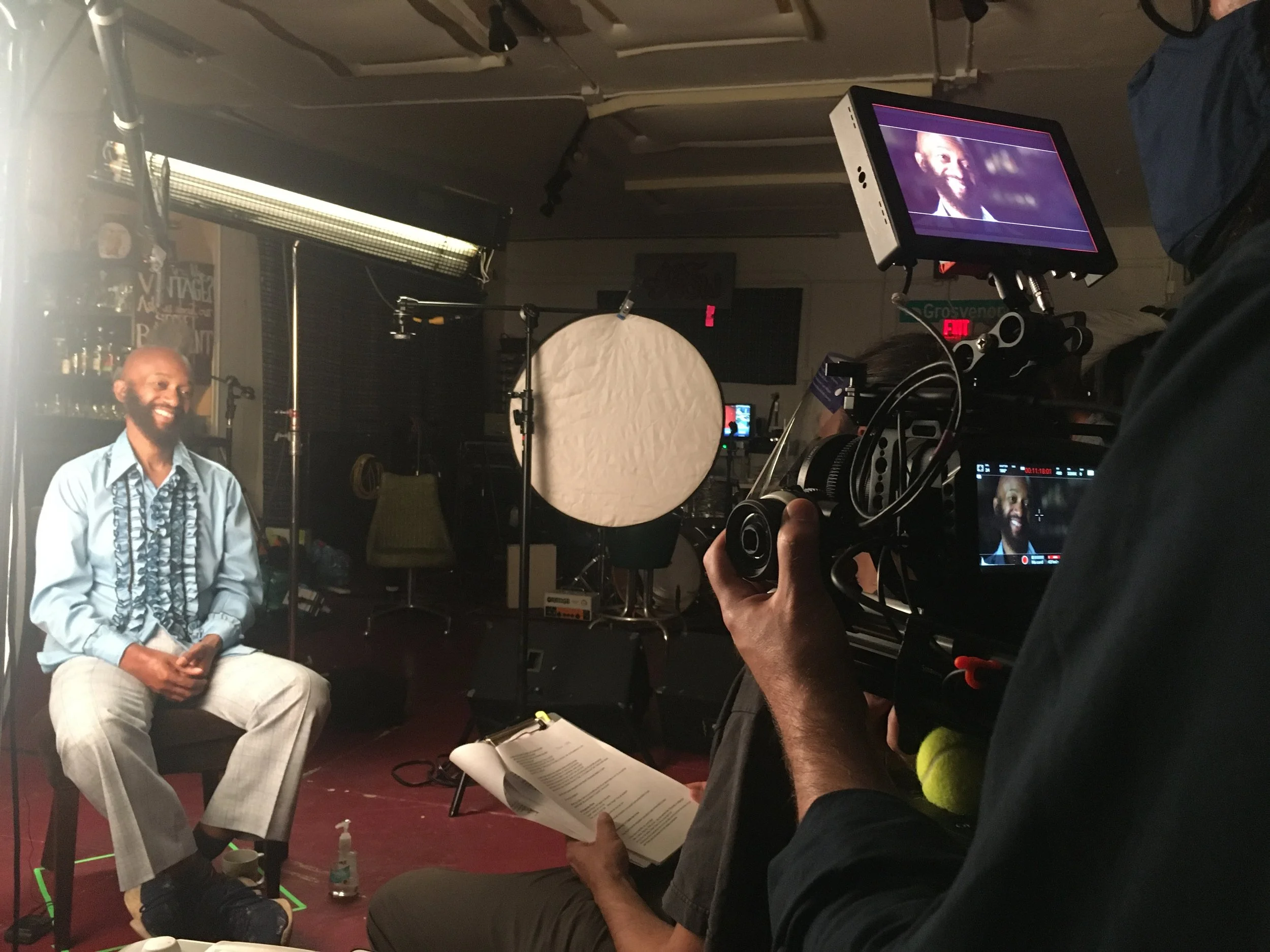
Filmmaker Spotlight: Francisco Núñez Capriles, Co-Director of FANTASTIC NEGRITO: Have You Lost Your Mind Yet?

Beyond the bombastic stage persona of Fantastic Negrito lies a 51-year-old survivor, hustler, and self-described ‘recovering narcissist’ named Xavier Dphrepaulezz. After his improbable midlife transformation from busking bluesman to back-to-back Grammy winner, Xavier is now ready to face his demons.

Full of musical performances and featuring intimate and often hilarious interviews with philosopher-poet Xavier and his brilliant band of collaborators and close friends, the film traces his journey from early isolation as a Black Muslim kid in rural Massachusetts to Bay Area star with a global fanbase. Along the way, the story of a singular musician unfolds as Xavier evolves from misfit, to homeless teenager, drug dealer, struggling L.A. pop hopeful, underground punk innovator, and urban farmer. From tragedy to triumph to tragedy and back again, FANTASTIC NEGRITO: Have You Lost Your Mind Yet? is a rollercoaster story of life and creation after destruction.

FANTASTIC NEGRITO: Have You Lost Your Mind Yet? will make its East Coast premiere at Salem Film Fest, screening in-person at The Cabot in Beverly, on Sunday, March 26 at 5pm followed by a Q&A with Co-Director Yvan Iturriaga.  Program Director Jeff Schmidt caught up with Co-Director Francisco Núñez Capriles  ahead of the festival.

FANTASTIC NEGRITO: Have You Lost Your Mind Yet?  Co-Directors Francisco Núñez Capriles and Yvan Iturriaga.

Jeff Schmidt: How did you meet Xavier/Fantastic Negrito, and at what point did you say to yourselves, "hey, we should make a movie"? Was Xavier/Fantastic Negrito onboard right away, or did it take some coaxing?


Francisco Núñez Capriles: I moved to the Bay in 2016 from Chile, where I worked for many years in media production and filmmaking. In 2019, I was working in construction. But I needed to get back to film. I found a Craigslist ad for a video production internship at the studio of local musician Fantastic Negrito. I didn't know much about him, but after a little research and listening to his music I was impressed by his talent and I thought, “This is perfect for me. It’s an underground space, run by people of color in West Oakland, and I could feel comfortable there.” And I thought my technical skills could compensate for my (lack of) English, and that I could contribute to the work they were doing.

So I was shooting promo videos for the internship, and realized something really exciting was happening with Xavier and his collaborators. X was in a transitional moment. He had just won his second Grammy, and was getting a lot of recognition and I think he was feeling empowered to talk about issues in a way he hadn’t before, and that came out in his creative process, writing this really personal album about himself and his community. 

And I asked, “Is anyone making this documentary?” And they told me, “What are you talking about?” So I switched my question to, “Is it okay if I start filming a documentary about Xavier and all this?” And they said, “Yes, of course.” But I don’t think X or his team expected a documentary in the end, although they were always supportive of us and the project.

JS: What was your production timeline, how long did you film with him and was it a challenge in the edit or did it come together easily?

FNC: I started filming in fall of 2019. I filmed a lot of really interesting behind-the-scenes material in the studio as they recorded Fantastic Negrito's third album. As an artist, it was really inspiring for me to see their process. But I didn't have a documentary yet. And at some point I started to try to find funding for producing this film, but I started to see my limitations again, in many ways, not just about funding but also still language, and also because I’m a recent immigrant still trying to fully understand this place where I’m living.

So I started thinking, “What can I do?” And I remembered when I was working in construction I talked with a Chilean contractor, who has a lot of artistic sensibility, and he told me, “Hey, you need to meet my son, because he’s also a filmmaker.”  And that was Yvan’s dad, and so I called Yvan and showed him the material, and he came onboard as a co-director and executive producer. That was in early 2020, right as the pandemic was starting. 

Our total production timeline was around three years from when I first started shooting. With Yvan, we spent almost a year shooting interviews and reenactments, before we brought on our fantastic editor, Charnelle Quallis. It took around one year to complete the editing process.

JS: Were there any particular moments during filming that you found challenging or surprising?

FNC: It was really surprising, very early in the process, to have such transparent and complete access to the musical creation. In terms of challenges, obviously the pandemic delayed and shifted our plans. Originally, we hoped to shoot X performing the album live in concert, but the album tour was cancelled due to COVID, so we had to get creative in terms of telling this story without those moments. I think the pandemic also changed the frame of the film -- the title of the album (and the doc), "Have You Lost Your MInd Yet?" took on new meaning when we were all stuck inside, trying to stay healthy and stay sane.

JS: What has Xavier's reaction been to the film?

FNC: He told us that it made him feel a lot of ways – happy, nostalgic, sad, and uncomfortable – and that that meant that the film captured something real about his story. 

JS: What do you hope people will take away from your film?

FNC: Xavier's story is inspiring in many ways, and how he approaches his problems offers us clues to deal with our own difficult experiences that sometimes haunt us or are unresolved. One of his songs has a great lyric: "Take that bullshit and turn it into good shit," and I think that synthesizes one of the ideas of the film, how art and creation can serve as a healing tool.

FANTASTIC NEGRITO: Have You Lost Your Mind Yet? screens in-person at The Cabot on Sunday, March 26 at 5pm followed by a Q&A with Co-Director Yvan Iturriaga - tickets available here

The film is also available for streaming during the virtual portion of the festival, March 27 - April 2 - tickets available here.

Filmmaker Spotlight: John McDonald and Nina Schwanse, Co-Directors of CALL ME MULE

John Sears, who calls himself Mule, has been roaming the western United States with his three mules for over thirty years. The 65-year-old and his animals sleep outside, claiming the right to move freely. Despite arrests, fines, incarcerations and involuntary institutionalization, he keeps on fighting to maintain his nomadic lifestyle.

Bemoaning the loss of open space, urban sprawl and our dependence on the automobile, Mule advocates a simpler way of life in harmony with nature. CALL ME MULE documents Mule’s arduous 500-mile journey to deliver a personal message to the Governor of California in defense of his way of life and his right to choose it.

Regardless of how we personally feel about Mule as an individual, the issues he raises concern all of us: preserving open space, individual freedom of movement, access to public land and the system’s treatment of people living outside society’s norms.

CALL ME MULE will make its North American premiere at Salem Film Fest, screening in-person at the Cinema Salem on Saturday, March 25 at 8pm followed by a Q&A with Co-Directors John McDonald and Nina Schwanse.  Program Director Jeff Schmidt caught up with the filmmakers ahead of the festival.

CALL ME MULE Co-Directors Nina Schwanse and John McDonald

Jeff Schmidt: You are a father/daughter filmmaking team, can you tell us about your production backgrounds and your decision to work on this film together?

John McDonald: I have always been passionate about making documentaries.  My first film, COTTON EYED JOE, which I made as a student at USC’s film school, was shortlisted for an Oscar and garnered awards internationally—including my German wife, who has collaborated with me on many documentary projects. I made several short social issue documentaries, but in order to make a living and raise a family, I had to switch to producing and directing commercials and industrials.  After a successful career in that field, I was finally able to return to documentary filmmaking with THE GHOST MOUNTAIN EXPERIMENT (2009), ON THE DAY(2011), and PIPES & STICKS ON ROUTE 66 (2015). CALL ME MULE took ten years to complete and is my first collaboration with my daughter Nina Schwanse. Nina came into the picture well after all the filming was over and I was trying to raise money to hire an editor. When the pandemic began, she was laid off from her assistant editing job at a large TV production company. She let me know that she was available, had a vision for the film, and would work for much less than the standard rate for editors. I said why not; let’s give it go. The rest is history!

Nina Schwanse: I’ve always been more of an artist and for most of my life veered away from any kind of conventional film production, pursuing painting and video/installation art. However, throughout the creative ebbs and flows, my dad and I have always helped each other out— my first gig was a hand model for a Mattel commercial he produced in the 90s, and he’s been the absolute best PA/DP for my bizarre video shoots from my childhood home in California to the New Mexico desert. Eventually Mule brought us together for a truly collaborative effort— I had a vision for the film based on my father’s experimental persuasion from his early years in film school, and I suppose we met in the middle. I currently work as a colorist in Los Angeles.

JS: How did you meet "Mule," John Sears, and was it difficult to convince him to let you tell his story?

JM: One evening, at dusk, I got a call from a friend who lives near me in a suburb of Los Angeles. He told me to hurry down to the end of our street and look east --- and see the subject of my next film. I ran to the corner just as a somewhat disheveled older man walked by, leading three fully loaded pack mules! He ignored me. I noticed a crudely stenciled website address, 3mules.com, on one of the mule’s panniers. Curious, I went to the site and found only one page with these words:

"We are mules. We are from the outside. We live outside all day, every day. We have come to this place -- a place of golden sparkling light, a place for anybody and everybody. Give your faith, hope and energy to this place at which time you connect to it and receive the magic and endless possibility of infinity. As you walk in this place with these mules you spread the awareness that this beautiful earth, like no other, can only be protected by the way we live one day at a time."

Now I was even more intrigued, so I chased him down. We exchanged a few words, but he was rather cranky and wanted to move on. However, he asked me for directions, and that was enough to give me a clue as to where he might be spending the night. As he was leaving, I asked him what his name was. He said to just call him Mule.

The next morning was Christmas Eve. I had thought about Mule all night and what a unique life he led. Would he be a good character for a documentary?  My whole family had come together for the holidays, and I was reluctant to go off on a wild goose (or mule) chase.  But as a documentary filmmaker, I sensed a good story. The dog needed a walk anyway, so I headed out in search of the guy with the mules. No luck at first, but then I found him, already packing up to start on the next leg of his trip to who knows where. 

He accepted a cup of coffee that I had brought with me. He talked a bit, very softly. With some reluctance he allowed me to retrieve the video camera from my car. Surprisingly, with the camera running, he talked more and with intensity, his eyes closed and his head bent forward, concentrating on every word he said.

This is what I learned. Mule and his animals have traveled for nearly three decades through sixteen states and into Mexico. For the last ten years they have lived every single day outdoors. Throughout his travels Mule has noticed an ever-increasing urban sprawl. Open spaces where they once moved through freely and sometimes spent the night, are disappearing. More and more cars are filling up the roadways, and the expanding urban infrastructure seems to serve just one purpose: accommodate more automobiles.

I asked Mule if he would consider letting me tag along with him on his journey and do more filming. He said yes, with the caveat that I would help him develop his website and social media presence. It seemed like a fair trade with benefits for both of us.

Little did I know at the time that I would be traveling with The Mules off and on for 27 months, up and down the state of California through noisy cities, quiet neighborhoods, and the backcountry wilderness. There was no crew involved in the production.  Our shared experiences during his travels helped to develop a relationship of mutual trust and respect. We enjoyed each other’s company and looked forward to spending time together. We became friends.

Nina Schwanse editing CALL ME MULE

JS: What was your production timeline on the film?

JM: I began shooting on December 24, 2012 and filmed my last shot in March of 2015. I spent 200 days with John and his mules. Some days I got some good footage, other days I did not, and occasionally I did no filming at all. For the next several years I applied for grants, cutting together various demos and scene selects with various editors. I only received two small grants totalling around $10,000. The New York Times OpDocs people took an interest in the project and asked if I'd be willing to edit a short piece for them to consider publishing. I did, but in the end they said it was "not a good fit." When the pandemic arrived, Nina was out of a job and asked if she could take a go at editing the film, so I said why not. She had had some experience making short experimental films for her art installations but had never edited a full-length film. Starting from scratch, she threw out everything that had been previously edited and took an entirely different approach from what I had originally envisioned. My cinematography provided her with a large piece of rough stone, and for two years, on and off, she chiseled away and sculpted it into a beautiful piece of art. Nina found a way to tell a story within my three-hundred hours of footage and deservedly is credited as co-director.

JS:  What is "Mule" up to now and how does he feel about the film?

JM: He seems to be staying around the area of Bakersfield, California with his two new mules and traveling as much as he used to. He was given a "life pass" to roam and live at the Wind Wolves Preserve in Kern County which is part of The Wildlands Conservancy.

NS: Unfortunately Mule became paranoid about the documentary making “Hollywood money” off of his message, and communication with him became difficult. I tracked Mule down based on his social media posts and caught up with him on the “Old Road” near Six Flags Magic Mountain in Santa Clarita, CA.  This was my first meeting with the “mules” in the flesh. I delivered a handwritten letter explaining our good intentions, and told him the film was completed, that I was John’s daughter, etc. He smiled warmly and philosophized… “How ‘bout that?”… He had always said “the energy” would surface to complete the film, and I believe he’s satisfied that his prophecy came true.


CALL ME MULE screens in-person at Cinema Salem on Saturday, March 25 at 8pm followed by a Q&A with Co-Directors John McDonald and Nina Schwanse - tickets available here.
The film is also available for streaming during the virtual portion of the festival, March 27 - April 2 - tickets available
here.

Filmmaker Spotlight: Deborah Kaufman and Alan Snitow, Co-Directors of TOWN DESTROYER

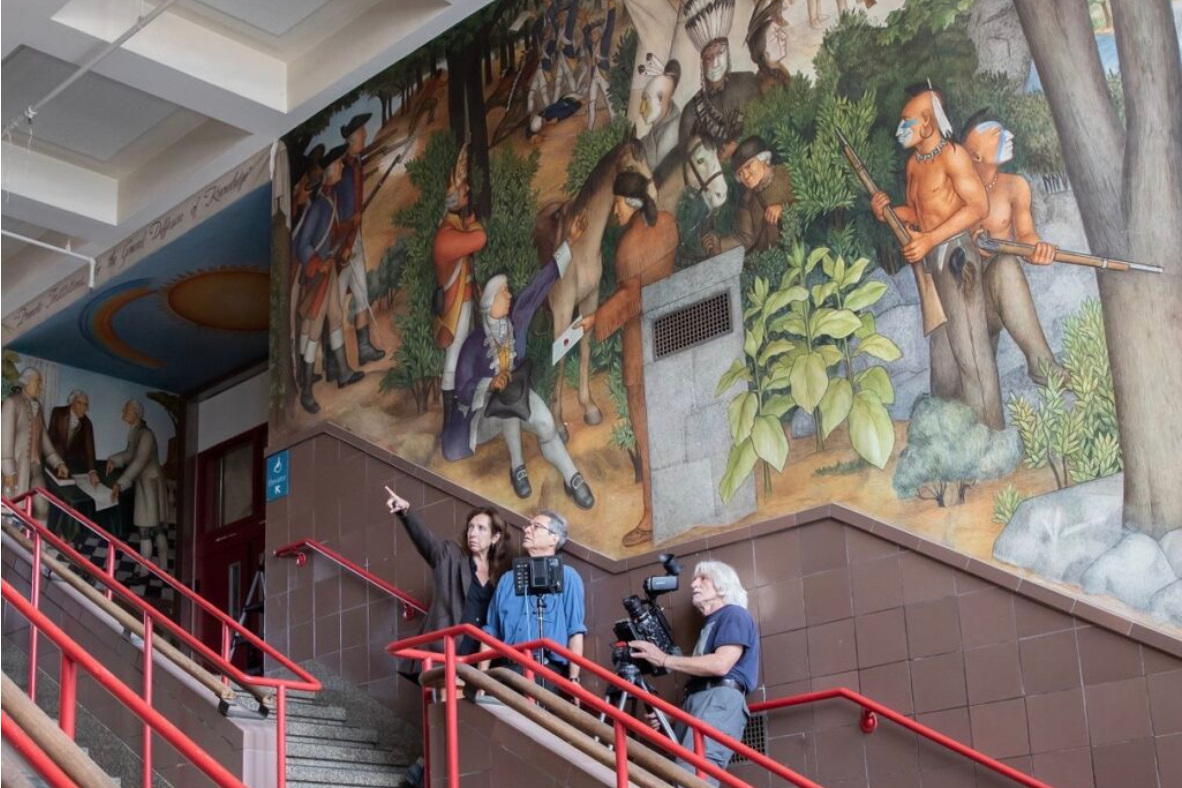
TOWN DESTROYER explores the ways we look at art and history at a time of racial reckoning. The story focuses on a dispute over historic murals depicting the life of George Washington: slave owner, general, land speculator, President, and a man Seneca leaders called “Town Destroyer” after he ordered their villages destroyed during the Revolutionary War.

The murals at San Francisco’s George Washington High School, painted in 1936 by leftwing artist Victor Arnautoff, a student of Diego Rivera, ignite controversy in the Bay area in the wake of battles over Confederate monuments across the United States. Heated debates spill into the community and make national headlines, as the murals become a catalyst for a national discussion about censorship, reparations, generational trauma, the ways in which America’s history of genocide and slavery is taught and memorialized, and the differences between monuments built to further white supremacy and art that critiques racism.

How should a changing society deal with controversial works of art? Do the intentions of the artist matter? or just the impact on viewers? Is it censorship to destroy murals that show painful histories? What does our country owe people who have been historically wronged?

Salem Film Fest is happy to be collaborating with Marblehead High School on some of this year’s Blog Posts and we are grateful to MHS Teacher Connor Ryan who has been working with his students in exploring this year’s festival.

TOWN DESTROYER Co-Directors Deborah Kaufman and Alan Snitow

MHS: You two have been working together for a long time. Could you please tell us about the nature and trajectory of your partnership?

Deborah Kaufman: We’ve been making films together since the mid-1990’s, starting with our film BLACKS AND JEWS. Neither of us went to film school but we were connected to the vibrant Bay Area film community through our prior work in media (Alan in radio as a radio news director and TV news producer; Deborah as Founding Director of the Jewish Film Festival). We had the benefit of collaborating with amazingly talented, smart and creative filmmakers here - who often help each other and work on each other’s films - which really jump-started our 2nd career. We both act as Producers and as Directors on every film, and work closely with our editors during post-production, which is often where the films actually come together.

MHS: How did you find this project?
Alan Snitow: We always have a hard time remembering exactly how we get into projects. That may be because making a documentary is a long-term effort, and so to consider doing something so crazy as that, it has to be over-determined with lots of reasons and inspirations flowing together to make it possible (and hopefully sometimes funding too). In this case, the debate over the murals had hit the local papers, and the San Francisco School Board was going to hold a public hearing about the issue. So we decided on short notice that we would take my visiting cousins with us and film the event. The debate was passionate, and we thought the art presented a much more interesting and complicated case study than the completely racist monuments to segregation and the Confederacy that have been discussed a lot in the media. We like that kind of complexity since it allows us to dig into the subject and present multiple points of view.

MHS: How long did filming take?

DK: This film began in the summer of 2019 and was completed in the summer of 2022. Three years is about how long it takes us to make most of our films - with probably half the time spent in research, pre-production and fundraising, and the other half in shooting and editing the film. Most of the filming was done here in the Bay Area where the story takes place, but we also took short trips to the Sierra foothills/Gold Country, Los Angeles, and Washington DC for interviews and to follow our characters.

It was hard to make a film during the height of the Covid pandemic - being stuck at home in the beginning and waiting for the vaccine, venturing onto airplanes, following Covid filming protocols, etc. Then there was the challenge of transcending the ‘he said/she said’ aspect of the film - wanting to ‘break the binary’ and suggest a new way of approaching the dispute over the murals. We like to think of our films as ‘interventions’ - opening possibilities, making things more complex and interesting for our audiences. We want to challenge ourselves, too, in the process. Talking with so many people who had varying opinions was wonderful in that respect.

MHS: Please describe some of the highlights of making this film: is there an interview or scene -- or even a shot -- that you're particularly proud of?

AS: We had a good time making this film cause the people we were talking to were fascinating and real personalities, so it’s hard to choose.  I think that the scene with artist Dewey Crumpler going back into George Washington High School to look at his 45 year old murals was wonderful. We spent several months trying to get into the school to film the murals with him, and the school district turned us down, but the principal said yes, and we agreed to film using only our cellphones. So that scene was very spontaneous. We’re also very proud of the scene with curator Paul Chaat Smith at the National Museum of the American Indian. Paul doesn’t like being interviewed very much so we had to convince him, which we did because we love his written work and his dry sense of humor. And of course for us, we are very gratified that Dewey and Paul—who trusted us—in the end really like the film.

MHS: Would you like to tell us about any new projects you’re working on?

AS: A lot of what you do in editing documentaries is eliminating from the film many of the things you really want to put in, but just won’t fit. One of the things we couldn’t put in was the wonderful art that Dewey Crumpler has been making since the George Washington High response mural back in the mid-1970’s. So, we’ve decided to try to make a short film about Dewey’s more recent work, which is very different from his mural work—much more abstract, but also very focused on wide swathes of history—particularly about the history of global trade from the slave trade to the current globalized system of trade in commodities.

MHS:  What do you want your audience to take away from this film?

DK: We want people to understand the imperative of what Robin Kelley talks about at the end of the film: that there is no one story, that each of our stories is incomplete, that we need to listen to each other and not keep screaming at one another. The film raises some big questions about the goal of education (to provide safety and security or to provoke and empower?), the break-up of political alliances, the meanings and uses of terms like victimhood and trauma, and the purpose and role in society of controversial art, which will always be with us. We hope that people are able to think more deeply about these things after they see the film.

TOWN DESTROYER screens in-person at the Peabody Essex Museum on Friday, March 24 at 5:30pm followed by a Zoom Q&A with Co-Directors Deborah Kaufman and Alan Snitow - tickets available here

The film is also available for streaming during the virtual portion of the festival, March 27 - April 2 - tickets available here.

Filmmaker Spotlight: Dawn Mikkelson, Co-Director of FINDING HER BEAT

Taiko drums have existed in Japan for over 2,000 years. The drumming art has been off limits to women for centuries. Until now.

In the midst of a frozen Minnosota winter with Covid rumbling in the background, a master of Japanese drumming and a Korean adoptee from Minnesota join forces to convene an all-female troupe of the world’s best Taiko drummers and claim a cultural spotlight previously reserved only for men. Through grueling rehearsals, the talented women share their vulnerability, pain, and joys and navigate their way through differences in culture, age, language, and performing styles.

As the clock ticks toward their first performance, it’s clear their story has become much larger than Taiko. Buoyed by dynamic drum performances and do-or-die spirit, FINDING HER BEAT is an energizing and uplifting story of music, cultural expression and, above all, sisterhood.

Salem Film Fest is happy to be collaborating with Marblehead High School on some of this year’s Blog Posts and we are grateful to MHS Teacher Connor Ryan who has been working with his students in exploring this year’s festival.

FINDING HER BEAT Co-Directors Keri Pickett and Dawn Mikkelson

MHS: How did you find this project?

Dawn Mikkelson: Jennifer Weir and I have been friends for over 20 years. We were meeting for lunch one day and talking about our creative lives, as working artists and queer mothers. Jen then shared her vision for HERbeat and asked if I might film it for historical documentation. The more we talked, the more I felt that this was bigger than a concert video. That we could explore what it is to be a woman in the arts, while also showing the story of these women coming together to do something groundbreaking. Jen liked that idea. I brought in Keri Pickett to co-Direct and become the DP and we started shooting in the fall of 2018.

MHS: How long did you film for?

DM: We shot from Fall 2018 to March 3, 2020. It was only a few days in 2018, then a couple weeks in Japan in 2019, and then at over 2 full weeks in 2020 leading up to the concert and afterwards. Then COVID shut everything down. Luckily, the performance happened, so we went into post-production.

MHS: There are a number of intimate moments throughout the film. What were the dynamics in the house like?

DM: The house was full of excitement, with late nights of bonding, practicing, celebrating, and of course… there was the flu that tore through the house, infecting both performers and the crew of the film. We actually had to pull in an additional cinematographer friend when Keri became too ill to film for a couple days.

MHS: How do you define the barrier between what should be filmed? Do you discuss what you would like to film with your subjects, or do you record everything and make decisions later?

DM: Our participants allowed us to film pretty much everything. There were a couple of decisions to not follow a couple of story lines that participants felt were too intimate. There were also a couple of conversations that were filmed that participants said, in the moment, please don’t use this. We respected that. They gave us so much access and there is no reason to exploit that access. At the end of the day, our goal is to lift up the larger story, while respecting the participants' boundaries. The participants understood this and trusted us to tell this story in a respectful way.

MHS: Some of the performers are at the beginning of their careers, while some are established stars of the genre. Could you discuss the ways in which this influenced filming?

DM: We wanted to have a diversity of experience represented on screen. From master taiko players who changed the field for decades to those who were just breaking through in their careers. These were considered the ‘All Stars” so all of them did have a level of success in their home region and country. This diversity of experience helped illustrate the great strides that have been made by those of marginalized genders in Taiko, but also the challenges that still exist in this performance art.

MHS: Have you kept in touch with any of the women in HerBeat?

DM: Absolutely. Of course Jen and Megan are a part of our weekly planning and a key part of our distribution team. In addition, most of the HERbeat performers have participated in screenings as guests and sometimes performers. We are currently developing a screening tour with our Japanese participants for later in the year. As we develop our impact campaign, they will continue to be involved, as we want this film to help bolster their careers, as well as introduce communities to the taiko in their own home towns.

MHS: What do you want your audience to take away from this film?

DM: To follow their dreams. It may sound cliché, but that is exactly what these performers did, in spite of all the barriers and glass ceilings they encountered. In addition, the fact that Jennifer Weir and her team decided to stop waiting for the taiko world to elevate it’s gender minorities and instead they elevated themselves, is something that can transfer to any field. If you aren’t invited to the party, throw your own party! That’s what FINDING HER BEAT is all about. And now the world of taiko is eagerly scrambling to catch up.

FINDING HER BEAT screens in-person at the Peabody Essex Museum on Friday, March 24 at 11am. The film is preceded by a Taiko drumming performance and followed by a Q&A with Film Subject Jennifer Weir - tickets available here. 

The film is also available for streaming during the virtual portion of the festival, March 27 - April 2 - tickets available here.