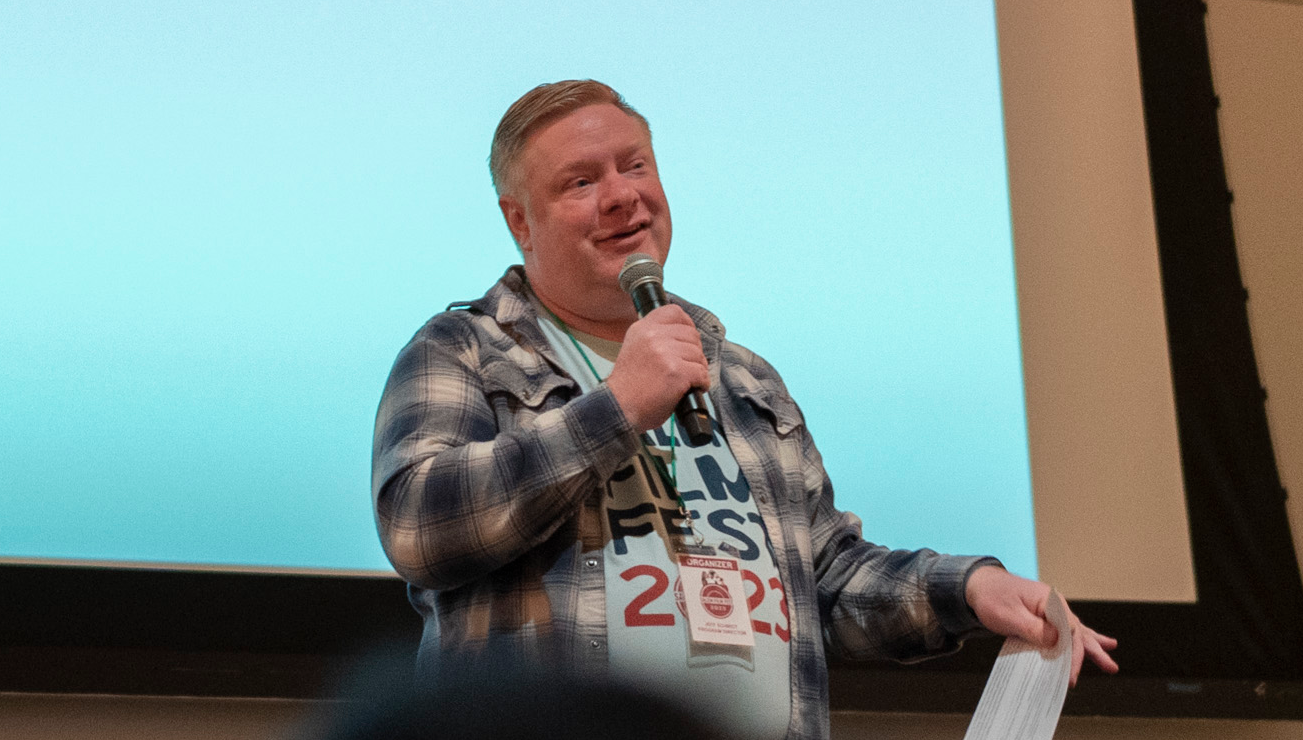
Meet Salem Film Fest Program Director Jeff Schmidt

This post was written by Alyssa Gentile, Sophie Dack, and Amanda Gilliland in Mr. Ryan’s AP Language and Composition class.  We are very grateful to have interviewed Mr. Jeff Schmidt about his experience volunteering for the Salem Film Fest.  This interview has been edited for length and clarity.


MHS: Did you grow up in the area?

Jeff Schmidt: I actually grew up in Ohio. But I have lived in Massachusetts for 27 years now; 19 in Salem. My wife and I have made Salem our home. We have a daughter and love living on the North Shore.

MHS: You have experience in the film industry. Could you tell us more about everything that you have done?

JS: I have had the opportunity to work on a number of documentary-style projects during my career. At the beginning of my career, I worked for ESPN Regional and produced and directed a documentary about NASCAR driver Rusty Wallace. I also worked locally on a project called the MILLION CALORIE MARCH, where I was the editor and the associate producer of the film. It followed a recovering food addict as he walked up the East Coast from Florida to Boston. More recently I was one of the producers of THE HOUSE WE LIVED IN, which played at a number of festivals this past year, and another film called, THERE FROM HERE which is launching this year.

MHS: What got you first interested in the Film Fest?

JS: My background in video production and documentary projects have [drawn] me to become  involved with the Festival. I found out about the Festival after the first year, and I followed up to see how I could get involved in an event that was taking place in my community. Fortunately, I was offered the opportunity to participate, and it’s been quite the journey since.

MHS: What is your role at the Film Fest, and what does it involve?

JS: As the Program Director of Salem Film Fest, I am the lead in researching films and [ultimately bringing them] to the Festival. I oversee multiple Selection Committees that view films from September through early February. I’m in constant communication with filmmakers; it’s practically a full-time job on top of my regular day job. A lot of our volunteers spend a lot of their free time putting together the Festival each year and maintaining the level of significance and quality of the Festival we put on each year.

MHS:  How and where do you find the films?

JS: We’re different from most festivals in that we are invite-only, so that means that we do not receive as many submissions as other festivals do.  [Instead], we research, go to festivals, and talk to alums, sales agents, and distributors to find films we think will appeal to our audience.  Then, our selection committees (which we have for our features, shorts, and student competitions) spend a great deal of time watching films and discussing them within our group.

MHS:  Salem Film Fest must have changed in myriad ways over the years. Can you track its trajectory, in broad strokes?

JS: From the beginning of the Festival, the focus was on celebrating filmmakers and bringing them to the North Shore to present their works and speak to our audiences. Over the years, we have certainly grown in scope and size. We’re fortunate that the filmmaking community has respected our work, and we have developed a reputation in the U.S. and internationally. We’re also very fortunate that the local business community has embraced the Festival as much as it has.  

MHS: What do you enjoy most about volunteering?

JS: What I enjoy most is once the Festival begins, and you finally meet filmmakers you’ve been communicating with for months. You watch filmmaker and audience interactions during screenings, and that’s why we do this every year, to see that interaction. Hopefully we provide an opportunity for people to learn more about the world around them.

MHS: What are some challenges you have faced?

JS: The biggest challenge is that it occupies a lot of time. To work on a festival of this size requires many hours on a daily basis. It certainly is a passion project for all of the volunteers who work so hard each year to present Salem Film Fest to the world.

MHS: Do you have an all-time favorite Film Fest film?

JS: One of my memorable experiences with Salem Film Fest was when I found a documentary about cats in Turkey that was just beginning applying to festivals. We ultimately hosted the North American premiere of the film, KEDI, which [eventually] was one of the highest-grossing documentary films in the United States in the next year. We flew out the filmmaker Ceyda Torun, and she later shared that after attending our festival, she knew she had made a film that would have massive appeal.

MHS: What do you think attendees should know about the Fest?

JS: It’s really an opportunity to learn more about the world around you, and certainly [attending] the in-person portion of the Festival is a great opportunity.  But we’re also going to be streaming from March 27 to April 2, so if you weren’t able to catch films at the in-person festival, there’s still an opportunity to watch them online.  For more information, people can visit SalemFilmFest.com.

Meet Salem Film Fest Assistant Director Bobbie Bush

This post was written by Kate Burns, Sophia Hallisey, Grace Mortensen, Sofia Grubor, Meg Maguire, and Lauren Zisson of Mr. Connor Ryan’s AP Language and Composition class. We thank Ms. Bobbie Bush for coming to Marblehead High School to speak to us about her experience volunteering at the Salem Film Fest. The below interview is edited for length and clarity. 

MHS: Could you please tell us a little bit about yourself? 

Bobbie Bush: I have lived in Salem for 33 years. I grew up outside of Hartford, but I've been in Massachusetts since college. I love Salem; it's my home by the ocean. 

MHS: How did you get into photography?

BB: From a young age, my parents knew I had a talent, even when I had my first [Kodak] Brownie camera. When I went to high school, there was a photography program with a dark room and training. I took to it very quickly. I was the Photography Editor for the yearbook, and then in college, I [was] the photo editor of the St. Lawrence newspaper.  

MHS: Do you like photography better than business?  

BB: Running your own photography business requires business skills; it just so happens my product is photography. I was fortunate that I had business corporate world experience. 

MHS: Do you have other people helping you with the photography and the business, or do you do it all yourself?

BB: Currently, I build my own websites and do my own marketing. I do [photography work], client emails, and email campaigns. In the past, [I] had employees, but it is hard to find workers that work as hard as you and care as much.

MHS: What do you enjoy doing outside of work?

BB: I enjoy going out to dinner with friends, going up to a family house on the coast of Maine, and going on long walks in Lynn Woods. I also love kayaking off the Coast of Maine and Marblehead and Salem harbors.

MHS: How did you begin working for the Film Fest?

BB: At first, I was a big fan of the Film Fest; then, I became a business sponsor and an organizer.  I learned about the logos that had to be on the website and asked who was in charge of them. Before you knew it, I was in charge of the website because I had graphic design skills. Then this past summer, I was approached to step up into the role of Assistant Director.

MHS: As Assistant Director, what are your responsibilities?

BB: My primary responsibility is to assist the Fest and Programming Director. I already knew I would be doing the website and sponsorship, but when you know somebody might not be able to do a role, people ask if you can fill in. There's a lot of filling in the cracks. 

MHS: What are the challenges your role faces?

BB: The biggest challenge is how compressed the timing is. We can’t make everything official with the design until we choose the films and confirm which filmmakers are attending.  This means that most of the final decisions have to be made in a short period of time.

MHS: What do you enjoy most about the Film Fest?

BB: I love it. It's eye-opening, thought-provoking, and engaging; I learn so much and see different parts of the world. The tagline Come to Salem to see the world is so true. I also love going in and watching the films. 

MHS: Do you have an all-time favorite Film Fest film?

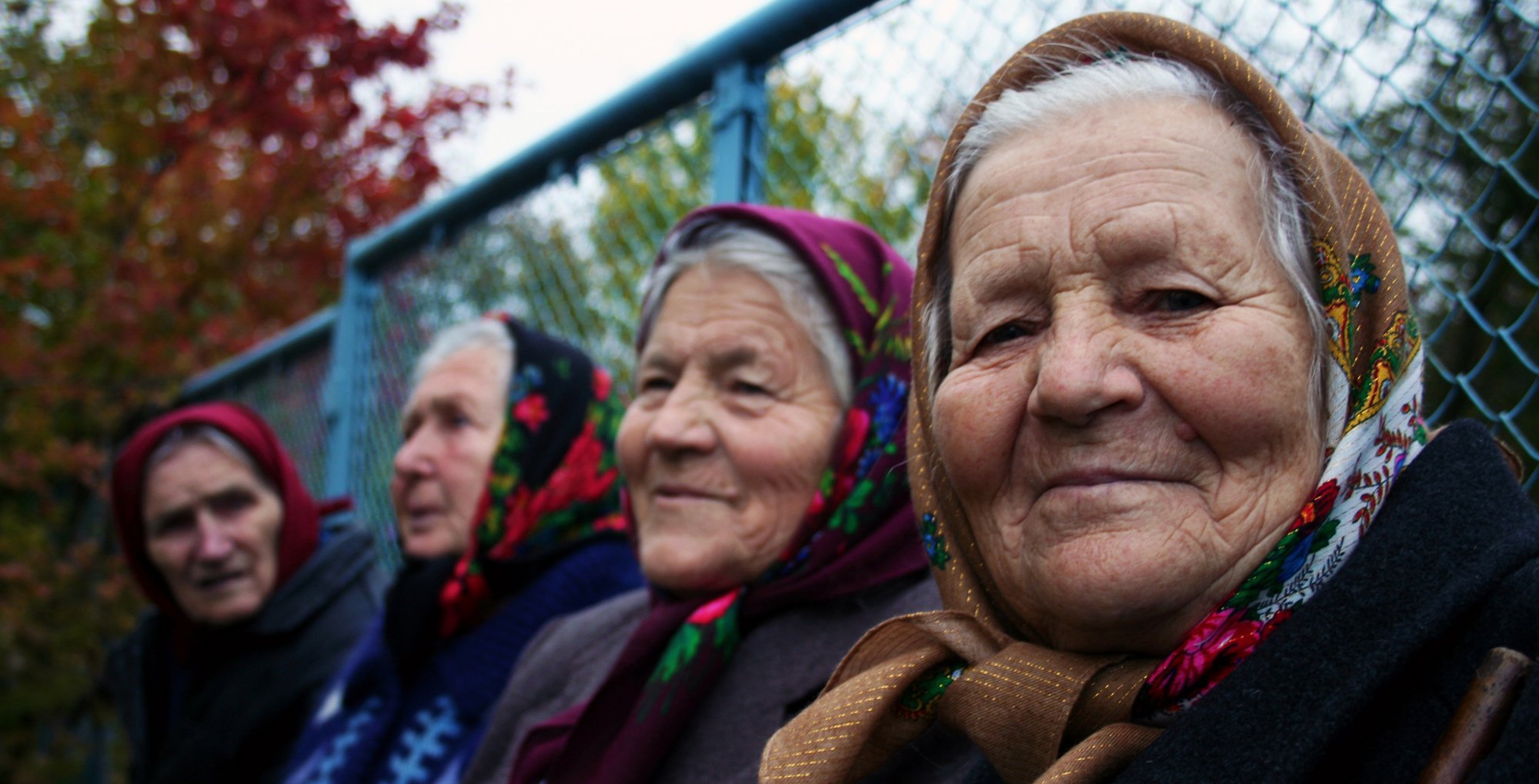
BB: One of my favorite films is THE BABUSHKAS OF CHERNOBYL. It's about aging women in Russia who survived the meltdown and refused to leave despite the radiation. It is heartwarming, sad, eye-opening, charming, and cryable!

THE BABUSHKAS OF CHERNOBYL, featured in Salem Film Fest 2016.

Filmmaker Spotlight - Michael Collins, Director of BEIRUT DREAMS IN COLOR

This post was written by Kate Twomey, Caroline Jones, Jasmina Kurtovic, and Casey Killeen, members of Mr. Ryan’s AP Language and Composition class. We are grateful to Mr. Collins for his time. This interview has been edited for length and clarity.

Imagery used with permission of filmmaking team, photo credit Beirut Dreams in Color

Mashrou’ Leila are indie rock gods in the Arab world. But their fame comes with a price. In a part of the world where singing about politics or sexuality is more than a little risky — and with an openly gay lead singer — Mashrou’ Leila’s very existence and success is unprecedented.

BEIRUT DREAMS IN COLOR screens as part of SHORT BLOCK 2, which can be streamed through Sunday, April 2.

Michael Collins directed GIVE UP TOMORROW (SFF 2012) and ALMOST SUNRISE (SFF 2017).

MHS: How did you find this project? 

Michael Collins: Back in 2017, I was in Beirut and was fortunate to be introduced to Tarek Zaiden, who helms the oldest LGBTQIA+ rights organization in the Middle East, Helem. He told me about the rise in bullying and violence that the queer community in Lebanon was experiencing at the hands of the government security forces. 

MHS: How did you find out about the band?

MC: [Zaiden] told me about Mashrou’ Leila - a popular indie band from Beirut whose lead singer, Hamed Sinno, was openly gay. Their music reflected all of the politics that they were observing and reacting to, and this included the queer experience from a very personal point of view. In fact, their song “The Smell of Jasmine” is known to be perhaps the first gay love song in the Arab world. This level of queer visibility is revolutionary in most countries, but, in this region, also dangerously tabooed. 

MHS: How did you find and choose your subjects? 

MC: I started listening to their music, [and] I was hooked. I experienced the power of it; how it resonates with truths that go beyond spoken language. I wished I had grown up with such beautiful artists to look up to, and in my awkward youth be reassured that there was, indeed, in this crazy, motley world, a space for me.

Imagery used with permission of filmmaking team, photo credit Beirut Dreams in Color

MHS: Why do you think the band’s music is so important?

MC: As Tarek points out in the film, “One good song can do more than 5000 protests.” It’s pretty self-evident that the very existence of this band, their fearless and often joyful expression of their experiences combined with their sheer talent, have done more to further the queer movement than we’ll ever know. But sadly, as their fame has grown, so has their perceived power in upsetting the status quo, making them a target for all kinds of attacks.  

MHS: Why do you think it’s so important for people to have this kind of representation, especially in the Middle East?

MC: It became obvious to me why they are hugely famous all over the Middle East. This added to the devastation of learning that one by one they were being banned from performing in most countries in the region, including Egypt, their biggest fan-base. But Lebanon always seemed like one place they could return to, especially their hometown of Beirut, which was historically known as a relatively liberal oasis, hence dubbed as “The Paris of the Middle East”.  Yet by the time I reached them, that no longer held true.  

Imagery used with permission of filmmaking team, photo credit Beirut Dreams in Color

MHS: Can you relate to the issues faced by the band and their fans in the film?

MC: As a queer man who grew up in a Christian country, I could relate to feelings of being less-than that were ever-present in the lack of positive queer representation in media -- we were relegated to caricatures or monsters. I could relate to the death-by-a-thousand-cuts all queer kids feel as the preachers and politicians use them as tools to drum up fear, votes, and all the benefits of othering and dividing to serve their needs.

MHS: What does this film mean to you?

MC: For me, this is the most personal film I’ve made. The process has forced me to confront my own past, and the lingering traumas of living in a society that continues to steer so many of our queer siblings to early deaths.  BEIRUT DREAMS IN COLOR is a film about belonging; a cautionary tale about what happens when greedy, fearful political and religious groups join forces to rehash some archaic worldview that feels more comfortable for them.

MHS: What do you want your audience to take away from this film?

MC: Cocooned within the tragedy, I also discovered hope in the spirit of Sarah Hegazi, a young Egyptian woman, a luminous leader who was silenced in the worst way. I hope through this film more people can meet Sarah and find inspiration in her voice. But I also wanted us to collectively have a space to grieve her loss, an act that is often robbed of those whose safety depends on their anonymity.

Meet Salem Film Fest Director Joe Ferrari

This post was written by Grace Promise and Livia Weiss of Mr. Connor Ryan’s AP Language and Composition class. We thank Joe Ferrari for coming to Marblehead High School to speak to us about his experience volunteering at Salem Film Fest. The below interview is edited for length and clarity. 

photo credit: Bobbie Bush

MHS: How did you end up in Salem?

Joe Ferrari: I grew up outside of Milwaukee; then I went to law school in New Hampshire. A couple of friends were from Boston, so I got to visit them. I really loved the area, [and when] I met my wife, Beki we moved out here.

MHS: What did you major in? And what do you do for work?

JF: I double majored in Political Science and Film. I am a lawyer by trade, but I work for a software company making contracts/negotiations. 

photo credit: Fae Phoenix Photo

MHS: What got you interested in the Salem Film Fest? 

JF: I've always just loved film. When we first moved to Salem, we dove headfirst into the community --  volunteering, cleanups, working with city counselors, working with the Film Fest. I became really good friends with the organizers. It didn't feel like work because there were such great people around me, and it's a really great festival. 

MHS: What is your role in Salem Film Fest? 

JF:  I [first] volunteered for the Fest at the beginning of 2015. I started out by cutting ballots over at Cinema Salem, and then I worked my way up to more complicated tasks. I became a film usher, and in the last few years, I worked on the Sponsorship Committee.

This is my first year as Director of the Film Fest. I’m involved in party planning, social media outreach, advertising, helping book visiting filmmakers, and just general operations. It's coordinating everything and making sure everything stays on the rails leading up to the Fest.

photo credit: Fae Phoenix Photo

MHS: When do you start planning for the Fest?

JF: I started planning on August 1st, and that wasn't enough time to start the planning. Planning for the 2024 Festival is going to start at the end of April or early May.

MHS: Do you have an all-time favorite Film Fest film?

JF: There was this film called KEDI about cats running around the streets in Turkey. KEDI was playing at the PEM around five years ago, and it was completely sold out. People were trying to get in and couldn't, so they were sitting in the aisles to watch it.

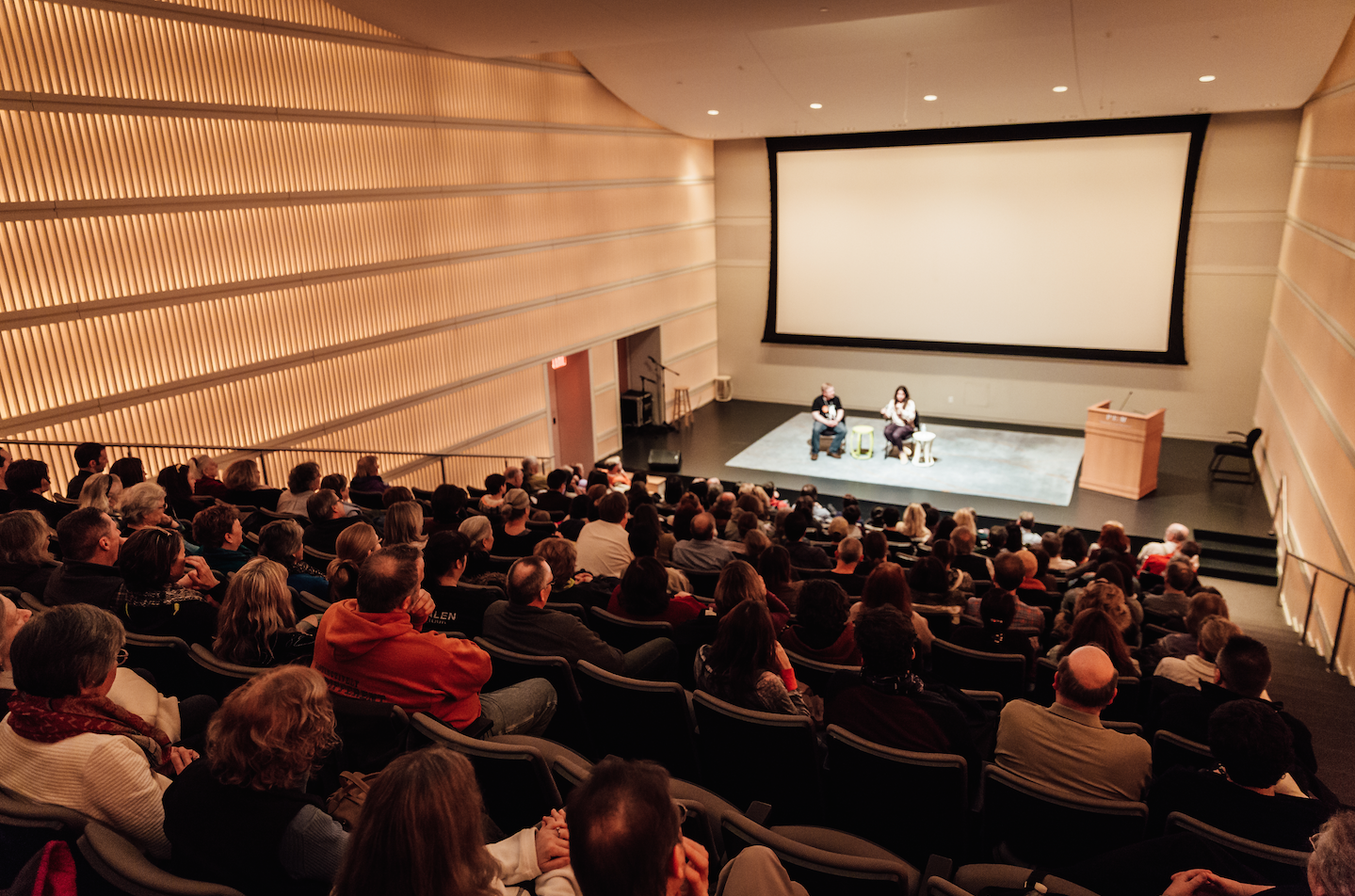
Salem Film Fest 2016, at the in-person screening of KEDI. Photo by John Andrews.

MHS: What do you enjoy the most about volunteering?

JF: The camaraderie of the people and the sense of community [that] builds off of that. I really love being part of this community. 

MHS: What are some main challenges you face? 

JF: It's people pulling me in so many different directions. It's tough to balance or manage all of that. As a director, I want to be as responsive as I can. 

MHS: What do you think viewers should know about the Fest?

JF: Everyone in our community should know about [the Fest], especially what we do with the filmmakers – providing stipends, not charging them, splitting revenues, being able to discuss their films [with a live audience]. We're really a unique film festival that our co-founders Joe Cultrera, Rinus Oosthoek and Paul Van Ness founded 16 years ago. My goal is to continue it for years to come.


Meet Salem Film Fest Sponsorship Director Deb Linehan


This post was written by Connor Ryan’s AP Language and Composition class at Marblehead High School. The below interview is edited for length and clarity.


MHS: What did you do before getting involved with the Salem Film Fest?

Deb Linehan: I have done a multitude of things. I'm a coach to artists, writers, and creative leaders. Right now, I also work as a paraprofessional at the Salem Academy Charter School in the Special Ed department, which is really fantastic. I love working there and working with kids. I'm currently the Literary Manager for the Actors Studio Playwright Director Unit in New York City. I'm a writer, director, and producer, and I'm also an equity actor and stage manager.

MHS: Can you tell us about your coaching? What does that look like? 

DL: I've been a coach since about 2010, and I used to work with folks, coaching them in life and career support. Since then, I've narrowed it down, and I work mostly with people who are interested in writing a book or getting their story out. 

MHS: Did we also hear correctly that you were part of the Upright Citizens Brigade? What was that experience like?

DL: I studied at UCB. In improv, there's this philosophy: “Yes, and…” that is wonderful in real life, because when you're living with people in the world, and they offer something, rather than being resistant and saying no, you can say yes. I'm also an active Buddhist in philosophy. Whenever I think I know the answer, I'm in trouble. There's a saying, “assume positive intent”. Look for what's right and assume that everybody else is doing their best, and that their intentions are good and positive. 

photo credit: Fae Phoenix Photo

MHS: When did you get into this volunteering job and how did you find out about it?

DL: In 2007, I moved from the Salem area to New York City and lived there for about a year. I rented a room from this guy, Joe, who was also from Salem. He and I would hang out sometimes when he was in town, and he told me about this film fest that he just started. 15 years later, I moved back to Salem, and jumped right in and got involved with the Film Fest.

MHS: Was there any reason that you became the Sponsorship Director, or was it just by chance?

DL: I had a conversation with Joe Ferrari, who is the current Director of the Fest, and we were chatting about what's going on with the festival where there was a need. I have a history in fundraising and development, so I said, I'd love to be on the team. My history of doing fundraising taught me to never be afraid to ask for money; if you have a project that is really worthwhile that you believe in, it can be really easy, because this is a real project that's gonna change people's lives. 

MHS: When you're asking for sponsorships, what's your tactic to get the most out of it that you can?

DL: The word tactic, a lot of people would think, “oh, that sounds manipulative,” but I don't think so. I think tactic means what's in your toolbox, and I think attitude is everything. When asking for money, I never walk up to someone expecting them to open their wallet, and to donate anything to what you're representing. Knowing that what you have is not for everybody is important, but also make sure to talk about the history of the organization and what has been done already to show a proven track record. 

MHS: How do you think social media has affected Salem Film Fest, especially with advertising?

DL: I think social media is fantastic in terms of getting the word out and getting people in seats. We can reach a wider audience than ever before. I think Salem Film Fest could leverage social media even more, but it takes a team of media experts to really leverage those platforms. So I think social media is fantastic. We're able to work with other venues as well, who are interested in doing blog posts and posting on our behalf. 

MHS: Have you seen a lot of films that are going to be presented at the Film Fest?

DL: No! I am very excited to be there and participate, and see these films for the first time, just like everybody else in the audience. I did get to see all of the trailers, and get a sense of what I'm excited about seeing, but even then, there's so many films to choose from. So I'm going to have to go through the trailers again, and really strategize what I want to make sure I get to see.

photo credit: Fae Phoenix Photo

MHS: What for you, are the benefits of being a part of the Film Fest? Why would you recommend doing this to other people?

DL: Oh, well, buckle your seatbelts. I'm a creative person, I love to make theater, I love to read books. I love storytelling in every single form. I believe that storytelling saves lives, period. We get to understand each other better; there may be something I see in the documentary about a person that I might have an opinion about, and it could change my mind. Also, this film festival gives us an opportunity to come together, have our minds changed, or have our minds blown, and then be with other people who have seen that documentary and have conversations after. It's a way for us to connect as a society, and to grow and learn, especially in this world where we're so divided. There's a lot of talk these days about empathy, and growing our empathy. Films in this film fest are an opportunity for us to grow that in this world.